







 Cyberattack Paralyzes Real Estate Transactions in Romania
 Short-Term Rental Rates in Greece Rise to €200 per Night
 Asia-Pacific Property Investment Hits Record $92.5 Billion
 Scandinavian Prefab Housing Market Seen Reaching $7.9 Billion
 Denmark Sets First-Half Tourism Record as Germans Lead
 Drought Dries Bärenschützklamm Waterfalls in Austria
Greece Turns to Older Homes
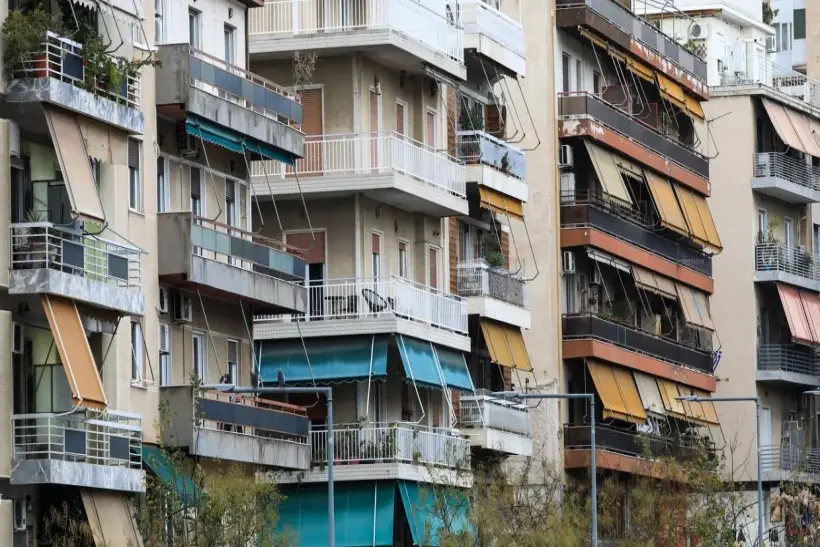
Greece’s property market is increasingly relying on older housing stock: three-quarters of homes sold in 2025 were more than 20 years old. A shortage of new construction, high building costs and slow urban renewal are turning older apartments into the market’s main product while deepening affordability and quality problems.
Older homes become the core of Greek sales
Greece’s property market in 2025 showed a structural imbalance: buyers are increasingly purchasing apartments and houses built more than two decades ago. This reflects not only buyer preference, but also the limited availability of modern homes.
Greek Reporter says more than seven in ten real estate purchases in the country involved residential properties. Among those, 75.6% were homes more than 20 years old. Newly built properties up to five years old accounted for only 12.3% of sales, homes aged 16 to 20 years made up 9.8%, properties aged 11 to 15 years represented 2%, and homes aged six to 10 years only 0.3%.
This structure shows that the market is not receiving enough new housing. Buyers are forced into older stock even when demand for modern energy-efficient apartments remains strong. As a result, older housing is no longer just a budget segment; it has become the center of transaction activity.
Attica shows the sharpest new-build shortage
The situation is especially visible in Attica, the Greater Athens region. Residential properties accounted for 85.3% of transactions, while commercial properties and land plots each represented 7.2%; agricultural land made up just 0.3%.
In the capital region, older stock dominates even more than nationally. Homes more than 20 years old accounted for 86.2% of residential sales in Attica. Newly built homes up to five years old represented only 3.3% of transactions. That means buyers in Greece’s most liquid and populated market have very limited access to modern housing.
Attica remains the main center of demand because of jobs, universities, business, tourism infrastructure and public institutions. But it is also where the shortage of new supply is putting the greatest pressure on prices, rents and housing choice.
Thessaloniki follows the same pattern
Thessaloniki shows a similar dependence on older housing stock. Residential property accounted for 87.4% of transactions, and homes more than 20 years old represented around 87% of sold units. New builds accounted for only about 2% of the market.
For Greece’s second-largest city, this is an important signal. Thessaloniki attracts students, young professionals, investors and buyers from the Balkans. But the shortage of new homes limits the city’s ability to renew its housing environment and preserve affordability.
Older apartments often require repairs, energy upgrades, replacement of building systems and document checks. The real purchase price for a family or investor can therefore be higher than the transaction price, once renovation, insulation, heating, wiring, elevators and technical compliance are included.
New builds remain scarce and expensive
Where new housing is available, it attracts strong demand. New apartments usually offer better energy efficiency, more modern layouts, parking, elevators, building systems and lower maintenance costs.
Energy efficiency is a building’s ability to use less energy for heating, cooling, lighting and hot water. In Greece, this is becoming more important because older housing stock is often poorly insulated and costly to cool in summer or heat in winter.
New properties are especially sought after by middle- and high-income buyers, foreign investors and people looking for homes without major renovation costs. But limited construction keeps these assets expensive, while their share of transactions remains low.
Construction crisis left the market without renewal
Greece’s housing stock is ageing not only because time has passed. After the debt crisis, residential construction investment collapsed, developers froze projects, banks tightened lending and households postponed purchases.
The debt crisis was a period in which the state, banks and private sector faced heavy debt burdens, restricted credit, falling incomes and strict fiscal austerity. In Greece, it halted renewal of the housing stock for years.
While demand gradually recovered, new supply failed to keep up. Construction companies face expensive materials, high land prices, bureaucracy, labor shortages and lengthy permitting procedures. The market is therefore filled by what already exists: apartments from the 1970s, 1980s, 1990s and early 2000s.
Prices rise even for older apartments
Limited supply is changing pricing logic. Under normal conditions, older housing should be significantly cheaper than new homes, especially when renovation is needed. In Greece, however, the limited number of available properties supports demand even for outdated stock.
The Bank of Greece regularly publishes residential property price indices used to track market dynamics. These indicators show that the recovery in prices after the crisis has become a sustained process, especially in cities and tourist regions.
Buyers are competing not only for new apartments, but also for older homes in good locations. In central Athens, near metro stations, universities, hospitals, offices and tourist areas, an older building can remain an attractive asset if it can be renovated and rented out.
Renovation becomes part of the investment model
With new builds scarce, buying older housing is increasingly seen as a strategy. An investor buys an apartment more than 20 years old, renovates it, improves energy performance, updates building systems and brings it to the rental or resale market.
Renovation is the comprehensive improvement of a property, including walls, floors, windows, wiring, plumbing, heating, cooling and the overall building condition. In Greek cities, renovation is becoming a way to return homes to circulation that would otherwise remain outdated or vacant.
But this strategy requires capital and time. Not every owner can finance renovations before selling. Not every buyer is ready for technical risk. And if a property has legal or planning problems, the process can become even slower.
Vacant homes do not solve the problem automatically
One paradox of the Greek market is that the country has a significant stock of old and vacant homes, yet many are not available for purchase or long-term rental. Some require renovation, some are tied up in inheritance disputes, some are used for short-term rentals and others remain closed for tax, legal or family reasons.
The International Monetary Fund has warned that vacant homes and market distortions are worsening Greece’s affordability problem. This means the shortage is not only physical but functional: homes exist, but they do not operate as available supply for residents.
This is especially important for Athens. The city center has old buildings and apartments, but many require investment, legal cleanup or a change in use. Until that happens, pressure on prices remains.
Foreign demand increases competition for older stock
Demand for Greek property comes not only from local buyers. Foreign investors, returning Greeks, holiday-home buyers, residency-program participants and rental investors are also competing for quality assets.
For a foreign buyer, an older apartment in Athens or Thessaloniki can look attractive if the price is lower than in Spain, Italy or Portugal while rental yields remain high. But this demand increases competition with local households, especially in central neighborhoods.
If an older property is converted into short-term rental after purchase, it does not solve the permanent housing problem. For the market, that means even residential transactions do not always increase housing availability for residents.
Energy upgrading becomes a social issue
Older housing stock creates not only a market problem but also a social one. Poor energy efficiency means higher electricity, heating and cooling bills. For low- and middle-income households, this increases the total cost of living.
In older apartment blocks, comprehensive upgrades are often difficult because multiple owners must agree. One owner may want to insulate the facade, replace the elevator or modernize heating, while others may lack the money or motivation.
That means upgrading the older stock requires not only private capital but also public programs. Without subsidies, cheap credit and simpler procedures, a large part of the old housing stock will remain technically outdated.
Land deals point to the search for new supply
In Attica, interest in plots and agricultural land has increased. That may show that buyers and developers are looking for future development opportunities amid the shortage of ready new housing.
But a land purchase does not become housing quickly. It requires planning, permits, infrastructure connections, financing, construction and sales. In a bureaucracy-heavy environment, that path can take years.
The growing interest in land is therefore an important long-term signal, but it does not solve today’s shortage. In the near term, the market will still depend on older stock and the speed at which it can be upgraded.
What this means for buyers
For buyers, the main conclusion is that the age of a property has become a central risk factor. Older housing may appear cheaper, but it requires detailed technical due diligence. Buyers need to assess the condition of the building, elevator, roof, wiring, heating, windows, facade and documents.
A buyer should calculate not only the apartment price, but also the full cost of ownership. That includes renovation, taxes, utilities, energy costs, possible common-building works and legal procedures. Without that assessment, an older apartment may become more expensive than it appears at signing.
For investors, speed of renovation is especially important. If works are delayed, yields fall. If technical or legal issues emerge, the financial model can deteriorate.
What this means for the state
For Greek authorities, the ageing market requires two parallel actions. First, new construction must be accelerated where it is possible without damaging the urban environment. Second, old and vacant apartments must be returned to use through renovation, energy upgrading and simpler procedures.
Building more is not enough by itself. In Athens and Thessaloniki, land is limited, infrastructure is under pressure and new projects are often too expensive for middle-income buyers. The main reserve therefore lies in the existing stock.
If the state can make renovation financially accessible, legally clear and technically fast, the market will gain new supply. If not, older apartments will continue to rise in price without improving in quality.
as reported by International Investment experts, Greece’s transaction structure shows that the housing market is facing not a temporary shortage of new builds, but a deep gap between demand and renewal of the housing stock. Older apartments have become the main product not because they perfectly meet buyers’ needs, but because alternatives are limited. For investors, this creates opportunities in renovation; for residents, it raises the risk of further price increases unless old stock is quickly and widely returned to quality use.
FAQ on older homes and new-build shortage in Greece
Why are so many buyers in Greece purchasing older homes?
Buyers are turning to older homes because new builds are scarce. After the debt crisis, residential construction remained weak for years, while demand recovered faster than new supply.
What share of sold homes in Greece are more than 20 years old?
In 2025, 75.6% of sold residential properties in Greece were more than 20 years old. In Attica, the share reached 86.2%, and in Thessaloniki it was around 87%.
Why do new builds make up such a small share of the market?
New builds are limited because of high construction costs, expensive land, bureaucracy, slow permitting and the legacy of years of weak residential investment.
Is buying an older apartment in Greece a good investment?
An older apartment can be attractive if it is well located and has renovation or rental potential. Buyers must account for renovation, energy upgrades, legal checks and building maintenance.
How does older housing stock affect prices?
When new housing is scarce, demand shifts to older apartments and pushes their prices higher as well. That reduces affordability and increases buyers’ post-purchase renovation costs.