







 How Ukraine’s New-Build Housing Market Has Changed Over Four Years
 European Prime Rents Rise as Property Yields Turn Higher
 The Most Expensive Airlines in Europe in 2026
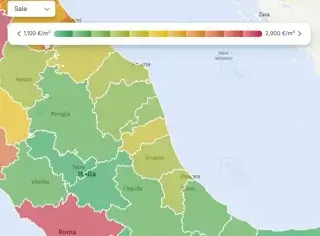 Housing Prices in Italy Reach a Two-Year High
 Travellers Increasingly Choose Cooler Scandinavia
 Serbia Property Sales Decline as Transaction Value Rises
Indonesia Raises Rates to Defend Rupiah

Bank Indonesia delivered an off-cycle rate increase to 5.50%, seeking to halt a rupiah selloff and restore investor confidence in Southeast Asia’s largest economy. The move was the second tightening step in less than a month and showed that currency stability now takes priority over cheaper credit.
The central bank moved outside its regular schedule
Bank Indonesia unexpectedly raised its benchmark rate by 25 basis points to 5.50% on June 9, 2026. A basis point is one-hundredth of a percentage point, so a 25-basis-point move equals 0.25 percentage point. The decision came outside the regular policy-meeting schedule, making it a signal of urgent action against market instability.
The central bank also raised the deposit facility rate to 4.50% and the lending facility rate to 6.25%. These rates form the money-market corridor: the deposit rate shows the return banks receive for placing liquidity with the central bank, while the lending rate sets the cost of short-term central bank funding.
Bloomberg reported that the decision was aimed at tempering a market rout. For Indonesia, the move is especially sensitive. The country is a major emerging market that depends on external capital, commodity prices, portfolio inflows and confidence in macroeconomic policy.
The rupiah became the main source of concern
The main reason for the off-cycle hike was pressure on the Indonesian rupiah. The Financial Times reported that the currency had weakened to around 18,188 per dollar, a record low. A weaker rupiah raises import costs, increases the burden of foreign-currency obligations and can feed inflation through fuel, food, industrial components and equipment prices.
According to Bank Indonesia, the JISDOR reference rate stood at 18,039 rupiah per dollar on June 5. JISDOR is the official indicative rupiah-dollar rate calculated from domestic foreign-exchange market transactions. It is used as a reference by banks, companies and investors.
After the off-cycle decision, the rupiah recovered some ground and Jakarta’s stock market rebounded. But that reaction looks more like short-term relief than a final solution. Currency markets respond not only to interest rates, but also to confidence in fiscal policy, the balance of payments, reserves, political predictability and the quality of official communication.
The May hike did not stop the pressure
The latest decision was the second tightening step in a short period. In May, Bank Indonesia had already lifted the benchmark rate by 50 basis points to 5.25%. The deposit facility rate was raised to 4.25%, and the lending facility rate to 6.00%. That was the first rate increase after a long pause and the largest single step in several years.
Yet in the three weeks after the May move, the rupiah continued to perform worse than the regulator had expected. That led to the off-cycle increase on June 9. The sequence shows that the market did not consider the normal monetary-policy signal sufficient. Investors wanted a stronger defence of the currency.
For the central bank, this is a difficult position. If it acts too gently, the rupiah may keep falling. If it tightens too aggressively, credit becomes more expensive for banks, companies and households. In an emerging economy, rates quickly affect mortgages, corporate loans, bonds, investment projects and consumer spending.
Inflation is still within target, but risks are rising
At first glance, inflation does not look critical. According to Bank Indonesia’s latest open indicators, consumer inflation was 3.08% year on year in May, while the 2026 target is 2.5% plus or minus 1 percentage point. That means inflation is still within the target corridor.
The problem is that currency weakness can quickly become an inflation channel. When the rupiah falls, imported goods and raw materials become more expensive. For a country that imports fuel, food components, technology and industrial equipment, that raises costs for businesses and consumers.
The off-cycle rate hike is therefore aimed not only at the current exchange rate. It is also designed to prevent a currency shock from moving into inflation expectations. Inflation expectations are what businesses and households think future prices will be. If companies expect costs to rise further, they may raise prices in advance, while workers demand higher wages. A temporary currency shock can then become more persistent inflation.
Reserves offer protection but cannot replace trust
Indonesia has significant foreign-exchange reserves. The central bank’s data show reserves at $146.202 billion at the end of April 2026. Reserves allow the authorities to smooth sharp currency moves, conduct interventions, support liquidity and show investors that the country can meet external obligations.
But reserves are not an unlimited tool. If the market believes fundamental risks are increasing, currency intervention can only slow depreciation. That is why the rate hike is part of a wider defence: the central bank is raising returns on rupiah assets and trying to restore portfolio inflows.
Bank Indonesia also uses money-market and foreign-exchange instruments, including securities operations, spot foreign-exchange transactions, forward instruments and measures to reduce hedging costs. Hedging means protection against adverse exchange-rate moves, often through derivative financial instruments.
Investors are watching more than the rate
Markets are judging Bank Indonesia’s decision in a wider political context. Indonesia remains an economy with a large domestic market, rich natural resources, rising consumption and a strategic role in nickel, batteries, palm oil, coal and the digital economy. But investors are also watching fiscal discipline, regulatory quality and the relationship between the state and private business.
Under President Prabowo Subianto, markets are paying close attention to large social programmes, the state’s role in key sectors and the sustainability of public finances. Any signs of fiscal expansion, pressure on institutional independence or unpredictable regulation can increase capital outflows even when interest rates are higher.
That is why the off-cycle hike can stabilise conditions only in the first stage. For the rupiah to strengthen sustainably, investors need yield, but also confidence in the rules of the game: a transparent budget, manageable deficit, predictable industrial policy and credible communication from financial authorities.
The stock market received a temporary reprieve
Indonesian assets received short-term support after the central bank decision. The rupiah strengthened and Jakarta’s main equity index rose after several days of losses. For investors, this was a natural reaction to a signal that the central bank is willing to act quickly and forcefully.
The stock market remains vulnerable, however. Higher rates can support the currency, but they also lower equity valuations because future corporate profits are discounted at a higher cost of capital. Banks, developers, consumer companies, infrastructure firms and highly leveraged borrowers may face higher financing costs.
At the same time, financial firms, exporters and companies with dollar revenues may look more resilient. Exporters benefit from a weaker currency if their costs are in rupiah and revenues are in dollars. But when the rupiah is too volatile, even exporters find it harder to plan investment and procurement.
The rate became a defence against an external shock
Bank Indonesia’s move came as global risks increased. The Middle East conflict has added pressure to oil prices, emerging-market currencies and investor risk appetite. For Indonesia, this matters because the country exports commodities, imports part of its fuel and depends on external financial flows.
When investors retreat from emerging markets, they sell local bonds, equities and currencies. That puts pressure on the rupiah and pushes up government bond yields. If yields rise too quickly, borrowing becomes more expensive for the state and companies. A rate hike is therefore an attempt to keep capital in the country through more attractive returns.
Higher returns come with a cost. They can slow lending, investment and consumption. For Indonesia, where domestic demand remains an important growth driver, that is a risk for business activity in the second half of 2026.
Indonesia is choosing stability over growth
The off-cycle hike shows that Bank Indonesia’s priority has shifted toward currency and financial stability. That does not mean the central bank has abandoned growth, but it does mean the weak rupiah has become too dangerous for inflation, external resilience and investor confidence.
The key question now is whether another rate hike will be needed at the next scheduled meeting. If the rupiah holds part of its recovery, the central bank may pause and watch the market. If the currency begins weakening quickly again, policymakers may have to choose among further tightening, intervention and additional measures to attract foreign capital.
For companies and investors, 2026 is becoming a test of Indonesia’s economic model. The country retains strong long-term advantages: scale, demographics, natural resources and strategic position in Asia. In the short term, however, markets will assess not potential but the authorities’ ability to keep the currency, inflation and budget under control.
As experts at International Investment report, Indonesia’s off-cycle rate increase matters not because of the 25-basis-point move itself, but because the central bank was forced to act between meetings. The critical risk is that currency weakness has become a question of confidence in economic policy, not only a reaction to an external shock. For investors, the main conclusion is to watch not only the rupiah, but also fiscal discipline, regulatory quality and Bank Indonesia’s ability to preserve independence under political pressure.