







 Turkey Is Losing Its Cheap-Holiday Advantage
 Development Is Rewriting Southeast Asia’s Historic Districts
 How Ukraine’s New-Build Housing Market Has Changed Over Four Years
 European Prime Rents Rise as Property Yields Turn Higher
 The Most Expensive Airlines in Europe in 2026
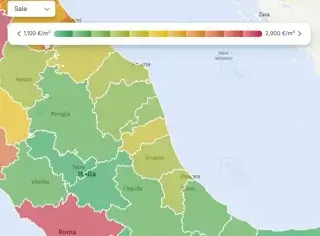 Housing Prices in Italy Reach a Two-Year High
Houthis Tighten Israel’s Red Sea Blockade

Yemen’s Houthis said they would impose a complete ban on Israeli-linked ships in the Red Sea, putting one of the world’s most sensitive maritime corridors back at the center of trade, energy and insurance risk.
Red Sea shipping faces a renewed security shock
Yemen’s Houthi movement said it would bar Israeli-linked vessels from sailing through the Red Sea, escalating pressure on a route that connects the Indian Ocean with the Suez Canal and the Mediterranean. The announcement on June 8, 2026, came as Israel and Iran exchanged new strikes, adding another layer of uncertainty to a region already central to global energy and container trade.
Bloomberg reported that the Houthis planned to impose a complete ban on Israeli ships in the Red Sea. The measure is not an internationally recognized embargo. It is a threat by an armed movement to treat a category of vessels as military targets. For shipowners, insurers and cargo operators, however, the operational question is less legal than practical: whether a voyage can pass the area without an unacceptable risk to the ship, crew and cargo.
The Bab el-Mandeb Strait links the Red Sea with the Gulf of Aden and the wider Indian Ocean. It is the southern gateway to the Suez Canal route. Any deterioration in security there can quickly affect freight rates, war-risk insurance, vessel schedules and the cost of moving goods between Asia, the Middle East and Europe.
The Houthis are broadening an existing pressure campaign
The new statement extends a maritime campaign that began after the escalation of the Gaza conflict. The Houthis initially said they were targeting vessels they associated with Israel or Israeli ports. Over time, the risk category widened to include ships with links to the United States, the United Kingdom or companies deemed by the movement to be supporting Israel.
The Houthi Humanitarian Operations Coordination Center has previously issued notices to shipowners and operators connected with Israeli ports and announced sanctions against companies it accused of violating its naval blockade. The center is not part of Yemen’s internationally recognized government, but its statements are monitored by the shipping market as a signal of operational risk.
For commercial shipping, the threat is not limited to missile strikes. It includes forced course changes, radio calls, demands for voyage information, attacks by small boats, unmanned maritime systems, illegal boardings and seizures of crews. The broader the definition of an Israeli connection, the harder it becomes for companies to assess whether a specific voyage may be exposed.
Bab el-Mandeb remains a critical trade chokepoint
The U.S. Energy Information Administration has described Bab el-Mandeb as a key energy chokepoint, accounting in the first half of 2023 for about 12% of seaborne oil trade and 8% of global liquefied natural gas trade. Those figures show why even a partial disruption in the area can carry consequences far beyond the Red Sea.
Under normal conditions, the Red Sea and Suez Canal route is one of the shortest links between Asia and Europe. When security risks rise, vessels are diverted around the Cape of Good Hope at the southern tip of Africa. That route adds distance, fuel consumption, transit time and fleet requirements for carriers trying to maintain schedules.
For container shipping, the result is schedule disruption, longer vessel rotations and higher freight costs. For energy markets, the additional risk is that Red Sea instability can overlap with tension around the Persian Gulf and the Strait of Hormuz. Even without a full closure of traffic, the threat can be enough to push insurance and logistics costs higher.
Maritime advisories show a wide threat profile
The U.S. Maritime Administration said in a 2026 advisory that the Houthis carried out more than 100 separate attacks on commercial vessels from November 2023 to October 2025, affecting more than 60 nations. The advisory identified vessels with Israeli, U.S. or U.K. associations, as well as ships belonging to companies that had made port calls in Israel, as potentially at high risk in the southern Red Sea, Bab el-Mandeb and the Gulf of Aden.
The listed threats included one-way unmanned aerial vehicles, unmanned surface vessels, unmanned underwater vessels, ballistic and cruise missiles, small-arms fire from boats, explosive boats, illegal boardings, detentions and seizures. For civilian shipping, that range of methods means the risk cannot be managed as a single-weapon problem.
Automatic Identification System equipment, known as AIS, is another sensitive issue. AIS broadcasts a vessel’s identity, position, course and speed, improving navigational safety in normal conditions. In a conflict zone, the same signal can help hostile actors track a target. That forces shipmasters and operators to balance safety rules against the need to reduce targeting risk.
Suez Canal traffic remains exposed to political risk
The Red Sea crisis has already hit the economics of the Suez Canal. When vessels avoid the corridor and sail around Africa, Egypt loses transit revenue and carriers face longer, more expensive voyages. Any recovery in Suez traffic depends not only on freight economics but also on the market’s assessment of security conditions.
The United Nations Conference on Trade and Development has warned that disruptions in the Red Sea and Suez Canal can weaken the environmental gains of slow steaming, as rerouted vessels travel longer distances and may increase speed to keep schedules. For container ships, a 1% increase in speed can raise fuel consumption by about 2.2%, turning the crisis into both a cost and emissions issue.
The Houthi announcement may therefore affect vessels even when they do not have an obvious Israeli flag or ownership link. Maritime risk is assessed across ownership, management, chartering, cargo, port calls and beneficial control. That broader due-diligence burden can push more operators to treat the corridor as unstable.
Insurance and freight markets move faster than diplomacy
The Red Sea has been treated as a heightened war-risk area for much of the recent crisis. Insurers assess the probability of attack, the potential loss of a vessel, liability for cargo, crew exposure and the likelihood of route disruption. New Houthi statements can be reflected in premiums before diplomatic efforts produce any visible result.
Freight markets respond through higher rates, risk surcharges, route changes and delays. Cargo owners face not only higher transport costs but also indirect expenses from inventory buffers, missed delivery windows, contract revisions and the need to use alternative ports or routes.
For Israel, the impact depends on how broadly the Houthis define an Israeli vessel. The risk may extend beyond the relatively small number of ships flying the Israeli flag to vessels with Israeli owners, managers, cargo interests, port destinations or previous calls. That uncertainty is what makes the announcement relevant to the wider shipping market.
Regional escalation raises the cost of uncertainty
The Houthi move came as Israel and Iran resumed direct exchanges of fire. For shipping companies, the Red Sea cannot be separated from the broader Middle East risk map. Tension around Iran, Lebanon, Yemen, the Gulf and Israeli ports can quickly become a single operating environment for risk managers.
Even a threat aimed at a narrow category of vessels can influence wider traffic. Major container lines and tanker operators rarely wait for a confirmed attack if the potential loss of a vessel or crew is high. They reroute early because delay is usually cheaper than an incident.
For global supply chains, this means geopolitical risk is again being priced into goods. Transport costs may rise for industrial components, consumer products, raw materials and energy cargoes. The most vulnerable shipments are those with fixed delivery windows and routes linking Asia, the Middle East and Europe.
As experts at International Investment report, the Houthi announcement should not be treated merely as a political signal. The central risk is the ambiguity of the criteria used to classify a vessel as Israeli or Israel-linked. That uncertainty raises decision-making costs for shipowners, insurers and cargo owners, turning the Red Sea from an efficiency corridor into a route where security now outweighs economics.