







 Turkey Is Losing Its Cheap-Holiday Advantage
 Development Is Rewriting Southeast Asia’s Historic Districts
 How Ukraine’s New-Build Housing Market Has Changed Over Four Years
 European Prime Rents Rise as Property Yields Turn Higher
 The Most Expensive Airlines in Europe in 2026
 Housing Prices in Italy Reach a Two-Year High
Egypt Inflation Accelerates Again in July
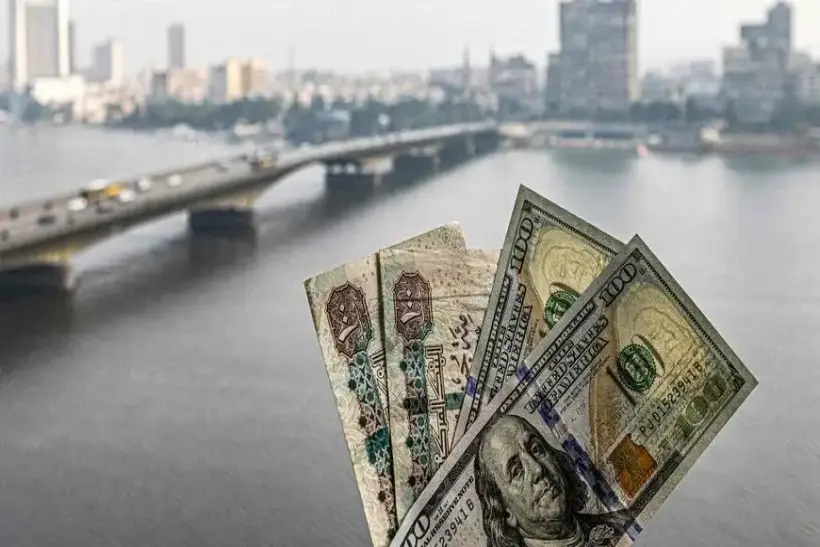
Egypt’s annual urban consumer inflation accelerated to 14.9% in July 2026 from 14.3% in June, ending three consecutive months of easing and recording its first increase since March. Yet urban consumer prices were unchanged month on month, while food and beverage prices declined 0.6% from June. The annual reading also came in below economists’ forecasts, although the International Monetary Fund expects inflation to rise to around 16.7% in the second half of 2026 amid higher energy costs, exchange-rate depreciation and unfavorable base effects.
Egypt inflation rises for the first time since March
July interrupted the disinflation trend that had prevailed during the previous three months. Bloomberg reported on August 10 that annual urban consumer inflation rose to 14.9% from 14.3% in June, its highest level since April and the first acceleration following the March inflation shock.
Urban inflation had reached 15.2% in March before easing to 14.9% in April, 14.6% in May and 14.3% in June. Official data for April and May show that the decline was largely associated with slower non-food inflation, while food-price dynamics remained considerably more volatile.
The monthly figures were much softer than the annual increase suggests. Urban consumer prices were unchanged in July after falling 0.4% in June. Food and beverage prices actually declined by 0.6% from the previous month.
The result therefore represents an acceleration in the year-on-year measure without a renewed broad monthly consumer-price shock.
Inflation undershoots economists’ expectations
Economists had widely expected Egyptian inflation to rise in July, but most forecasts anticipated a stronger increase.
A Reuters poll of 13 economists conducted between July 29 and August 6 produced a median forecast of 15.6%, with estimates ranging from 14.6% to 16.3%. Analysts cited an unfavorable comparison base as well as stronger food and non-food price pressures.
The final 14.9% reading was therefore 0.7 percentage point below the poll median.
Market estimates were not completely uniform. The consensus displayed by Investing.com before the release was also 15.6%, while some other market-data aggregators had expectations closer to 15.1%. It is therefore more accurate to describe market forecasts as a range rather than as a single universal estimate.
The divergence between annual and monthly inflation partly reflects base effects. The annual rate compares consumer prices with the same month one year earlier, meaning it can accelerate even when prices are flat from one month to the next.
Food inflation accelerates to 8%
Food became the clearest source of renewed annual inflation pressure in July.
Trading Economics reported that urban food and beverage inflation accelerated to 8% year on year from 5.4% in June, the highest rate in about 14 months. Transport inflation edged up to 24.5% from 24.4%, while clothing and footwear inflation rose to 13.7% from 13.6% and health inflation increased to 4.5% from 4%.
Housing and utility inflation remained exceptionally high at 41.2%.
The figures underline the uneven nature of Egypt’s current inflation picture. Food inflation is still far below the extreme rates seen during the earlier currency crisis, but transport and housing-related costs continue to increase far faster than the overall consumer index.
At the same time, the 0.6% monthly decline in food prices indicates that the higher annual food-inflation rate was not the result of a fresh one-month surge.
Nationwide inflation rises to 13%
Egypt publishes several consumer-price measures, meaning the 14.9% and 13% figures refer to different geographical baskets.
The Central Agency for Public Mobilization and Statistics said nationwide annual inflation increased to 13% in July from 12.2% in June. The nationwide consumer price index reached 289.9 points, rising 0.1% from the previous month. Food and beverage prices increased 7.9% year on year, transportation costs rose 21.1%, and housing, water, electricity, gas and fuel prices increased 31.1%.
The 14.9% measure covers urban areas and is the headline series most closely followed for monetary-policy purposes.
Urban CPI covers Cairo, Alexandria, urban Lower and Upper Egypt, the Canal cities and frontier governorates.
Core inflation is calculated separately and excludes several volatile food items and administered prices. Annual core inflation stood at 14.3% in June, up from 13.8% in May.
Fuel prices continue to feed into transport costs
Transport inflation continues to reflect higher domestic energy costs introduced earlier this year.
Egypt’s Ministry of Petroleum and Mineral Resources raised petroleum-product prices on March 10 as international energy markets came under severe pressure. Current official prices include 20.50 Egyptian pounds per liter for diesel and kerosene, 20.75 pounds for 80-octane gasoline, 22.25 pounds for 92-octane gasoline and 24 pounds for 95-octane gasoline. A household cooking-gas cylinder costs 275 pounds.
The March adjustment raised major motor-fuel prices by roughly 14% to 17%, with diesel increasing by about 17%.
Fuel prices affect inflation beyond direct household expenditure because they feed into freight, passenger transport, agricultural distribution, retail logistics and service-sector costs.
Egypt keeps policy rates at 19% to 20%
Monetary conditions remain tight.
The Central Bank of Egypt left its overnight deposit rate at 19%, its overnight lending rate at 20% and the main operation rate at 19.5% at its July 9 meeting. The discount rate also remains at 19.5%. The next scheduled monetary-policy meeting is on August 20, 2026.
Current rates follow a 100-basis-point cut in February. Policymakers subsequently kept rates unchanged in April, May and July.
The July inflation report complicates the next decision. Annual inflation has turned higher, but monthly urban inflation was zero, signaling substantially weaker near-term momentum than during the March price shock.
Egypt’s 2026 inflation target was revised
The current inflation target differs from the one originally established several years ago.
In December 2024, policymakers set a target of 7%, plus or minus two percentage points, on average in the fourth quarter of 2026. A target of 5%, also with a two-percentage-point tolerance band, applies to the fourth quarter of 2028. The effective target range for late 2026 is therefore approximately 5% to 9%.
That replaced the earlier target established in December 2022, when the objective for the fourth quarter of 2026 had been 5% plus or minus two percentage points.
Policymakers warned in May that inflation was likely to exceed the revised target range in late 2026 before gradually easing from early 2027 and converging toward the target during the second half of that year.
July’s 14.9% reading remains well above the upper end of the current target range.
IMF sees inflation reaching around 16.7%
The external outlook remains more inflationary than the latest monthly data.
The International Monetary Fund expects inflation to rise to around 16.7% in the second half of 2026 because of higher energy prices, exchange-rate depreciation and unfavorable base effects. Convergence toward the central bank’s target range is now expected roughly one year later than previously projected.
Economic growth has nevertheless remained resilient. Real gross domestic product expanded by 5% in the third quarter of fiscal year 2025/26, lifting growth during the first nine months to 5.2%.
Full-year growth is expected at around 4.6% in fiscal 2025/26 before moderating to about 4.4% in fiscal 2026/27.
The current-account deficit is estimated at approximately 4.5% of gross domestic product in fiscal 2025/26. Record remittances, resilient tourism revenue and a gradual recovery in Suez Canal receipts have helped contain external pressure.
Foreign reserves reach $56.3 billion
Egypt has continued rebuilding its foreign-currency buffers.
Net international reserves reached a provisional $56.294 billion at the end of July, up from about $55.1 billion in June.
The increase strengthens the country’s capacity to absorb external shocks and lowers immediate foreign-currency liquidity risks.
It does not, however, eliminate inflationary pressure generated by administered prices, domestic fuel costs or imported goods.
Exchange-rate developments therefore remain an important component of Egypt’s inflation outlook because the economy continues to rely heavily on imported food, fuel, machinery and intermediate goods.
Egypt’s IMF program began in 2022, not 2024
The chronology of Egypt’s current international financing program is important.
The original 46-month Extended Fund Facility arrangement of about $3 billion was approved in December 2022. In March 2024, the arrangement was augmented by approximately $5 billion, bringing total access to about $8 billion. March 2024 was therefore the date of the program’s expansion rather than its launch.
In July 2026, the Fund completed the seventh review of the Extended Fund Facility and the second review under the Resilience and Sustainability Facility.
The decisions made around $1.8 billion of additional financing available, including approximately $1.5 billion through the main program and about $272 million through the sustainability facility.
Total purchases and disbursements under the two arrangements had reached about $7.3 billion by the end of July.
The policy framework continues to emphasize exchange-rate flexibility, fiscal consolidation, energy-price reform, state-asset divestment and a larger role for private-sector investment.
Egypt has passed the inflation peak, but risks remain
Today’s inflation rate is far below the levels reached during the earlier phase of Egypt’s economic crisis.
Urban inflation peaked at a record 38% in September 2023. By July 2026 it had fallen by more than half.
The final stage of disinflation is proving less straightforward.
Annual food inflation is accelerating again, transport and housing costs continue to rise considerably faster than headline inflation, and the latest international forecast allows for another increase in the overall rate later in 2026.
At the same time, zero monthly urban inflation and lower food prices in July indicate that the rise in the annual rate has not yet developed into another broad-based monthly inflation shock.
As International Investment experts note, the July data are not sufficient to conclude that Egypt has entered a new sustained inflation cycle because annual inflation increased to 14.9% while monthly urban prices were unchanged. The risk, however, remains material because of elevated energy costs, rapid transport and utility inflation, currency sensitivity and the forecast for inflation of around 16.7% later in the year. For investors, the central issue is increasingly the duration of tight monetary policy: if inflation remains around 15% to 17%, interest rates may have to stay high for longer than previously expected, prolonging expensive local-currency financing and increasing the importance of exchange-rate movements for investment returns.
FAQ: What was Egypt’s inflation rate in July 2026?
Annual urban consumer inflation was 14.9%, up from 14.3% in June. Nationwide annual inflation was 13%.
FAQ: Did Egyptian prices rise sharply during July itself?
No. Urban consumer prices were unchanged month on month. The 14.9% figure measures the change from July 2025 rather than the increase during July alone.
FAQ: Why did annual inflation rise when monthly inflation was zero?
Base effects are one reason. Annual inflation compares the price level with the same month one year earlier, meaning the annual rate can rise even when the current monthly index remains flat.
FAQ: How fast are food prices rising in Egypt?
Urban food and beverage prices were 8% higher than a year earlier, compared with annual growth of 5.4% in June. On a monthly basis, however, they declined by about 0.6%.
FAQ: What are Egypt’s current interest rates?
The overnight deposit rate is 19%, the overnight lending rate is 20%, and the main operation rate is 19.5%. The next scheduled monetary-policy meeting is August 20, 2026.
FAQ: What is Egypt’s current inflation target?
The target is 7%, plus or minus two percentage points, on average in the fourth quarter of 2026, implying a range of approximately 5% to 9%.
FAQ: What is the inflation outlook for late 2026?
The International Monetary Fund expects inflation of around 16.7% during the second half of 2026, citing higher energy costs, currency depreciation and unfavorable base effects.
FAQ: When did Egypt’s $8 billion IMF program begin?
The original program of about $3 billion was approved in December 2022. It was expanded by approximately $5 billion in March 2024, increasing total access to about $8 billion.