







 Russian and Belarusian Owners List More Latvian Property
 Georgian Law Enforcement Busts Scammers Posing as Real Estate Brokers
 World’s Largest Economies in 2026: GDP and Purchasing Power Rankings
 Turkish Airlines Cancel Flights to Moscow
 Escalation in the Middle East: New US and Iranian Strikes
 Hong Kong Property Rebounds as Momentum Slows
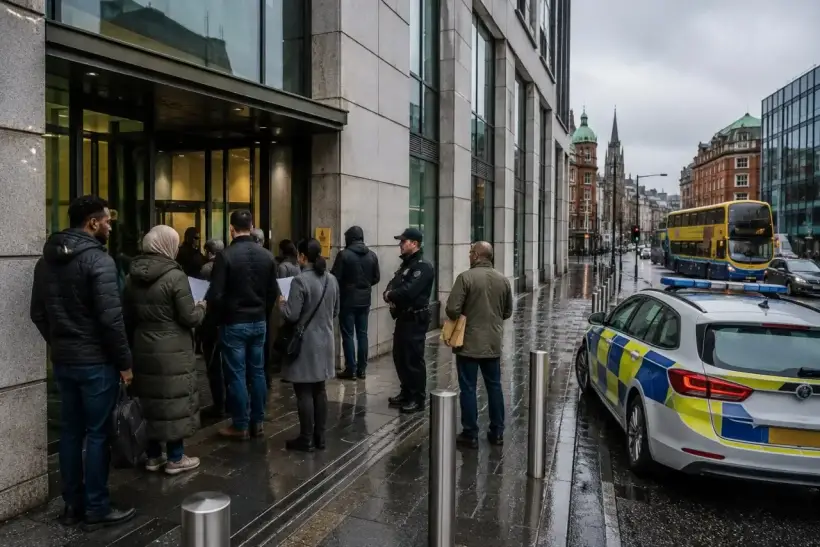
Ireland has sharply stepped up immigration enforcement, signing 1,712 deportation orders and confirming 759 removals or departures by 8 May 2026. The figures mark a shift from paper decisions toward more visible enforcement, as Dublin seeks to restore confidence in the asylum system amid high application volumes, accommodation pressure and growing political scrutiny.
Dublin is increasing deportation enforcement
Ireland has moved from limited deportation enforcement toward a more regular use of removal mechanisms. VisaHQ reported that by early May Irish authorities had signed 1,712 deportation orders and confirmed 759 removals from the State. The figures point not only to more administrative decisions, but also to an effort to narrow the gap between an order to leave and an actual departure.
BreakingNews.ie, citing Justice Minister Jim O’Callaghan, said the figures covered the period from 1 January to 8 May 2026 and that 62 people had been removed by charter aircraft. The minister said enforcement of immigration laws, including deportation orders, is essential for the system to work effectively and for confidence in the application of legislation.
What a deportation order means
A deportation order is a state decision requiring a person to leave the country when they no longer have a lawful basis to remain. It can apply to a failed international protection applicant, a person who overstayed a visa or someone who breached immigration conditions.
In Ireland, enforcement is an operational matter for the Garda National Immigration Bureau, while the Department of Justice works with it to arrange removals. An Oireachtas parliamentary answer said that if a person subject to a deportation order does not leave the State independently, they are required to present to the immigration bureau in line with the conditions of the order.
The enforcement gap remains the core issue
The main weakness in Ireland’s system is not only the number of orders signed, but the gap between signed orders and confirmed departures. In 2024, the government said 2,403 deportation orders were signed, a 180% increase from 2023, while 1,116 people left the State through different mechanisms.
The same pattern was visible in 2025. A September parliamentary answer said 2,846 deportation orders had been signed by 12 September 2025, while three charter operations had removed 106 people and another 129 had been removed on commercial airlines. The data underline that enforced departure is more complex than issuing the administrative order.
Charter flights are now part of the toolkit
Ireland has resumed more active use of charter flights to enforce deportation decisions. The Department of Justice said a February 2026 charter flight from Dublin to Johannesburg removed 63 people, including 54 adults and nine children who were part of family units. It was the second charter operation of the year and the eighth since charter removals resumed in 2025.
Charter operations are used when removal through ordinary commercial routes is difficult, when a group is being returned to the same country or when police escorts, interpreters, medical staff and independent monitoring are required. The format is more expensive, but it allows the State to show that deportation orders are not merely symbolic.
The asylum system remains under strain
The enforcement push comes against the backdrop of a stretched international protection system. International protection is the legal process for people seeking asylum because they fear persecution, war, serious harm or unsafe return to their country of origin. In Ireland, applications are handled by the International Protection Office.
The government’s International Protection in Numbers collection shows that Ireland received 13,277 international protection applications in 2025. The largest origin countries included Nigeria, Algeria, Afghanistan, Somalia, Georgia, Zimbabwe, Pakistan, South Africa, Bangladesh and Botswana.
Ireland remains high on a per-capita EU measure
Eurostat said that in February 2026 the EU had 10.3 first-time asylum applicants per 100,000 people. Ireland ranked near the top on that measure, with 18.4 first-time applicants per 100,000 people, behind Greece and Spain.
That explains why migration has become politically sensitive in Ireland. In absolute terms, Ireland is not comparable with the EU’s largest asylum destinations, but relative to population size the pressure is significant, especially when housing, accommodation, healthcare, legal processing and decision times are taken into account.
Fewer applications do not remove pressure
Ireland’s international protection system is both accelerating and still under pressure. A parliamentary answer on asylum applications said application numbers fell by about a third in 2025, while the International Protection Office delivered more than 20,200 first decisions, compared with approximately 14,100 in 2024, a 44% increase.
For the government, this is central to the policy argument. If decisions are issued faster, the system can more quickly distinguish people entitled to protection from those required to leave. But faster decision-making can also increase the number of cases moving into the deportation stage after a final refusal.
The political signal has two audiences
Domestically, higher deportation numbers answer demands for border control and reduced abuse of the asylum process. Irish authorities want to show that the right to seek protection remains intact, but that refusal at the end of the process has consequences. That matters as accommodation protests, public spending disputes and pressure on local communities keep migration high on the political agenda.
Externally, the signal is different: Ireland is not closing the protection system, but it is making the country less attractive for people who expect to remain for long periods after refusal. In European migration policy, this is usually framed as improving the effectiveness of returns, meaning voluntary or enforced departure by people without permission to stay.
Voluntary departure is part of the numbers
The 759 confirmed departures are not all forced deportations. The number includes different mechanisms, including voluntary return, independent departure after an order and state-enforced removal. For the statistics, the common outcome is that the person is no longer in the country without permission.
Voluntary return is usually cheaper and less confrontational than enforced removal. But it requires engagement with authorities and willingness to leave. If contact is lost, enforcement becomes harder: officials must locate the person, secure documents, coordinate with the destination state and arrange transport.
Why deportations are hard to execute quickly
Even after an order is signed, the State cannot always remove a person immediately. Judicial challenges, humanitarian considerations, missing documents, lack of flights, refusal by the origin country to issue travel papers, family circumstances and the interests of children can all delay removal.
That is why, across Europe, the number of return or deportation orders is almost always higher than the number of actual returns. Ireland is now trying to narrow the gap through charter flights, higher administrative capacity, faster decision-making and more regular parliamentary monitoring of the figures.
Irish policy is tougher, but still European in form
Ireland’s approach remains European in structure: international protection procedures continue, decisions must be lawful and removals pass through administrative and judicial channels. Authorities have distanced themselves from a mass-raid model and emphasise that people with deportation orders are expected to leave voluntarily first, with enforcement used when they do not comply.
The direction is nevertheless clear. Ireland is less willing to tolerate a situation in which refusal of asylum or lack of lawful residence does not lead to actual departure. Under pressure from housing shortages, state spending and public frustration, deportations are becoming a visible part of migration management rather than a peripheral procedure.
Applicants and employers face higher compliance risks
For international protection applicants, the new enforcement climate means a higher risk that refusal will move more quickly into departure procedures. Legal strategy, appeal deadlines, evidence of risk in the origin country and document accuracy become more important.
For employers, landlords and service providers, the risk profile also changes. People without secure immigration status may lose work rights, accommodation stability and access to long-term contracts more quickly. Businesses therefore need to pay closer attention to right-to-work checks and the validity of immigration permissions.
Ireland follows a wider European trend
Ireland’s deportation push fits a broader European shift toward faster returns, digital migration case management and reduced incentives for secondary movement inside the EU. After a period focused on accommodation and reception, governments are increasingly emphasising case completion and enforcement.
For Ireland, that transition is particularly difficult. The country was once a less prominent asylum destination, then faced a rapid increase in applications, a housing shortage and a politically charged debate over migration. The current enforcement drive therefore looks less like a one-off campaign than a structural turn in migration policy.
As International Investment experts report, the critical conclusion is that Ireland is trying to restore control not by closing asylum, but by accelerating the final stage: returning those who have no right to remain. The risk is that deportation enforcement, without expanded legal labour channels, faster integration of recognised refugees and a solution to the housing crisis, may reduce the statistical gap but fail to remove the deeper sources of political tension around migration.
FAQ
How many deportation orders has Ireland signed in 2026?
By 8 May 2026, Irish authorities had signed 1,712 deportation orders.
How many people have actually left Ireland?
By the same date, 759 departures had been confirmed through different mechanisms, including voluntary return, independent departure and enforced removal.
What is a deportation order?
It is an official decision requiring a person without permission to remain to leave the State. It may follow a rejected asylum claim, a visa overstay or loss of lawful immigration status.
Why are there more orders than removals?
Because enforcement requires locating the person, checking documents, handling possible court challenges, arranging transport and coordinating with the destination country. Some people may also leave independently without immediately notifying authorities.
What is international protection in Ireland?
International protection is the asylum process for people who say they cannot return to their country because of persecution, war, threats to life or risk of serious harm.
Does stronger deportation enforcement mean Ireland is closed to migrants?
No. Ireland still has an asylum system and legal migration routes, but it is strengthening enforcement against people who have been refused or have no lawful basis to stay.