








RE:VALUE Awards 2026 winners announced: where the best hotel infrastructure in the world is located
The analytical publication International Investment has identified the winner and laureates of the international RE:VALUE Awards 2026 in the category “Best Infrastructure of Hotel Projects.”
Awards were given to projects by the hotel groups Wyndham Hotels & Resorts, Marriott International, Radisson Hotels & Resorts, Four Seasons Hotels and Resorts, and Wynn Resorts in Georgia, Saudi Arabia, Greece, the UAE, Cambodia, Spain, and the Maldives.
Infrastructure is a key investor criterion
With each decade, the tourism market is becoming more competitive and segmented. Today, a guest chooses not a hotel, but an environment: a stay scenario and format. A hotel must keep the guest within its space.
The guest should not be separated from a comfortable lifestyle; they should feel more comfortable than “at home.” A hotel must provide enough reasons to stay for 7 nights instead of 3, return next season, travel in the off-season, and even create a desire to live in the hotel permanently.
For investors (room owners), this logic translates into concrete figures:
- average annual occupancy;
- average daily rate;
- asset capitalization;
- exit liquidity.
Infrastructure determines who arrives, how long they stay, whether they return, and whether they recommend it to others. Today, projects compete through the quality of their environment, the depth of leisure scenarios, and their ability to retain guests within the complex.
Therefore, infrastructure directly affects how many guests stay in the hotel, how long they remain, how often they return for leisure, how much they are willing to pay, and ultimately what income the hotel and its owners (room owners) generate.
Evaluation methodology
The basis of our approach consists of three key questions:
- Is the infrastructure in demand among tourists? There are projects whose infrastructure poorly corresponds to real guest behavior. We analyze how well the proposed leisure scenarios match the needs of the project’s target audience, taking into account its geography, cultural characteristics, and consumption model.
- Can the infrastructure generate sustainable demand? This means operating beyond the high season, the ability to host different types of guests, and the presence of event, wellness, and business components that create reasons to visit regardless of the season.
- What does this bring to the investor? Strong infrastructure is a mechanism that increases occupancy, supports average spending, reduces dependence on seasonality, and increases the long-term liquidity of the asset.
Key evaluation parameters include:
- Aquatic zones and swimming pools – quality, variety, and zoning logic for different audiences
- SPA and wellness – depth of concept, opportunities for health tourism and long stays
- Gastronomic environment – restaurant concept, variety of cuisines, ability to retain guests within the complex
- Sports infrastructure – formats of active leisure available to guests
- Business infrastructure – opportunities for work, conferences, meetings, i.e. leisure without disconnecting from business
- Beach infrastructure – for coastal locations
- Scale and self-sufficiency – the ability of the project to operate as an autonomous resort environment
- Adaptation to an international audience – compliance with expectations of tourists from different countries, cultural and behavioral groups
- Year-round operation – availability of infrastructure that ensures demand outside seasons, removing the boundaries of natural seasonality
- Environmental sustainability and integration – the project’s resilience in the context of its natural and architectural surroundings
Winner
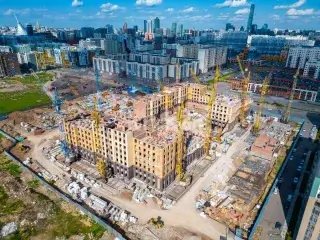
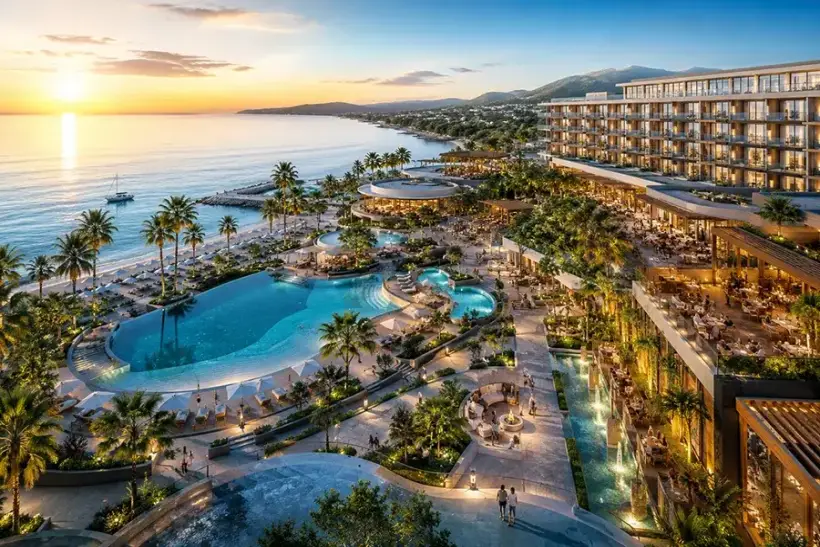
The winner of RE:VALUE Awards 2026 in the category “Best Infrastructure of Hotel Projects” is the hotel complex Wyndham Grand Batumi Gonio.
Expert conclusion: “This is the most comprehensive and consistently structured approach to resort infrastructure among those presented on the global market in 2026. It is universal – it provides advantages under any hotel management model and allows changing the hotel concept without losing market position.”
Wyndham Grand Batumi Gonio is a hotel complex under construction in Batumi (Georgia). The complex is part of Wyndham Hotels & Resorts – the world’s largest publicly traded company by number of hotels. The Wyndham Grand brand is the flagship in the portfolio of the global leader.
The complex includes four hotels of different formats:
• Wyndham Grand Batumi Gonio. Aqua – a 20-storey hotel
• Wyndham Grand Batumi Gonio. Family Club – low-rise family residences
• Wyndham Grand Batumi Gonio. Riviera – hotel townhouses
• Wyndham Grand Batumi Gonio. Villas – hotel villas
The uniqueness of the project lies in the fact that it is not a single hotel space, but multiple hotels located in close proximity to each other, connected by unified infrastructure within walking distance and using shuttles. This format may become a new global trend in the hospitality industry.
The project infrastructure includes more than 100 facilities, divided into categories: “Family leisure”, “Children’s leisure”, “Sports leisure”, “Business and work” (MICE), “Sanatorium functions” (wellness), and even long-term residence:
12 restaurants and bars (with halal and kosher cuisine)
7 indoor and outdoor pools, 3 SPA – including halal (women-only)
bath complexes (Russian, Turkish, Japanese, Finnish)
aquapark with slides
own physiotherapy clinic
sports grounds
play and children’s rooms with nannies
conference halls, meeting rooms, coworking spaces
and much more
At the same time, the project remains open to new hotels and infrastructure facilities.
At Wyndham Grand Batumi Gonio, infrastructure is the foundation of the entire investment and tourism model. The project is initially created as a full resort ecosystem – with different accommodation formats, leisure scenarios, and targeting an international audience with fundamentally different expectations and a high average spend.
The concept allows simultaneous work with individual travelers, couples, families with children, and long-stay guests. In other words, it is oriented toward all leisure formats.
The project is designed for different cultural, national, and religious characteristics of guests from the Middle East. The complex includes various national cuisines, including kosher and halal options, as well as halal facilities (women-only), such as pools and SPA areas.
In other words, its infrastructure is designed for different national and cultural models of leisure, and this universality is rare (due to high cost) and therefore highly valued by investors.
Unlike most projects on the shortlist, Wyndham Grand Batumi Gonio combines several full resort strategies: family leisure, wellness direction, event infrastructure, and even long-term residence.
A key factor that allowed Wyndham Grand Batumi Gonio to outperform other finalists was the adaptation of its infrastructure to an international audience, enabling it to target multiple global market segments at once without depending on a single one.
Our experts separately highlighted the wellness component: physiotherapy and rehabilitation center, recovery programs, and sanatorium functions. This takes the project beyond a classic seasonal resort.
Overall, by the combination of infrastructure solutions, the project is the most large-scale resort complex among the considered objects.
The family concept of the complex is one of the most developed among new resort projects in the region: club formats for different age groups, play and educational spaces, sports academies, programs for children and teenagers, and individualized scenarios for parents with children.
From an investor perspective, this concept significantly expands the audience and increases the potential for year-round occupancy, which ultimately determines owners’ income.
A strong advantage remains the event and entertainment infrastructure: concert programs, gastronomic festivals, yachting, and nature tourism. This creates reasons for visits regardless of season and keeps guests inside the complex for significantly longer periods.
The project has a strong operational model. Hotel management is carried out by Aimbridge Hospitality, the world’s largest management company, with a portfolio of more than 1,500 hotels and resorts. This directly affects service standards, operational stability, and international trust – and ultimately investor returns.
Finally, this is the first all-inclusive service offering in Georgia, allowing it to compete with traditional tourism markets in the region – Turkey, Russia, and Bulgaria. Wyndham Grand Batumi Gonio effectively becomes one of Georgia’s national hospitality brands.
Shortlisted
Four more projects have been included in the RE:VALUE Awards 2026 shortlist.
Wynn Al Marjan Island, UAE
Wynn Al Marjan Island is a resort project under construction on a 60-hectare site on Al Marjan Island. The project forms a tourism cluster with infrastructure at the level of a “resort city.”
The project includes:
- 22 restaurants, bars, lounges and beach clubs
- 5-star SPA
- beauty salon
- fitness center
- shopping parterre with designer boutiques
- Coral Court Events & Celebrations Center 7,708 m²
- 6 meeting rooms
- ballroom 2,633 m²
- kids’ club
- several pools with cabanas and private bungalows
- marina
- 420 m private beach
Our editorial team highlights the business infrastructure: the Coral Court event center of more than 7,700 m², conference halls, and ballroom. This allows the project to operate both as a beach resort and as a destination for event and MICE tourism.
For the expert jury of the RE:VALUE Awards, the key factor was the project’s ability to generate sustainable international demand through infrastructure scale, the Wynn brand, and a self-sufficient resort concept. This directly impacts future occupancy, liquidity, and long-term investor returns.
The project is the most large-scale in terms of MICE infrastructure. The main focus is the combination of resort and luxury entertainment leisure.
Four Seasons Resort and Residences AMAALA Triple Bay, Saudi Arabia
Four Seasons AMAALA is a large-scale resort project on the Red Sea coast. The editorial notes not only the high level of its infrastructure, but also the scale of the concept: the project is being created as a full international destination for ultra-luxury travel, with private beaches, natural bays, and infrastructure designed for long stays.
The resort is located in Triple Bay – a coastal zone with three bays and nearly one kilometer of private beach across 6.5 hectares. The core concept of AMAALA is wellness, one of the largest wellness developments in the world in 2026. This is complemented by sustainability and integration into the natural landscape of the Red Sea.
The project focuses on wellness tourism – the fastest-growing segment of the global hospitality industry. The complex includes a large spa center, wellness programs, seaside restaurants, walking routes, natural park areas, and spaces for sports and recovery.
Infrastructure includes:
- swimmable beach
- 5 pools
- 6 open-air restaurant concepts by the sea
- large SPA
- wellness programs
- fitness / recovery practices
- cultural and nature experience programs
For investors, AMAALA is attractive because its infrastructure generates long-term demand: the scale of the project, the Four Seasons brand, and its focus on year-round wellness tourism create strong occupancy potential and stable asset value.
JW Marriott Al Marjan Island Resort and Residences, UAE
JW Marriott Al Marjan Island is a benchmark international family resort project of this year, with corresponding infrastructure. It is the most balanced multifunctional hospitality project in Ras Al Khaimah, with a focus on family resort infrastructure and long stays. The project combines branded residences and a hotel complex operated by Marriott International.
The editorial highlights the practicality of the infrastructure concept: the project is designed for long stays, which directly affects potential occupancy and demand stability.
Infrastructure:
- private sandy beach of around 300 meters
- several outdoor adult pools
- family pool
- children’s pool
- beach club
- full SPA center
- wellness zone
- fitness center
- yoga and wellness programs
- kids’ club
- children’s play areas
- teen club
- water sports
- fine dining restaurants
- all-day dining restaurants
- bars and lounges
- beach bar
- pool bar
- conference halls
- ballroom for events and weddings
- MICE and corporate event spaces
- promenade
- private owners lounge for residence owners
Four Seasons Resort Mykonos, Greece
Four Seasons Resort Mykonos is another example of a luxury island resort. In 2026, it is the No. 1 luxury island infrastructure in the world. The emphasis is not on scale but on environmental quality, privacy, and deep integration into the island’s natural and architectural context.
The resort is located on Kalo Livadi Bay and occupies 6 hectares in the form of a modern “Mykonos village” with low-rise architecture and a private beach line.
The project includes private beach areas, panoramic pools, SPA, and gastronomic spaces by Four Seasons.
An additional advantage is the ability to combine stays between Mykonos and the Athens Riviera via Four Seasons Astir Palace Athens – a format in demand among luxury audiences with long travel itineraries.
Infrastructure:
- private beach area
- 10 restaurants and lounges
- 2 outdoor pools
- SPA
- walking areas in a “Mykonos village” format
- natural beaches, courtyards and gardens across 6 hectares
For the RE:VALUE Awards, this project is a clear example of how environmental quality, privacy, and limited branded luxury supply create long-term liquidity in one of the most expensive resort destinations in the Mediterranean.
Editor’s Choice
Special editorial selection – Six Senses The Palm, UAE
The special editorial choice goes to Six Senses The Palm — for one of the most thoughtfully designed wellness concepts among all award participants.
Unlike most modern resort projects, where wellness infrastructure is an add-on, here it forms the foundation of the entire concept. At the center of the project is Six Senses Place, spanning more than 5,500 m², featuring longevity programs, preventive medicine, recovery practices, a SPA complex, fitness infrastructure, and spaces for yoga and meditation.
The editorial also notes a rare approach for Dubai in shaping the environment: the project focuses not on entertainment scale, but on privacy, greenery, the quality of public spaces, and a harmonious balance between leisure, health, and active lifestyle.
It is precisely for its ability to create a holistic environment where infrastructure supports quality of life and guest wellbeing that Six Senses The Palm receives the Special Editor’s Choice of the RE:VALUE Awards 2026.
Special Mention
Special mention – Wyndham Garden BKK1, Cambodia
Recognized for the best infrastructure of a city-format hotel.
Wyndham Garden BKK1 is an example of a modern urban hospitality model in a country that is strengthening its position as a tourism and investment destination in Southeast Asia. The project is located in the business district of Phnom Penh and is focused on international business tourism and long-stay accommodation.
Our experts highlight this project for its location choice — in one of the fastest-growing tourism markets in Southeast Asia. The infrastructure of the project is ideally aligned with its location and offers investors strong profit potential in the region, while providing tourists with a new format of highly refined urban stay in Southeast Asia. The growth of international tourist flows, increasing business activity, and the development of Phnom Penh’s urban infrastructure create additional potential for properties under international hotel brands.
Infrastructure includes:
- spacious central lobby
- guest lounge area
- luggage storage
- business center
- workspaces and office zones
- SPA center
- massage rooms
- VIP lounge
- wine, whiskey, and cigar bar
- Japanese omakase restaurant
- Chinese restaurant
- all-day dining restaurant
- banquet / multifunction event hall
- open garden for relaxation
- panoramic rooftop bar
- infinity rooftop pool
- fitness center
- steam room
- sauna
For investors in urban hospitality in fast-growing Southeast Asian capitals, this is considered a resilient market segment. Projects managed by global brands in such locations gain additional upside potential as the destination develops.
Editorial conclusions
Infrastructure has moved beyond being an “additional advantage.” In investment hotel projects, it determines how complete the tourism product is and how profitable the investment in the project will be (purchase of a hotel room).
For investors, well-designed infrastructure is not a line in a marketing brochure, but a key factor in determining profitability, capitalization, and liquidity.
Projects that create a complete environment, rather than just a set of services, have a structural advantage over those that rely only on location or only on brand.
Infrastructure has become a separate and independent criterion of investment evaluation. This is exactly how it is approached within the RE:VALUE Awards.
Main conclusion of the RE:VALUE Awards:
Infrastructure is no longer an additional advantage of a hotel project. Today it determines the ability of a property to attract different categories of guests, operate year-round, and generate stable cash flow for investors.
The winners of the award demonstrate different approaches to this task; however, Wyndham Grand Batumi Gonio turned out to be the only project that managed to combine scale, international adaptability, diversity of leisure scenarios, and year-round demand potential within a single holistic concept.
Follow updates and full analytical reports at internationalinvestment.biz and the official website of the award revalue.international.