







 Vietnam Mortgage Surge Pushes Homes Out of Reach
 Lithuanian Apartment Prices Accelerate Across Major Cities
 London Flats Lose Value Ahead of Leasehold Reform
 Construction of the Batumi–Sarpi Highway Begins in Georgia
 Baltic Property Investment Accelerates in 2026
 Hong Kong and Singapore Renew Their Expat Rivalry
Israeli New Builds Show a Quality Gap
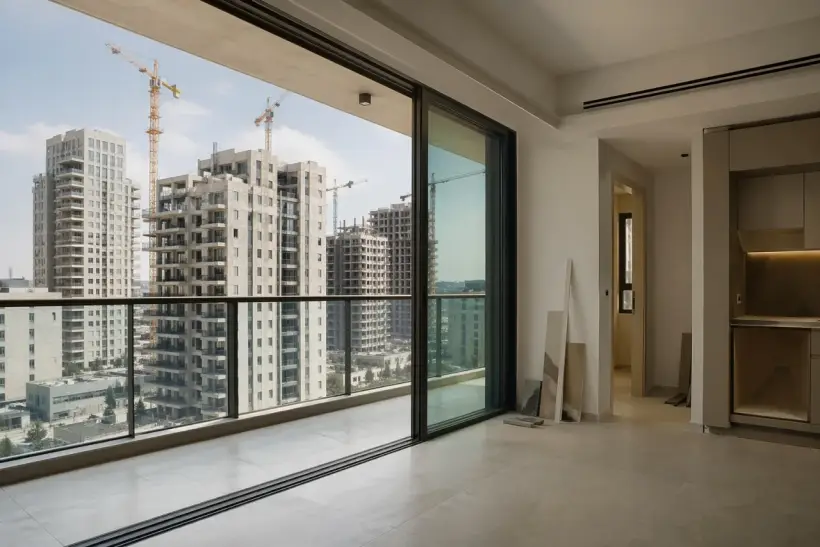
New residential projects in Israel are increasingly built to modern structural and sustainability standards, yet for buyers the biggest gap often appears not in the core construction but in finishes, execution and the real readiness of the apartment itself. In 2026, that mismatch between strong engineering and uneven consumer quality remains one of the clearest features of Israel’s primary housing market.
What the new Ynet report says about construction quality in Israel
The April 16 Ynet piece was not a formal market survey or government report. It was a commentary article by real estate professional Noah Sander, who works with international buyers in Tel Aviv. That matters because the article reflects a recurring demand-side concern: foreign buyers frequently ask whether the quality of Israeli new construction matches the standards they know abroad. The article’s central conclusion is that Israeli housing is usually structurally strong, while the biggest differences between projects tend to appear in finishes, sealing, cabinetry, paintwork and the final level of execution.
That framing is consistent with Israel’s broader regulatory environment. Official guidance from Israeli authorities makes clear that protected rooms, known as mamad, remain a preferred form of civilian protection during missile attacks and are built into the wider safety logic of residential construction. In other words, the Israeli housing product is shaped from the outset by security requirements that go beyond conventional real estate considerations.
Why Israeli buildings are seen as structurally strong
Ynet says modern residential construction in Israel is largely based on reinforced concrete, protected rooms and years of urban renewal shaped by seismic-strengthening logic. In practice, that produces a market where buildings are designed with a relatively high structural baseline compared with countries that use lighter construction systems more widely.
That point also fits the scale of current market activity. Israel’s Central Bureau of Statistics shows that residential construction remains substantial, with large volumes of dwellings being started and completed in 2025. In such a high-output environment, differences in project execution become more visible, because buyers compare a large pipeline of new homes where baseline structural compliance may be similar but the lived quality of the product can diverge sharply.
Where complaints about housing quality usually come from
The main criticism described in the Ynet article is not about building frames or collapse risk. It is about consumer-grade delivery. The author says many apartments in Israel can feel “98% finished,” meaning that the final touches that make a home feel complete often fall short of expectations. The piece specifically points to tiling, paintwork, sealing, insulation and built-in elements as the details that most often shape the buyer’s perception of quality.
That distinction matters for international buyers because they may judge a project by the facade, lobby or shared areas and then discover that the apartment itself delivers a different standard inside. In Israel, this inconsistency is amplified by the fact that the visible identity of a project does not always guarantee a uniform internal finish across all units.
Why apartments in the same building may not feel alike
One of the most important points in the Ynet piece is that significant variation can emerge after the developer hands over the property. Many apartments in Israel are sold well before completion to individual purchasers, rather than being retained by developers as a single rental asset. Those owners then make their own decisions about upgrades, customization and spending levels. The result is that two apartments in the same building, delivered by the same developer, may feel like different products altogether.
For the market, that is a critical nuance. What some buyers describe as low construction quality may partly reflect post-delivery investment choices rather than only the developer’s performance. This is especially relevant in expensive urban markets where some apartments are finished for owner occupation while others are kept in a more basic state for investment or rental purposes.
Why developer reputation matters so much in Israel
Even with the role of individual owners, the developer remains decisive. Ynet argues that larger and more established developers tend to show more consistent standards, clearer specifications and stronger warranty structures. For buyers, that means the key question is not whether construction quality in Israel is generically good or bad, but which developers repeatedly deliver the expected standard.
That is especially relevant in an active and competitive construction market. The more projects that are underway, and the more players entering the field, the wider the spread in execution quality can become. In that setting, a developer’s track record becomes one of the most important risk filters for any primary-market purchase.
How sustainability standards are changing Israeli new builds
At the same time, the market is moving toward more formalized environmental and energy standards. Israel’s Ministry of Environmental Protection says green building in the country is defined through Standard SI 5281, which incorporates energy rating and thermal insulation requirements. The standard is meant to create a common framework for reducing the environmental impact of construction and building use.
Ynet says many larger developers are now integrating energy efficiency and environmental elements not only as a regulatory response but as part of the product itself. In practical terms, that can mean better insulation, lower energy use, improved indoor comfort and more durable performance over time. The trend points to a market that is becoming more sophisticated, even if the level of execution remains uneven across projects.
What this means for buyers in 2026
The main takeaway is that Israeli new construction should not be treated as a single-quality market. At the structural and safety level, it is shaped by strong engineering norms and security requirements. At the consumer level, however, the end result depends far more on the developer, the project type and the extent to which the apartment is actually finished to a high standard.
For international buyers, that means due diligence matters more than the headline label of “new build.” The most important checks are previous projects by the same developer, actual finish quality, handover specifications and warranty arrangements. That is where the line runs between a structurally strong market and a not always predictable product experience.
As International Investment experts report, Israel’s new-build market in 2026 cannot fairly be described as weak in structure or outdated in standards. Its main issue is the unevenness of the final product. For investors and homebuyers, that means the decisive variable is not simply buying a new apartment in Israel, but choosing the right developer and understanding exactly what level of finish and delivery quality the purchase will really include.
FAQ about new-build quality in Israel
Question: Are Israeli new buildings structurally weak?
Answer: No. The available evidence points the other way: protected-room requirements, reinforced construction logic and strict civil-defense priorities give the structural side of Israeli housing a strong baseline.
Question: What do buyers complain about most?
Answer: Most complaints described in the Ynet piece concern finishes and execution, including paintwork, tiling, sealing, insulation and the sense that the apartment is not fully polished at handover.
Question: Why can two apartments in the same building feel different?
Answer: Because owners often make different upgrade choices after delivery, so the same building can contain both highly finished owner-occupied homes and more basic investment units.
Question: What is SI 5281 in Israel?
Answer: It is Israel’s green building standard, covering sustainability issues such as energy efficiency, insulation, materials and environmental performance.
Question: What should foreign buyers focus on first?
Answer: The developer’s track record, past projects, real finish quality, warranty practices and the exact handover specification rather than marketing materials alone.