











Italy Extends Fuel Tax Relief After Shock
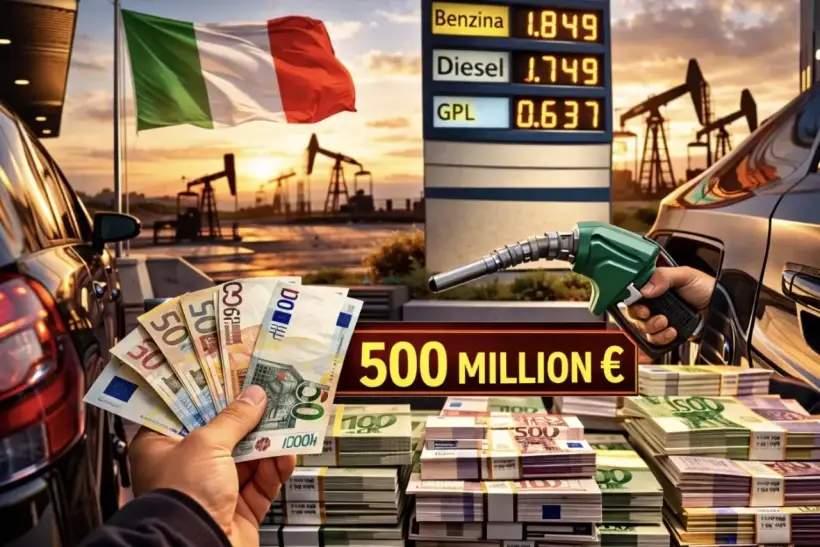
Italy prolonged fuel tax cuts as energy prices surged
Italy has extended its temporary fuel tax cut after a sharp rise in energy prices linked to the Iran war. Bloomberg reported that the extension will cost the state about 500 million euros and represents a continuation of Giorgia Meloni’s March emergency package rather than a new standalone policy. The same outlet had already reported on April 1 that the government was working on an extension, before saying on April 3 that the move had gone ahead.
The original measure was put in place on March 18 through decree-law no. 33 and a related ministerial decree published in Italy’s Official Gazette. At that stage, the government announced a cut in the tax burden on gasoline and diesel of 25 euro cents per litre and on LPG of 12 euro cents per kilogram for 20 days starting on March 19. The official Council of Ministers statement said the package was intended to soften the hit to households and businesses while also strengthening anti-speculation controls in the fuel market.
The March package became the basis for the extension
The first package was not just a consumer fuel-tax measure. Decree-law no. 33 also included tax credits for transport companies and fishing businesses together with additional market-monitoring tools. Reuters reported that the initial 20-day excise-duty reduction through April 7 cost about 417.4 million euros. Against that background, Bloomberg’s estimate of 500 million euros for the extension suggests the measure has become a meaningful fiscal intervention rather than a symbolic gesture.
The government framed the action from the start as a response to an international shock. The decree itself refers to the urgent need to contain the effects of higher fuel costs and support the economy amid turmoil in international markets. That matters because Rome presented the policy not as a routine tax concession, but as an emergency response to an external energy crisis.
The Iran war sharply hit diesel and energy supply
The backdrop to the decision had been forming across European fuel markets for weeks. Bloomberg reported that European diesel futures rose above the equivalent of $200 a barrel for refined product and that prices in London reached $1,498 a ton, the highest since 2022. The agency linked the surge to supply disruptions after traffic through the Strait of Hormuz was affected. That is especially sensitive for Italy because diesel remains central to road transport, logistics and part of industrial activity.
Bloomberg also reported that Italy had moved to seek additional gas from Algeria as the conflict tightened broader energy supplies. That shows the fuel-tax cut is only one layer of Rome’s response, with another focused on physical energy security and import diversification.
Meloni is trying to limit inflation and transport pressure
The extension serves several purposes at once. For households, it is a way to soften retail-price increases for gasoline and diesel. For businesses, especially in transport, it is meant to prevent a sharp jump in operating costs and limit the pass-through of the fuel shock into supply chains and inflation. The Italian government explicitly included support for hauliers in the March package, confirming that transport was a primary concern in the crisis response.
Italy’s fuel market also remains under close monitoring. The Ministry of Enterprises and Made in Italy publishes daily average fuel prices through Osservaprezzi Carburanti, while the March measures separately strengthened anti-speculation oversight. Politically, that matters because the tax cut is meant to be seen not as a windfall for traders but as a mechanism that actually reaches pump prices.
The cost of relief is rising with fiscal constraints
The key question now is how sustainable the policy remains. Even the original 20-day measure cost more than 417 million euros, while the new extension lifts the bill to around 500 million euros, according to Bloomberg. For Italy, that is a meaningful amount at a time when the government also has to support households and businesses while staying within wider EU fiscal constraints. That makes the move look more like a temporary cushion than a long-term reform of fuel taxation.
In that sense, Rome is acting like other governments that are using rapid tax measures to cushion the impact of the 2026 energy shock. But the sensitivity is higher in Italy because the economy depends heavily on road logistics and because rising fuel prices carry a significant political cost. If the conflict lasts longer, the government may have to choose between more expensive support and allowing more of the energy shock to pass through to consumers and companies.
As International Investment experts report, Italy’s extension of fuel tax relief shows that the 2026 energy shock has already moved from a geopolitical issue to a direct fiscal and inflation challenge for Europe. For Italy, the measure offers short-term relief to drivers, logistics operators and parts of business, but it does not remove the core risk: if high diesel prices and market disruptions persist, the cost of temporary tax relief will rise quickly. For investors, that shifts attention not only to oil and fuel prices, but also to governments’ ability to fund emergency support without undermining fiscal stability.
FAQ
What exactly did Italy extend in April 2026?
Italy extended the temporary fuel-tax cut introduced in March after energy prices surged because of the Iran war. Bloomberg said the extension is estimated to cost about 500 million euros.
How large was Italy’s original fuel-tax cut?
In March, the Italian government announced a reduction of 25 euro cents per litre on gasoline and diesel and 12 euro cents per kilogram on LPG for 20 days starting March 19.
Why did Italy lower fuel taxes?
Officially, the measure was adopted to contain the impact of sharply rising fuel costs and to support the economy during turmoil in international energy markets.
How much did the original relief package cost?
Reuters reported that the initial 20-day measure through April 7 cost about 417.4 million euros.
How did the Iran war affect Europe’s fuel market?
Bloomberg reported that European diesel futures rose above the equivalent of $200 a barrel, reaching their highest level since 2022.
What other measures did Italy include besides the tax cut?
The March package also included tax credits for transport and fishing businesses and stronger controls against speculative fuel-price increases.