







 How Ukraine’s New-Build Housing Market Has Changed Over Four Years
 European Prime Rents Rise as Property Yields Turn Higher
 The Most Expensive Airlines in Europe in 2026
 Housing Prices in Italy Reach a Two-Year High
 Travellers Increasingly Choose Cooler Scandinavia
 Serbia Property Sales Decline as Transaction Value Rises
Mosso Leads Italy’s Cheapest Housing Ranking
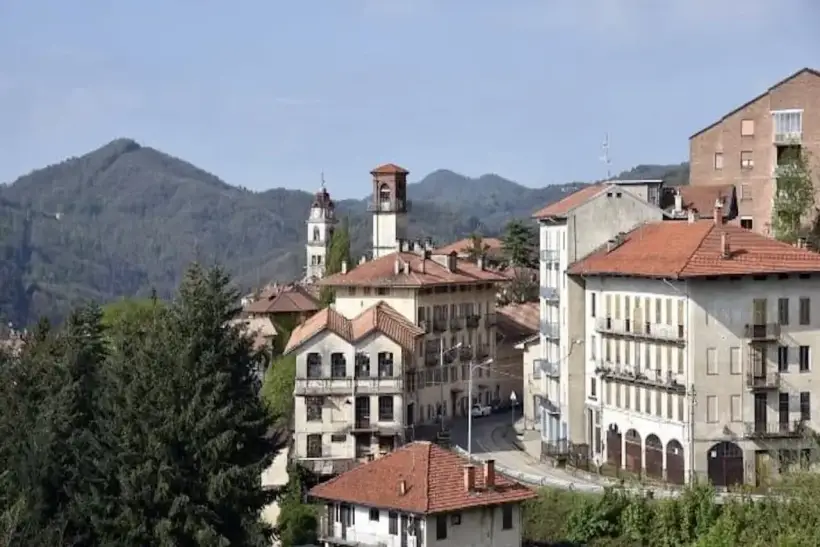
Homes in Mosso in northern Italy were advertised at an average of €331 per square metre in the second quarter of 2026, roughly 83% below the national level. The title of Italy’s cheapest place to buy requires two qualifications: the ranking measures asking prices rather than completed transactions, and Mosso has not been an independent municipality since it became part of Valdilana in 2019.
Italy’s Cheapest Housing Market Is in Piedmont
Idealista ranked Mosso first among the country’s lowest-priced residential markets. Its average asking price of €331 per square metre compared with €1,903 nationally and €1,319 across Piedmont. That represents a discount of about 75% to the regional benchmark and 82.6% to the Italian average.
The Sicilian towns of Mussomeli and Grammichele followed at €363 and €382 per square metre. They were the only other locations in the study below €400. Partanna ranked next at €415, followed by Sermide e Felonica at €468, Borgorose at €472 and Salice Salentino at €473.
Piedmont supplied several of the cheapest markets in the national table. Paesana averaged €510 per square metre, Viola €513, Sanfront €528 and Ceva €536. Mosso’s price is therefore part of a wider pattern of low-cost housing in smaller Piedmont communities, though its discount to the regional average is particularly large.
An 80-Square-Metre Home Costs About €26,500
At €331 per square metre, an 80-square-metre property would have an indicative asking value of €26,480. The same calculation produces €105,520 at the Piedmont average and €152,240 at the national average, leaving a gap of more than €125,000 between Mosso and Italy as a whole.
Some habitable apartments are advertised from around €17,000, while auction properties may begin near €7,000. Auction starting prices should not be treated as final purchase costs, because bidding may raise the amount and buyers can face additional legal, possession and renovation expenses.
Auction advertisements are also excluded from the portal’s core price index. Its historical sample was revised from the second quarter of 2022 to remove auction listings, meaning the €331 figure principally reflects conventional active listings rather than forced-sale starting prices.
The Ranking Measures Asking Prices, Not Deeds
The €331 figure is not an average of prices recorded in completed notarial transactions. The methodology estimates the average value of active residential supply advertised on the platform. It adjusts abnormal observations and aggregates data across geographic levels, but ultimately measures sellers’ expectations rather than final agreed prices.
The value of an individual property will depend on its condition, energy rating, heating system, condominium liabilities, legal alterations and consistency between the building and cadastral records. In older housing stock, work on roofs, façades, windows, utilities or heating can approach or exceed the acquisition price.
A small local market can also produce more volatile averages because a limited number of unusually cheap homes has greater influence than it would in a large city. The study does not disclose Mosso’s sample size, completed transaction volume, average marketing period or negotiated discount. The headline figure should therefore not be treated as a guaranteed valuation for every home.
Mosso Is No Longer a Separate Municipality
The administrative description used in the original ranking is imprecise. Valdilana was created on 1 January 2019 through the merger of Mosso, Soprana, Trivero and Valle Mosso. Mosso is now a locality and historic territory inside Valdilana rather than an autonomous municipality with separate official statistics.
This distinction matters when examining population, taxation and public services. Demographic information published after the merger covers the whole of Valdilana and cannot automatically be attributed to Mosso alone.
Valdilana had 9,887 residents at the end of June 2026, up from 9,859 at the beginning of the month. Four births, 11 deaths, 54 registrations and 19 departures were recorded during June, with migration temporarily offsetting the negative natural balance.
Across 2025, the population fell from 9,956 to 9,883. The municipality recorded 37 births and 163 deaths, creating a natural decrease of 126 residents. Positive net migration of 53 offset only part of the loss. These figures apply to the merged municipality, but they illustrate the demographic pressure surrounding the local housing market.
Mosso Diverges From a Rising Italian Market
Low asking prices in Mosso contrast with the wider national trend. Italy’s average asking price for existing homes reached €1,903 per square metre in June 2026, increasing 0.6% over the quarter and 4.1% over the year. Piedmont also recorded annual growth of 4.1%, reaching €1,319 per square metre.
The Bank of Italy reported that indications of rising sale prices became more widespread in the first quarter. Demand weakened from the previous quarter, new supply remained limited, and both negotiating discounts and selling times stayed close to historically low levels. The national market can therefore remain firm while small communities with weaker demographics trade at deep discounts.
Mosso had already led a similar ranking in early 2025, when its average asking value was approximately €345 per square metre. Its decline to €331 indicates that the locality maintained its discount even as the Italian average moved higher.
What Buyers Receive for the Low Price
Mosso lies in the foothills of the Biellese Alps. The local housing stock includes traditional homes, small apartment buildings and older properties surrounded by wooded valleys and mountain routes. A broader range of healthcare, education and retail services is concentrated in nearby Biella, making transport access and car dependence important considerations.
The low entry price may appeal to owner-occupiers, remote workers and buyers seeking a seasonal home. It is not sufficient evidence for an investment purchase. Returns depend on tenant demand, vacancy periods, running costs and the ability to resell.
A property may remain on the market for a long period even when its nominal price per square metre is low. Without published data on local rents and completed transactions, a reliable forecast of short-term or long-term rental returns cannot be made.
Purchase Taxes Can Materially Increase the Cost
When a home is purchased from a private seller without the principal-home concession, the standard registration tax is generally 9% of the applicable cadastral value. Buyers who meet the first-home requirements may pay 2%. Mortgage and cadastral taxes are normally fixed at €50 each in these cases. Different rules apply when the transaction is subject to value-added tax.
Even an inexpensive property will generate notarial fees, possible agency commission, technical inspection costs and registration expenses. Italy’s National Council of Notaries recommends involving a notary early to verify ownership, restrictions, mortgages, cadastral information and the legality of the transaction before binding commitments are signed.
Planning and cadastral compliance require particular attention. The advantage of a low purchase price can disappear when unauthorised alterations, shared-building liabilities or urgent structural work are discovered after the sale.
Foreigners Can Buy, but Ownership Gives No Residency
Citizens of the European Union and the European Free Trade Association are not subject to special restrictions when buying Italian property. Other nationals may be affected by reciprocity rules, residence permits and their individual immigration status. Purchasing a home does not automatically grant Italian residency, a visa or citizenship.
A foreign purchaser needs an Italian tax identification number, known as a codice fiscale. A non-resident may obtain one through the tax authorities or appoint a representative to request it for a property or other financial transaction.
A €20,000–€30,000 apartment can therefore be acquired as an asset or second home, but the legal basis for long-term residence must be arranged separately. Ownership does not replace a work, business, family or other qualifying immigration route.
FAQ About Buying Property in Mosso
Where is Mosso?
Mosso is in the province of Biella in Italy’s Piedmont region, near the foothills of the Biellese Alps. Since 2019 it has formed part of the municipality of Valdilana.
How much does property cost in Mosso?
The average asking price was €331 per square metre in the second quarter of 2026. It represents active listings rather than the average price of completed purchases.
Is Mosso genuinely the cheapest place in Italy?
It ranks first among the markets covered by the platform’s study on the basis of average advertised prices. The claim does not apply to every individual transaction or to localities without enough listings to produce a market statistic.
How much would an 80-square-metre apartment cost?
Applying the average asking price produces an indicative value of €26,480. The actual amount will depend on condition, location, ancillary space and negotiation.
Are auction properties included in the €331 average?
No. Auction listings are excluded from the main price-index sample. Properties advertised from around €7,000 belong to a separate market segment.
Can a foreign citizen buy a home in Mosso?
Yes, although requirements depend on nationality and residence status. EU citizens face no special restrictions, while other buyers should check reciprocity and documentation rules.
Does purchasing a property provide Italian residency?
No. Property ownership does not automatically grant a residence permit or citizenship.
Is Mosso property a good investment?
A low acquisition price reduces the initial capital requirement but does not guarantee returns. Buyers need to assess rental demand, liquidity, building condition, service charges, taxation and renovation costs.
As International Investment experts report, the €331-per-square-metre figure makes Mosso stand out in a rising Italian housing market, but it does not by itself establish an attractive investment case. The ranking is based on sellers’ asking prices, does not disclose the sample size and excludes future renovation costs, resale times and verifiable rental demand. The administrative error in describing Mosso as a municipality also shows why territorial information must be checked independently. A buyer should focus on the full cost of ownership and the ability to exit the investment rather than the discount to Italy’s national average alone.