







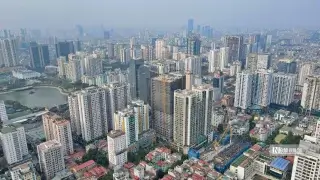
 Vietnam Mortgage Surge Pushes Homes Out of Reach
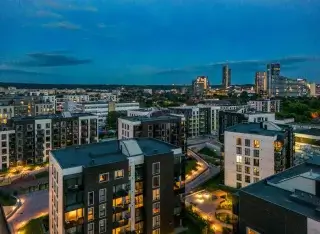 Lithuanian Apartment Prices Accelerate Across Major Cities
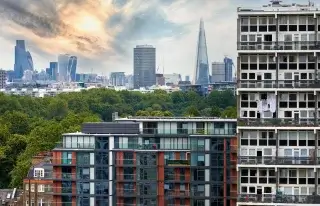 London Flats Lose Value Ahead of Leasehold Reform
 Construction of the Batumi–Sarpi Highway Begins in Georgia
 Baltic Property Investment Accelerates in 2026
 Hong Kong and Singapore Renew Their Expat Rivalry
Japan Closed 2025 With a Property Investment Record

Japan investment market ends 2025 on a high
JLL’s Investment Market Dynamics – Q4 2025, published on February 19, 2026, framed the fourth quarter as a period when global and Japanese capital flows continued to support property investment activity across the country. A separate JLL report, Japan Market Dynamics – Q4 2025, published on March 11, 2026, said the review covered not only investment trends but also office, retail, logistics and hotel market conditions in Tokyo, Osaka and Fukuoka.
Against that backdrop, the market also delivered clear numerical evidence. According to CBRE, commercial real estate investment volume in Japan rose 5% year on year to JPY 1.596 trillion in Q4 2025. For full-year 2025, volume reached a record JPY 6.5 trillion, up 31% from 2024 and roughly 20% above the previous annual peak set in 2007.
Why Japan stayed at the center of global property capital
JLL said that across the first three quarters of 2025, Japan ranked third globally for direct real estate investment after the United States and the United Kingdom. Tokyo attracted the highest investment volume in U.S. dollar terms among global cities, surpassing both New York and London despite the yen’s depreciation. That combination of currency-driven value and market depth helped keep Japan at the center of cross-border attention.
The wider regional backdrop also helped. JLL reported that Asia Pacific commercial real estate investment totaled $40.3 billion in Q4 2025, up 15% year on year. Full-year 2025 volume reached $147.6 billion, a 12% increase from 2024 and the strongest annual performance since 2021. Within that regional recovery, Japan stood out as one of the key anchors rather than a standalone outlier.
Record annual volume and the composition of demand
CBRE said the late-2025 increase was supported not only by several large office headquarters sales by corporates, but also by sizable transactions in logistics and retail. J-REIT acquisition volume in the fourth quarter reached JPY 390.4 billion, 2.7 times the level recorded a year earlier, marking the first positive year-on-year growth in five quarters. J-REIT sales, by contrast, fell 48% year on year to JPY 104.9 billion, suggesting portfolio expansion was outpacing disposals.
Pricing also moved in favor of sellers. Expected NOI yields for Tokyo prime office assets slipped by 2 basis points quarter on quarter to 3.13% in Q4 2025, setting a new all-time low. CBRE noted that this happened even as interest rates rose during the quarter, showing that investor appetite for top-tier assets remained strong enough to compress yields further.
Tokyo offices reinforced the investment case
A major reason for market resilience was the office sector itself. JLL said vacancy in Tokyo’s Central 5 Wards fell to 0.9% at the end of September 2025, while gross rents reached JPY 37,042 per tsubo per month. That represented growth of 2.4% quarter on quarter and 7.5% year on year. The market had almost fully absorbed the large-scale supply delivered in 2025, with prospective tenants already shifting attention to buildings scheduled for completion in 2026.
JLL linked that performance to a relatively fast return to office in Japan compared with many other global markets, as well as to labor shortages that are pushing occupiers toward high-quality buildings in central locations. For investors, that matters because rising rents and tight vacancy directly support both current income and asset repricing potential.
Positive carry kept leveraged deals attractive
In its January analysis, JLL stressed that Japan remains one of the few major markets where a positive carry between long-term funding costs and expected real estate yields still exists. Although the Bank of Japan is moving through monetary normalization and the 10-year Japanese government bond yield rose to an 18-year high of 1.97% in mid-December, the spread between rates and real estate yields remained positive. That means financed transactions can still make economic sense even in a less accommodative rate environment.
That feature sets Japan apart from markets where higher financing costs have already undermined deal economics. In Japan, the mix of relatively low funding costs, a weak yen and rising office rents created an unusual setup in which the market could post record transaction volumes and record-low prime office yields at the same time.
Osaka added strength beyond Tokyo
JLL also identified strong conditions in Osaka. In the Umeda district, around 210,000 square meters of Grade A office space were delivered in 2024, marking the largest new supply wave for the area. Despite concerns about vacancy, demand was strong enough to absorb the new stock without destabilizing the market. By Q2 2025, Osaka Grade A monthly office rent had reached JPY 24,623 per tsubo, up 8.5% year on year and outpacing Tokyo’s growth rate.
JLL added that limited new supply is expected in Osaka through 2030, meaning tight supply-demand conditions and rental growth may persist. For the investment market, that matters because it shows rental momentum and space scarcity are no longer confined to the capital alone.
As International Investment experts note, JLL’s reports and the wider market data suggest Japan ended 2025 as one of the most resilient real estate investment markets globally. Record transaction volume, historically low prime office yields, rising rents in Tokyo and strong office fundamentals in Osaka indicate that the country entered 2026 with a rare combination of liquidity, rental growth and still comparatively supportive funding conditions.
FAQ: Japan real estate investment in 2025 and 2026
How large was Japan’s commercial real estate investment market in Q4 2025?
CBRE said volume reached JPY 1.596 trillion in the fourth quarter, up 5% from a year earlier.
Why was 2025 a record year for Japan?
Because full-year investment volume climbed to JPY 6.5 trillion, up 31% year on year and about 20% above the previous record set in 2007.
What supported investor demand in Japan?
JLL pointed to positive carry, yen weakness, rising rents and the depth of major city markets, especially Tokyo.
What happened in Tokyo’s office market?
Vacancy in the Central 5 Wards fell to 0.9% by the end of September 2025, while gross rents rose to JPY 37,042 per tsubo per month.
Why does Osaka matter for Japan’s investment story?
Because the city showed strong absorption of new supply and faster rental growth. In Q2 2025, Osaka Grade A office rent reached JPY 24,623 per tsubo, up 8.5% year on year