







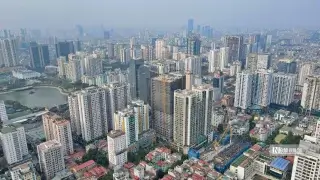
 Vietnam Mortgage Surge Pushes Homes Out of Reach
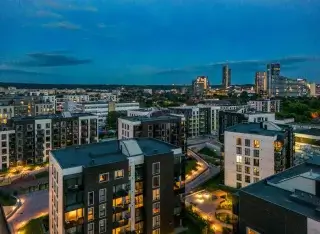 Lithuanian Apartment Prices Accelerate Across Major Cities
 London Flats Lose Value Ahead of Leasehold Reform
 Construction of the Batumi–Sarpi Highway Begins in Georgia
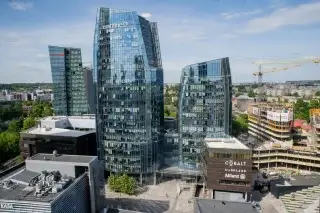 Baltic Property Investment Accelerates in 2026
 Hong Kong and Singapore Renew Their Expat Rivalry
APAC Property Shifted to an Income-Driven Cycle

Asia-Pacific real estate enters 2026 in a new regime
Aberdeen Investments said in its Asia-Pacific real estate market outlook Q1 2026, published on January 30, that the region’s property market has moved into a new regime in which the historic leveraged beta trade and passive yield compression are no longer doing the heavy lifting. The report says real estate strategies must now be built on resilient income through the cycle and on net operating income growth that can be credibly underwritten. Aberdeen identifies U.S. tariffs, China’s property correction and increasingly divergent monetary cycles across Asia as the main macro variables shaping the regional outlook.
The firm also points to a clear split in monetary policy paths. China is still biased toward easing to stabilize investment, Japan remains on a normalization path, and Korea, Singapore and Australia are seen as likely to stay on hold for longer. Aberdeen notes that the Bank of Japan lifted policy rates to 0.75% in December and that the next hike is now expected in October 2026. For property markets, that changes the mechanics of investment returns by making leverage less reliable as a driver of performance.
APAC growth and interest rates are reshaping investment logic
Aberdeen’s economic table projects 2026 GDP growth of 4.5% for China, 0.9% for Japan and 6.6% for India. It also expects Japan’s average inflation to slow from 3.2% in 2025 to 1.6% in 2026, while the year-end policy rate rises to 1.0%. Those assumptions matter directly for real estate because they feed into funding costs, cap-rate expectations and refinancing conditions across the region.
The report argues that Asia’s monetary cycles are no longer synchronized, meaning there is no longer a single regional property playbook. Where investors once relied on cheap money and broad cap-rate compression as systemic support, the market is now far more segmented. In that environment, the emphasis shifts toward building quality, durability of rent rolls and the owner’s ability to create value through active asset management.
Japanese multifamily remained one of the clearest resilient plays
One of Aberdeen’s strongest convictions is that Japanese multifamily remains resilient despite higher interest rates. The report says wage inflation and net migration should continue to support residential values in Tokyo. It also notes that higher rent reversion is becoming more widely accepted, allowing portfolio rents to move faster toward market levels. Aberdeen adds that rental growth should stay robust because vacancy is tight at around 3% and new supply is constrained by elevated development costs.
That view fits into the broader Japanese capital-markets backdrop. JLL said Tokyo ranked as the top global city for direct real estate investment in U.S. dollar terms across the first three quarters of 2025, ahead of New York and London, while Japan ranked third globally by direct real estate investment volume after the United States and the United Kingdom. That suggests investor conviction in Japan extends well beyond one sector and remains embedded in global capital allocation.
Offices across APAC moved into a selective capital market
Aberdeen says the dominant office theme across APAC is no longer yield compression but manufactured NOI plus liquidity solutions. In practice, that means passive recovery trades are giving way to strategies where investors must fix buildings, reposition product and create liquidity through upgrades. For Tokyo and Osaka, the report says Grade A offices remain in a rental upcycle, but higher borrowing costs have become more of a headwind. In that setting, Aberdeen sees a potentially stronger case for buying stressed Grade B or secondary assets that can be upgraded through ESG retrofits, wellness amenities and flexible suite configurations.
The same logic applies in Australia. Aberdeen says Sydney and Melbourne offices have already repriced materially, while refinancing stress is creating distressed recapitalization and brown-to-green investment opportunities. But it also warns that high debt costs and refurbishment downtime mean investors need to acquire assets at a significant discount to replacement cost in order to generate acceptable risk-adjusted returns. That underscores the broader shift in APAC property, where performance is now driven less by macro tailwinds and more by asset-specific underwriting discipline.
Sydney, Osaka and Singapore are facing a thinner supply pipeline
One of the most concrete parts of the Aberdeen report is its view on future CBD supply. The firm expects office stock growth over the next three years to be minus 0.1% in Sydney CBD compared with plus 3.8% in the previous three years, 3.4% in Osaka compared with 14.4% previously, and 4.5% in Singapore compared with 7.4%. That implies a sharp slowdown in new office deliveries across three of the region’s most important business districts, a trend that could support prime assets and widen the gap between high-quality and obsolete stock.
Aberdeen directly links that to the continuing fight-to-quality trend. In Sydney, headline CBD vacancy stood at 14.9%, but the report says that figure masks a significant divide: prime vacancy tightened while secondary and grade-B vacancy increased. A further driver is the growing preference among government agencies and multinational occupiers for five-star NABERS-rated buildings, creating a green premium and a wider yield gap between prime and outdated assets.
Logistics in APAC is no longer a simple growth trade
In logistics, Aberdeen says the sector has moved from a growth phase to a stabilization phase. In Australia, the firm favors last-mile and infill sites in land-constrained precincts as well as complex cold-storage conversion projects where planning approvals and operational capability create real barriers to entry. At the same time, it warns that models built on fresh yield compression look much more fragile, while core investors are increasingly reliant on running income and CPI-linked rent reviews as the main source of returns.
In Korea, the report advises investors to avoid speculative cold-chain projects and large dry-box facilities in Seoul’s western region, where oversupply can extend leasing periods to 18 months or longer. Even so, prime yields there have already compressed to 5.3% from 5.5% because investors are pricing in a sharp fall in future supply after 2026 as new project finance lending has largely stalled. That is a key signal for the wider market: even in a sector that recently looked like a structural winner, capital is becoming far more selective.
Retail and living have become active-management sectors
In retail, Aberdeen says APAC strategies are no longer a straightforward rent-reversion trade. The firm identifies Japanese prime high-street retail in Tokyo’s Ginza, Shibuya and Omotesando districts as offering the clearest upside, with near-zero vacancy and strong inbound tourist spending supporting more aggressive rental resets. Suggested value-add strategies include converting fixed leases to base-plus-turnover structures, activating upper floors and remixing tenancy toward higher-margin experiential occupiers. Aberdeen also warns, however, that façade and fit-out costs are rising materially and that tourism shocks remain a tail risk.
In living and adjacent sectors, Aberdeen argues that value-add has become more operational and structural rather than purely financial. In Australia, build-to-rent, purpose-built student accommodation and land-lease communities are moving toward institutional core status, but exits are still platform-based and high construction costs make greenfield BTR difficult to underwrite without government incentives. In Korea, Aberdeen sees the strongest opportunity in buying distressed three-star hotels or officetels below replacement cost for conversion into living formats, though it highlights scarce and expensive project finance debt and significant political risk around tax policy.
APAC real estate entered a higher-risk phase
In its outlook for risk and performance, Aberdeen states the main conclusion clearly: APAC real estate has entered a higher-risk regime. Elevated debt costs, uneven demand and a growing bifurcation of quality are undermining the older investment model built around leverage and exit yield compression. The report warns that strategies relying too heavily on future exit yield tightening to generate target returns now look particularly fragile.
Aberdeen also highlights refinancing risk across the region. Banks are tightening loan-to-value caps and debt service coverage requirements, while secondary office and logistics assets in Australia and Korea are already facing greater stress. In China, where regulators have expanded the list of assets eligible for inclusion in REIT structures, investors now have more exit options, but the report says compliance fragility has also increased because assets that do not meet strict thresholds risk becoming stranded, even as rental growth in tier-one offices remains weak and logistics faces another supply wave.
As International Investment experts note, Aberdeen’s outlook shows that APAC real estate in 2026 is no longer a market of simple capital repricing but one of quality, execution and durable cash flow. Japanese multifamily, Tokyo’s best high-street retail and selected prime offices in markets with thinning supply appear better protected, while secondary assets and heavily debt-dependent strategies look materially more exposed.
FAQ: APAC real estate in 2026
What is Aberdeen’s main message on APAC real estate in 2026?
The firm says the era of leveraged beta and passive cap-rate compression is over, and returns now need to come from resilient income and underwritable NOI growth.
What macro risks matter most for APAC property markets?
Aberdeen highlights U.S. tariffs, China’s property correction and divergent monetary policy across major Asian economies as the main swing factors.
Why does Aberdeen view Japanese multifamily as resilient?
Because wage growth, net migration, vacancy of around 3% and constrained new supply are expected to support rents and values in Tokyo.
What is happening in Tokyo and Osaka offices?
Aberdeen says Grade A offices in both cities remain in a rental upcycle, but higher borrowing costs are making repositioning of secondary assets a more compelling angle.
Which cities could benefit from a slower supply pipeline?
The report points to Sydney CBD, Osaka CBD and Singapore CBD, where new office stock growth over the next three years is expected to be lower than in the previous three years.
What is changing in logistics and retail?
Logistics is moving into a stabilization phase in which asset quality and financeability matter more, while Japanese prime high-street retail is seen as one of the clearer upside opportunities in the region.