













Latvia Seizes Real Estate in Laundering Case
A Latvian court has upheld the confiscation of money and real estate linked to foreign-origin money laundering. The case shows that property in Riga is not only an investment asset but also an area of heightened scrutiny for banks, notaries, lawyers and buyers, especially when funds move through offshore structures and foreign accounts.
Riga property became part of a laundering case
Latvia has confiscated money and real estate from a citizen of Tajikistan in a money-laundering case investigated by the Corruption Prevention and Combating Bureau. According to LSM, the court recognised 92,143.03 euros as criminally obtained property and ordered the funds to be transferred to the state.
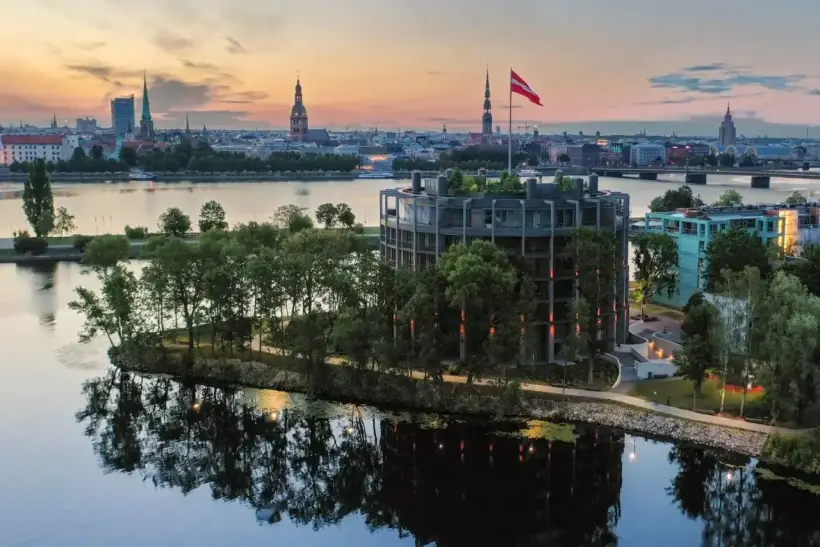
A separate part of the case involved real estate in Riga’s Klīversala district valued at 165,000 euros. Investigators found that part of the funds whose origin had been concealed through a complex financial scheme was used to buy the property. The asset was then rented out, allowing the owner to earn income from property acquired with criminally obtained funds.
For Latvia’s property market, the significance lies less in the size of the sum than in the mechanism. A Riga property was used as a way to place and legitimise capital. That pattern is familiar across many jurisdictions: real estate remains a convenient asset for preserving value, earning rental income and giving capital the appearance of legality.
Court confirmed asset confiscation
The case passed through the Economic Court and the Riga Regional Court. Proceedings concerning criminally obtained property were initiated on September 21, 2022, and on January 22, 2026 the Criminal Division of the Riga Regional Court upheld the Economic Court’s decision.
The court recognised 92,143.03 euros as criminally obtained property, subject to confiscation and transfer to Latvia’s state budget. It also decided to confiscate real estate owned by the individual and one-fifth of another real estate asset.
The ruling has entered into force, making the confiscation final. For investors, the case shows that Latvian authorities can pursue suspicious-origin capital through to the actual seizure of assets, including real estate.
Offshore accounts increased the red flags
Investigators found that a former high-ranking Tajikistani official used accounts of shell companies registered in the Dominican Republic, the British Virgin Islands, Belize and the United Kingdom. According to the investigation, that structure was used for a complex and economically unjustified financial scheme.
Shell companies are legal entities that may exist without real operating activity and can be used to hold assets, move funds or obscure the ultimate owner. The existence of an offshore company is not itself proof of wrongdoing, but when combined with unclear source of funds, a politically exposed background and a subsequent property purchase, it becomes a strong due-diligence trigger.
For banks and notaries, this logic is directly relevant. If a buyer uses a chain of foreign companies, accounts and intermediaries, transaction participants must understand who ultimately owns the money, where the capital came from and whether the deal has a genuine economic purpose.
Klīversala shows the appeal of Riga assets
Klīversala is part of the left bank of the Daugava near Riga’s historic centre, where property can be attractive both for living and for rental use. For an investor, such an asset combines several features: central proximity, liquidity, rental potential and the ability to preserve value.
That is why such districts can attract not only legitimate buyers but also capital of questionable origin. The more liquid an asset is, the easier it can be to fit it into a financial scheme: buy it, rent it out, show rental income, use it as collateral or resell it.
For the market, this creates a double effect. On one hand, confiscation confirms the state’s capacity to protect the financial system. On the other, such cases remind buyers and investors that a property may carry hidden legal risks linked to the previous owner, source of funds or ownership structure.
Rental income became part of the risk
A notable feature of the case is that the property was not only bought with questionable funds. It was rented out, and the owner received income from an asset recognised as connected to criminally obtained money.
That matters for the investment market. Rental activity can be used to give an asset the appearance of normal economic life. Regular payments, contracts and tax traces emerge. But if the underlying asset was acquired with criminal proceeds, subsequent income can also come under investigative scrutiny.
For property managers, tenants and intermediaries, this does not create automatic liability in every case. It does, however, increase the importance of checking the owner, especially for expensive property, corporate leases, long-term contracts or unusual ownership structures.
Banks and notaries will remain cautious
Latvian banks have already operated under strict source-of-funds controls since the financial-sector overhaul. The Tajikistan citizen case confirms that real estate remains one of the areas where banking compliance intersects with criminal and anti-corruption enforcement.
For buyers, this means more questions when transferring money, especially if funds come from outside the European Union, pass through several jurisdictions or involve foreign companies. A bank may ask for documents confirming income, asset sales, dividends, inheritance, business operations or other lawful sources of capital.
Notaries also remain an important filter. They certify transactions, verify parties and record the transfer of ownership. If a transaction appears unusual in price, structure, source of funds or participant behaviour, notarial and banking checks may become more extensive.
Foreign buyers face stricter checks
Latvia remains a relatively affordable euro-area market for foreign property buyers. Riga, Jūrmala and selected regional cities attract investors because of moderate prices, clear ownership rules, rental demand and EU membership.
But confiscation cases change the practical side of transactions. A foreign buyer does not only need money in an account. They must be ready to explain source of funds, ownership structure, tax history and the economic purpose of the purchase.
Former or current public officials, relatives of officials, buyers from higher-corruption-risk jurisdictions, owners of offshore companies and investors using complex payment chains will face particular scrutiny. For legitimate buyers, this is not a ban, but it means extra time, documentation costs and the need to prepare proof of lawful capital in advance.
The housing market gets a clean-capital signal
For Latvia’s real estate market, the case has reputational significance. The country has undergone a major financial-sector restructuring after international criticism and stronger anti-money-laundering requirements. That approach is now increasingly affecting not only banks but also asset transactions.
Real estate sits at the intersection of private capital and public control. A single property can involve a bank, a notary, the land register, the tax authority, a tenant, a property manager and lawyers. If the source of funds is questionable, the entire transaction chain becomes vulnerable.
For the market, this may be positive in the long term. Stronger capital checks reduce the risk that property is used to legitimise criminal proceeds. In the short term, however, they raise transaction costs and make deals involving foreign capital slower.
Buyers should check the property’s history
An ordinary buyer of an apartment in Riga or Jūrmala rarely thinks that a property may have a history linked to financial investigations. Yet transactions involving confiscated, frozen or previously problematic assets require additional caution.
Before buying, it is important to check not only title and encumbrances, but also ownership history, court disputes, freezes, pledges, unusual resales and links to legal entities. If the seller recently obtained the property through a complex corporate structure or the price differs significantly from the market, additional legal due diligence is warranted.
Buyers should also understand how the seller obtained the asset and whether there is any risk of a transaction challenge. Most standard transactions do not involve such problems, but the risk is higher when buying expensive assets from foreign owners, companies or representatives.
Confiscation does not mean market weakness
The confiscation of real estate should not be read as evidence that Latvia’s market is unsafe. The opposite interpretation is also possible: the case shows that law enforcement and courts can identify and seize assets when a link to criminal funds is proven.
For a legitimate investor, that can be a positive signal. A cleaner market, where the source of capital is checked, is usually more sustainable over time. It is less dependent on questionable money, speculative inflows and buyers willing to overpay in order to legitimise capital.
The price of that sustainability is more complex procedure. Latvian real estate remains affordable and liquid by euro-area standards, but foreign-capital transactions now require a level of preparation that used to be associated mainly with banking operations.
What an investor should do before buying
An investor planning to buy property in Latvia should prepare source-of-funds documents in advance. These may include tax returns, asset-sale agreements, bank statements, dividend documents, company accounts, inheritance records or other proof of lawful capital.
It is also important to check the property through the land register, review ownership history, confirm the absence of freezes and encumbrances, assess whether the price is market-based and identify who actually controls the seller. If the seller is a company, the buyer should establish its beneficial owners and check for links to sanctions, corruption investigations or higher-risk jurisdictions.
For rental properties, lease contracts, payment history and tenant substance should be assessed separately. If the yield looks unusually high or payments flow through non-standard channels, that may be a risk signal rather than an advantage.
Latvia is tightening property scrutiny
The Tajikistan citizen case fits a broader trend: Baltic countries are strengthening checks on the origin of capital in real estate, banking operations and corporate structures. For Latvia, this is especially important as the country seeks to preserve investment appeal after a major clean-up of the financial sector.
For real estate, this means a new normal. An asset is no longer assessed only by location, price, building condition and rental yield. Legal history, ownership transparency, source of funds and document quality are becoming increasingly important.
As experts at International Investment report, the confiscation of real estate in Riga shows that Baltic markets are entering a phase of stricter investment due diligence. For legitimate buyers, this is not a reason to leave the market, but a signal to prepare transactions more professionally: prove the source of capital, examine the seller more deeply and avoid treating a low price as sufficient compensation. The critical risk for investors today is not Latvia itself, but opaque assets: if a property has a questionable history, its liquidity can disappear faster than its price rises.