







read also
 Vietnam Mortgage Surge Pushes Homes Out of Reach
 Lithuanian Apartment Prices Accelerate Across Major Cities
 London Flats Lose Value Ahead of Leasehold Reform
 Construction of the Batumi–Sarpi Highway Begins in Georgia
 Baltic Property Investment Accelerates in 2026
 Hong Kong and Singapore Renew Their Expat Rivalry
Spain evicts around 400 undocumented migrants from former school building
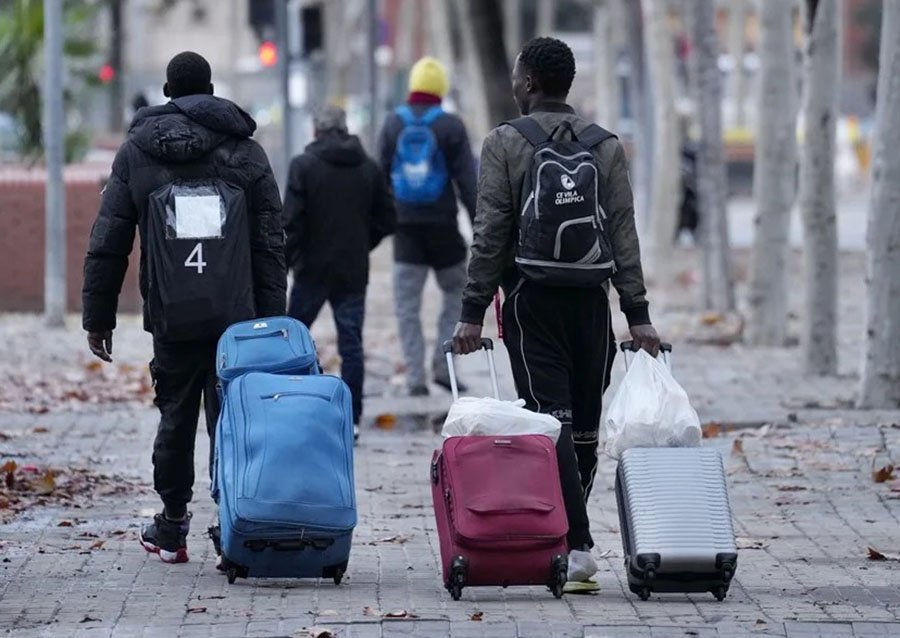
Photo: Efe.com
In Badalona on December 17, police evicted undocumented migrants from the building of the former B9 school. For more than two years, around 400 people had occupied it without legal grounds, mainly migrants from African countries. It was the largest settlement of this kind in Catalonia. The operation was carried out at the request of the city council and approved by a court,reports El Mundo.
During the large-scale operation, which involved several police units, 15 people were detained and more than 180 underwent identification procedures. The rest managed to leave the building, which has now been completely cleared. The former B9 school had been under illegal occupation for two and a half years. The Badalona municipal authorities repeatedly stated that the site had become a source of conflict and crime. In August 2025, a man was stabbed to death inside the building during a fight. This became one of the reasons for taking drastic measures. The former B9 school building will be demolished by decision of the city administration.
During the operation, the issue of the eviction was raised in the Catalan parliament. The leader of Comuns, Jéssica Albiach, criticised the authorities for failing to provide alternative housing for those evicted. In response, the head of the regional government, Salvador Illa, stated that the initiator of the eviction was the Badalona city council rather than the Generalitat, stressing that regional authorities are providing assistance to those entitled to it.
The Federation of Neighbourhood Associations of Badalona stated that the situation of the people who had been living in the B9 building remains difficult. Many of them do not have documents, jobs or access to the social system and risk being left without shelter after the eviction. The same point was made by the squatters’ lawyer Marta Llonch, who insisted that the problem cannot be solved in this way. According to her, some of the evicted people earn a living by collecting and selling scrap metal found on the streets. Others have residence permits and work permits but were forced to live in the building because they cannot afford rent.
After the eviction, around 50 people set up a camp of about 20 tents in the square in front of the former B9 school building and have been living there for two days, reports Catalan News. Most of those evicted are migrants from West African countries and territories south of the Sahara, including women and elderly people. UN experts condemned the operation, which was carried out in the middle of winter without providing an adequate alternative, and called for acceptable accommodation options.
The Catalan Minister for Social Rights and Inclusion, Mònica Martínez Bravo, demanded the immediate opening of the Can Bofí Vell shelter to accommodate those evicted. The Badalona city council responded that this option was not viable due to serious structural defects in the building.
Badalona mayor Xavier García Albiol said the city “will not be a refuge for illegality” and placed responsibility for the further accommodation of those evicted on the central government. In his view, housing should be provided by the national government, which insists on accepting foreigners.
Spain’s housing crisis in recent years has become a source of social tension and mass protests. In Barcelona and other cities, demonstrations against high prices in the housing purchase and rental markets are held regularly. These often turn into protests against tourists and foreign buyers. Negative sentiment toward migrants is also growing in the country.
Spain, like other southern European countries, has for more than a decade faced an influx of undocumented migrants who reach the country via Mediterranean and Atlantic routes in small boats, risking their lives. In many other countries, rules for foreigners — especially undocumented migrants — are being tightened, but Spain’s left-wing government has repeatedly stated that legal migration contributes to the country’s economic growth. It is also noted that the problem has a social dimension linked to rising poverty and requires the development of support programmes and affordable housing.
Analysts at International Investment note that the problem of property squatting remains relevant, including for foreign investors. In such cases, owners lose rental income while continuing to bear maintenance costs, taxes and utility payments. Additional financial pressure is created by court proceedings, which often drag on, and after the property is vacated, significant investment in repairs is frequently required, as the property is often damaged. As a result, an investment may lead to direct losses. In addition, the tightening regulation of the rental market in Spain should be taken into account, as it also increases costs and may reduce profitability.