







 Vietnam Mortgage Surge Pushes Homes Out of Reach
 Lithuanian Apartment Prices Accelerate Across Major Cities
 London Flats Lose Value Ahead of Leasehold Reform
 Construction of the Batumi–Sarpi Highway Begins in Georgia
 Baltic Property Investment Accelerates in 2026
 Hong Kong and Singapore Renew Their Expat Rivalry
Estonia’s construction sector shrinks for fourth year
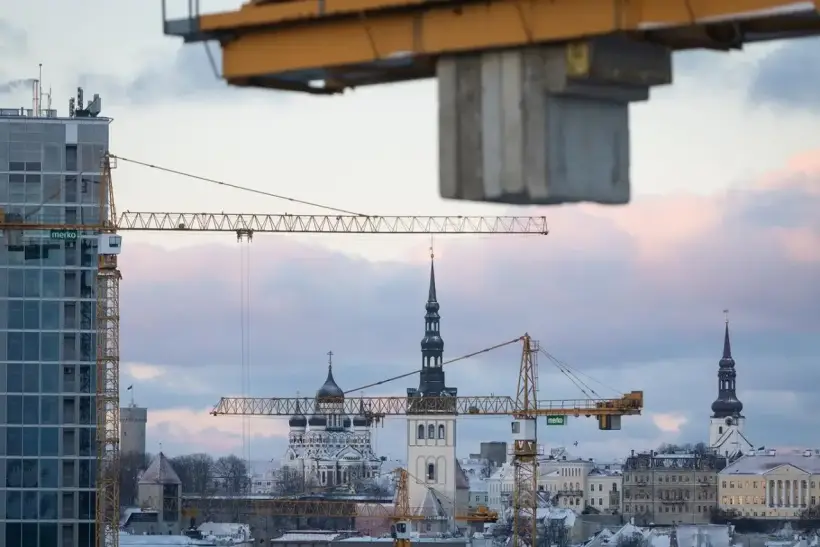
Construction output by Estonian construction companies declined again in 2025, marking the fourth consecutive year of contraction. According to Statistics Estonia, the total volume of construction work carried out both domestically and abroad fell by 1.5% compared with 2024, highlighting the ongoing challenges facing the sector after several years of economic uncertainty and reduced investment activity.
Total construction output reached €4 billion
Estonian construction companies completed projects worth approximately €4 billion in 2025. Of this amount, €2.5 billion was related to building construction, while €1.5 billion came from civil engineering works.
Compared with the previous year, building construction declined by about 1%, while civil engineering activities — including roads, bridges, ports, pipelines, communication networks, power lines and sports facilities — decreased by around 2%.
According to Statistics Estonia analyst Merike Sinisaar, construction output has now declined for four consecutive years. She noted that although 2025 started relatively positively, the downward trend typical of recent years returned from the second quarter onward.
Domestic construction market weakens
Construction activity within Estonia declined by 1.4% in 2025. However, building construction within the domestic market increased by 1.9%, mainly driven by new building projects.
In contrast, civil engineering works on the domestic market dropped sharply by 6.8%. This segment often depends heavily on public investment and infrastructure programs, making it sensitive to changes in government spending priorities.
Overseas construction activity also declines
The volume of work carried out abroad by Estonian construction companies decreased by 1.2% compared with 2024. Building construction abroad declined, while civil engineering projects increased.
The share of construction work performed outside Estonia accounted for about 7% of total construction output in 2025, unchanged from the previous year.
Housing sector shows early signs of recovery
Despite the overall contraction in construction activity, the housing market showed signs of recovery. In 2025, occupancy permits were issued for 6,059 new dwellings, representing a 4% increase compared with the previous year.
Although most new dwellings are located in apartment buildings, the share of single-family houses has increased for the second consecutive year. The most common type of residential building remains three- to five-story apartment buildings, which account for nearly one-third of all new housing units.
Four-room apartments represented the largest share of newly completed dwellings, followed by three-room and two-room units. The average size of new homes reached about 95.7 square meters.
Most new housing developments are concentrated in Tallinn, followed by municipalities surrounding the capital and the Tartu region.
Rising building permits may signal market stabilization
Authorities issued building permits for 6,695 new dwellings in 2025, more than one-third higher than in 2024. This increase may indicate that demand for housing is gradually recovering after several years of decline.
In the non-residential sector, occupancy permits were granted for 1,199 buildings with a total usable floor area of about 973,000 square meters. The largest additions were in office, warehouse and industrial buildings.
Construction slowdown intensifies at the end of the year
In the fourth quarter of 2025, construction output totaled approximately €1.1 billion, representing a 7% decrease compared with the same period in 2024. Building construction declined by around 10%, while civil engineering fell by 1.4%.
The weak performance at the end of the year highlights ongoing pressure on the construction sector, influenced by high interest rates, cautious investment sentiment and slower economic growth across Europe.
As experts at International Investment note, Estonia’s construction industry is currently adjusting after a period of rapid expansion and rising financing costs. According to analysts, the increase in building permits and improving housing demand could mark the first signs of stabilization, though a full recovery will depend on economic conditions across the European Union and the trajectory of interest rates.