







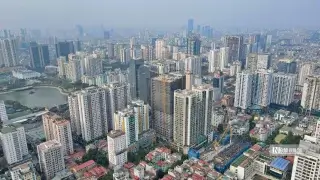
 Vietnam Mortgage Surge Pushes Homes Out of Reach
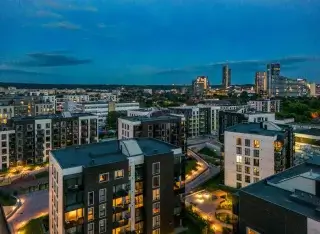 Lithuanian Apartment Prices Accelerate Across Major Cities
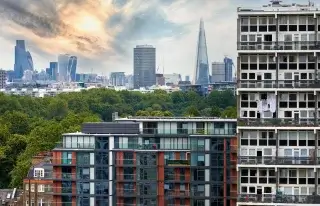 London Flats Lose Value Ahead of Leasehold Reform
 Construction of the Batumi–Sarpi Highway Begins in Georgia
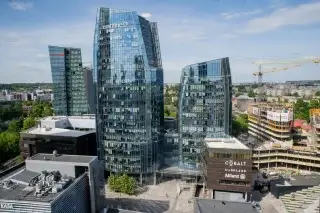 Baltic Property Investment Accelerates in 2026
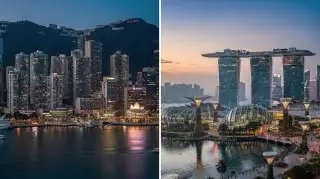 Hong Kong and Singapore Renew Their Expat Rivalry
Real Estate as a Long-Term Business: Why Hotels Outlast Apartments and Offices
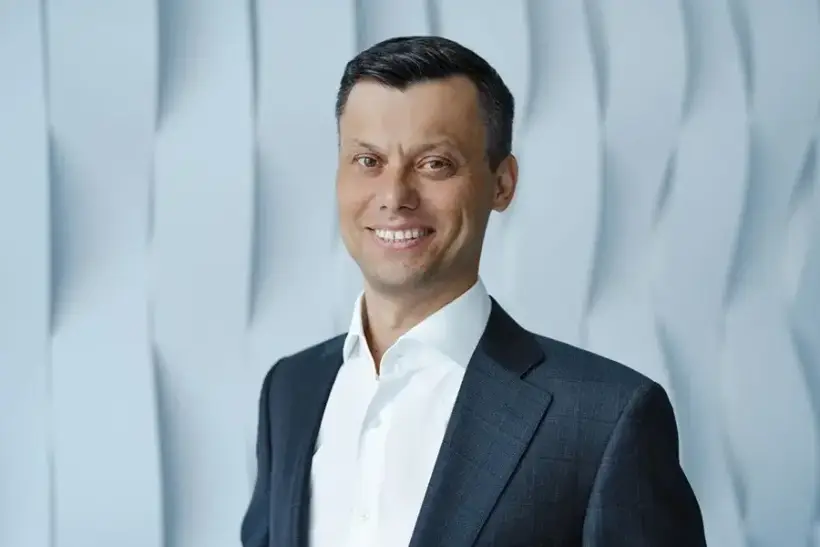
Ruslan Sukhiy: Where to Invest in 2026 and How Buyer Behavior Is Changing
Ruslan Sukhiy is a popular author and real estate expert: holder of the YouTube Silver Play Button (over 130,000 subscribers and more than 20 million views), a member of juries for industry and business awards, and runs his personal Telegram channel “Ruslan Rentaved.” He is a recipient of an industry award as the most cited real estate expert in the media and co-founder of the investment and development company RENTAVED, which specializes in real estate investments. The company’s portfolio includes projects in multi-story residential buildings, club complexes in historic city centers, commercial real estate, and hotel projects in Russia and Indonesia. RENTAVED is listed in the Russian Book of Records for the fastest franchise rollout and significant fundraising in a development project.
High interest rates keep money in deposits, the secondary market is overloaded with inherited apartments, and demand for new buildings moves in bursts—driven by news and expectations. Against this backdrop, RENTAVED co-founder Ruslan Sukhiy believes investors need to think more broadly: to choose not just a “type of property” but a consumption scenario, and to remember that tenants are always temporary while location is almost permanent. In the interview, he explains why hotels remain one of the most resilient models over the long term, why a developer needs a “team of superheroes” instead of trying to do everything alone, and why the story of domestic tourism in Russia succeeded precisely because market and government interests aligned.
Real Estate as a Guarantee of Stability
— Ruslan, how long have you been in real estate? How did it all start?
— I’ve been investing in real estate for more than 15 years, and in business even longer. All this time, my partner Artyom Filatov and I tried different directions. We had a restaurant business—one of our restaurants in Moscow even made it into the Michelin Guide. We developed a satellite monitoring system based on GLONASS and later worked as contractors in construction. When we had some modest personal capital, we started thinking about passive income.
Over the years, we repeatedly saw the same pattern: a business grows, reaches its peak, then the market changes, the product loses relevance, and returns decline. We went through these cycles ourselves and, at the right moment, moved into a different niche.
Over time, we increasingly thought about slowing down and building a system where money works for us. That’s how we came to the idea of investing in real estate. Initially, we bought an existing rental business to get stable rental income, but gradually this direction became one of the core focuses. We developed expertise in finding undervalued properties, then started projects involving renovations, and later moved into construction: hotels and development projects. Step by step, we evolved to fully focus on the real estate market.
— How did you get into hotel projects? When did that happen?
— When we started delving deeper into investment strategies, we created a collective investment fund. We began buying land, developing larger and more thoughtful projects, and bringing in strong experts. I’ve always believed that a developer’s task is not to try to build and control everything alone but to assemble a team of professionals: architect, marketer, financier, accountant, salespeople, builders. Essentially, to form a “superhero” team where each person is responsible for their area and performs at a high level. Only this way can you deliver a quality product to the market.
At one point, we were offered a hotel construction project near Moscow. We looked at the market and saw that domestic tourism was growing, demand was high, and the government actively supported this direction. Essentially, we were going with the flow: industry development, business interests, and government priorities aligned. When these things coincide, it’s always a strong signal, because working in line with government policy and market demand is much more sustainable than going against the trend.
What the government currently prioritizes generally aligns with people’s interests. Domestic tourism became one of the niches actively developing precisely because all parties are interested. People travel more within their own country: going abroad has become harder and more expensive, currency rates have risen, and travel costs themselves have increased. Meanwhile, many have “sampled” Russia and discovered quality domestic leisure options.
Against this backdrop, stable demand has formed for hotels, campsites, and holiday resorts. The government noticed this trend and began supporting the industry through various programs. As a result, the interests of business, government, and regional authorities coincided: local authorities understand the importance of developing tourism infrastructure and reporting on real projects. In this situation, everyone benefits—investors, regions, and end consumers.
— Indonesia is primarily an attempt at diversification?
— Yes, absolutely. It’s both diversification and, to some extent, a desire to try a new, less familiar location. We looked at macro trends and saw that such countries are developing rapidly. Indonesia is a good example: a population of around 300 million, and in the coming years it’s estimated to become the fourth-largest economy in the world. Yet it gets far less attention than China, the USA, or India.
The country is growing quickly, with strong domestic tourism and an active international flow. There are locations familiar to our compatriots—like Bali. But Indonesia isn’t limited to a single island: it’s a huge country with many islands and diverse markets.
It’s also important to note the generally positive attitude toward Russian speakers. The political leadership treats Russia favorably, and Indonesia is gradually bringing order to legislation and construction rules. The process is gradual, but the direction is clear.
Of course, in the past, especially in Bali, as in any fast-growing economy, there were many gray areas: regulation wasn’t everywhere, and complications arose. But such stages happen in many markets—and Indonesia is now in the phase of establishing systemic order.
— Yes, there were indeed cases of fraud.
— This is very similar to what we went through in Russia in the early 2000s, before escrow accounts and strict regulation. Back then, there were many situations where projects weren’t completed: some developers left the market, others took over and finished construction. For example, the company Urban—there were many stories like this.
Today, in Russia, such cases are mostly exceptions. I think it would be a major news event if a large project remained unfinished. We no longer fear this and work calmly with developers. In this sense, every country goes through its evolutionary path: a period of formation, mistakes, and subsequent order. Russia has gone through this stage, and Indonesia is currently in that process.
Investor Sentiment in 2025
— We’ve already entered 2026, and many call 2025 a difficult year: numerous political events, talks of a global crisis, and market changes. How do you assess the past year and investor sentiment?
— In my view, 2025 was relatively calm for the real estate market. The main reason was high deposit rates, which kept a significant amount of money in bank accounts. People generally took a wait-and-see approach and observed the real estate market.
At the same time, some investors began to realize that keeping money in deposits was not as profitable as it seemed. Those who placed funds at 20–25% and exited their deposits after a year came to the real estate market and saw that prices for certain properties had risen more than the deposit income. As a result, expectations were not always met.
Speaking about Russia, developers are currently in a rather difficult situation. On one hand, construction costs are rising due to inflation: some materials have become 50–100% more expensive, labor costs have increased, and there is a serious shortage of engineering specialists. Rising wages add another burden. On the other hand, expensive loans and mortgages are also factored into the price per square meter.
Against this backdrop, demand looks “erratic”: an informational wave passes—people withdraw money and go to buy property—then there’s a pause, and the market freezes again.
Then comes another pause—the market freezes, and everyone waits. Developers in this situation literally have to “dance with a tambourine”: creating promotions, special conditions, and new formats for offers. Meanwhile, too many factors remain uncertain, putting additional pressure on the market.
Another important point is that the secondary market is noticeably oversaturated today. Buyers increasingly focus on the primary market: new, modern buildings with landscaping and infrastructure. Meanwhile, older apartments are increasingly hitting the market—elderly owners pass away, heirs inherit property they don’t need, and put it up for sale. As a result, the secondary market fills with properties that no longer meet current demands.
This creates a discrepancy: new buildings become more expensive and less accessible, while secondary housing faces pressure due to outdated formats. The market currently exists within this contradiction.
Any property also has a shelf life. Looking more broadly, apartments built 20–30 years ago largely no longer meet modern expectations in terms of quality, layouts, and living environment—the market increasingly feels this.
As I mentioned, people are less willing to buy such apartments. Demand has shifted toward higher-quality and more aesthetically pleasing housing. Even an economy-class house today is often perceived as more attractive than an apartment with “nice tiles” in a 30-year-old building. People value modern entrances, landscaped territories, a comprehensible surrounding environment, and retail and services on the ground floor. Against this backdrop, old housing largely loses out—it’s difficult to look at it without regret.
The same applies to office real estate. Offices built 15–20 years ago have largely lost relevance. Requirements for space, layouts, finishing quality, and work scenarios have changed. Companies and employees now want a different office experience.
The situation is similar with warehouse real estate. It’s currently talked about as one of the most in-demand segments, but it also has a shelf life. Warehouses built 20–30 years ago no longer meet modern requirements: logistics processes have changed, vehicle sizes have increased, and requirements for height, load, and infrastructure have evolved. Essentially, everything needs to be rethought and rebuilt.
It’s important to understand that any property sold today as “income-generating”—whether housing, offices, or warehouses—has a limited relevance period. In 20–30 years, a significant portion of these assets may no longer meet market needs.
Do you know which type of property, oddly enough, remains the most relevant worldwide?
— Data centers?
— Shopping centers have largely lost their former role. Data centers are certainly highly in demand today, but they too will evolve over time—technology does not stand still. If you look at the longest-lasting business in the world, it even made it into the Guinness World Records. It’s a hotel in Japan owned by the same family for hundreds of years. The exact figure is hard to recall, but it’s roughly 700 years—this story is easily found in public sources.
Looking more broadly, hotels in general—whether in Moscow, Paris, New York, or London—have operated continuously for decades and continue to do so. They do not lose relevance under one important condition: a good location and a well-managed concept. Over time, renovation and format updates occur, but the model itself remains sustainable.
In contrast, residential, office, and warehouse real estate change dramatically over 20–30 years and often cease to meet market needs. This is why we saw opportunities in hotel projects: if you find a strong site, create a quality product, and bring in a professional operator, such property can remain relevant for a very long time.
Currently, for example, we work in partnership with the company “Kosmos”: we handle construction, and the operator manages the property. For us, this is a clear and effective collaboration with a full professional operator.
Another segment showing long-term stability is street retail real estate. In good locations, these properties maintain demand regardless of market cycles and transformations.
— What do you mean by street retail?
— It’s quite simple. We still enjoy walking down the street, entering a store, buying coffee, groceries, or services. Yes, tenants will change—that’s normal. We see that large chains like “Pyaterochka” and “Magnit” are gradually reducing their offline presence and moving online—this trend will continue. Meanwhile, dark stores—fulfillment centers for order assembly—are developing.
But people remain people. They walk the streets, they want to enter somewhere: buy coffee, get a haircut, visit a shop, or get a manicure. That’s why street retail in good locations—where there’s a dense residential area and stable pedestrian traffic—remains in demand. Whether it’s the Champs-Élysées, Tverskaya Street, or any busy avenue in a major U.S. city, such places always work.
Looking more broadly, this is about emotions. Both hotels and street retail properties are part of the experience industry. People go there not just for a product or service, but for the feeling: sitting in a beautiful place, having coffee, spending time in a pleasant environment. We are social beings; it’s important for us to be in spaces that provide emotions and experiences.
The same applies to the restaurant business. Formally, we go there to eat, but in reality—for the atmosphere, service, and emotions. That’s why these real estate formats, with the right location and concept, remain relevant for decades.
Demand for Hotels in Russia: What Drives It
— The hotel and restaurant business is traditionally considered complex to manage: a wide range of services, a lot of staff, and its own specifics. Plus, there’s constant discussion about how consumer demands are changing and how generational shifts affect this. Do you see any notable trends here?
— We are living in quite a challenging economic time. Sometimes you hear the opinion that rising inflation automatically means higher revenues in stores, hotels, and restaurants—everything gets more expensive, so turnover should increase. But reality is different: most people’s incomes aren’t growing at the same pace. Salaries have been indexed somewhere between 10–20%, yet many goods and services have increased in price several times over.
This is clearly seen in the foodservice market. Over the past year, chains like “Shokoladnitsa,” “Victoria,” and “Penza” have reduced their presence, and some pizzerias have simply closed. If I’m not mistaken, the number of liquidated food service establishments grew by about 10% over the year, reaching around 35,000 outlets.
People have become much more cautious even with so-called “emotional” spending. Yes, they are still willing to have coffee for 200–300 rubles in a nice café, sit in a pleasant place, and enjoy the experience. But they are increasingly refusing more expensive and less justified expenses from their point of view.
Someone opens a laptop, sits in a café, and enjoys the atmosphere. But the equivalent of “pancakes at Shokoladnitsa” is now seen as excessive spending—for many, it’s simply too expensive. At the same time, café formats near “Magnit” and “Pyaterochka” are actively entering the market, attracting people for budget reasons. Overall, consumers have become more cautious and wary in their spending.
It’s also important to understand that Moscow is a separate reality. About 20% of the country’s GDP comes from Moscow and the Moscow Region. On one hand, it can serve as an indicator of trends; on the other, it does not always reflect the situation in the regions.
A similar story occurs with the hotel business. The market is increasingly polarized: either a strict economy segment or high-quality premium, for which people are willing to pay. And it’s fair to say there are categories of people who have started earning more than before in recent years. These are primarily sectors where incomes are currently growing: the defense-industrial complex, IT, and areas related to import substitution and technology.
Significant money is concentrated in these sectors: people receive good salaries, buy housing, actively visit restaurants, and update their cars. As a result, a solvent audience emerges with demand for quality housing and leisure. These people are willing to pay for service levels and accommodation, including expensive hotels.
This is clearly visible in actual demand. Even quality hotels during peak periods—like the New Year holidays—are fully booked. Just recall what happened in Sochi during the holidays: queues for lifts, high demand, and almost full occupancy of resort infrastructure.
— At the same time, many note that vacations in Sochi or, for example, Kamchatka today are no cheaper than trips to Europe.
— Even more expensive. Internal tourism is currently largely overheated: expectations are inflated, and in some places outright speculation has begun. For example, a family of two adults and two children traveling to Gelendzhik can easily spend around half a million rubles. For the same money, you could fly to a five-star all-inclusive hotel in Turkey, including flights.
Here we encounter the question of service. In Turkey, they know how to work with guests—the hotel industry has been developed there for decades. Yes, inflation has affected them too, and service has dropped in some areas, but overall the level remains high. Honestly, we still have work to do and things to improve.
Therefore, I agree that the hotel market in Russia is currently overheated in places. From an investment and diversification perspective, the most understandable and stable locations are well-established resort destinations. First and foremost, the Moscow Region, because the bulk of the money is concentrated in Moscow. The second key point is Krasnaya Polyana, with the longest and most stable tourist history.
New attraction points are also emerging, but broadly speaking, much of Russia’s regions remain uncertain. People are often willing to visit many places just once—to see, experience, and close the direction for themselves. Repeat demand there is much harder to generate.
At the same time, demographics must be realistically assessed. The country is large, but the population is relatively small—around 140 million people. If we focus on domestic tourism and consider only the solvent audience, its size becomes even more limited. There is no mass international tourism yet, while the number of built facilities is quite high.
Therefore, the domestic tourism market has its own structural features and limitations, which investors need to consider when choosing a location and strategy.
Does the Middle Class Still Exist in Russia, and Is It Wise to Keep Money “Under the Mattress”?
— Am I correct in understanding that the so-called middle class is shrinking, and the market is increasingly dividing into economy and premium segments?
— That’s exactly how it feels to me. I would say there’s noticeable stratification happening. If we look back 10–15 years ago at conversations about “soon we’ll live well,” paradoxically, that period was already quite prosperous. With an exchange rate around 30 rubles per dollar, there was a fairly broad middle class: people traveled to Europe, shopped in stores, stayed in hotels, and traveled.
At the time, many felt that life wasn’t all that good, but in reality, during that period the standard of living and consumer capabilities were noticeably higher than they are today.
— Looking at the situation through the lens of inflation and currency risks, how reasonable is it to invest in Russia today? Or would it be simpler to keep money “in a pillowcase” in foreign currency and hope for the exchange rate to rise?
— That’s a good question. I wouldn’t say that all money must necessarily be kept in real estate—although I work in this market and could be expected to actively promote it. We see that corrections happen, and no asset is fully risk-free.
For example, take commercial real estate: its value is directly linked to rental income. If there’s a tenant, there’s cash flow. Essentially, when buying income-generating property, you’re buying the lease. If the tenant leaves, the property’s value immediately drops, which is directly tied to the state of the economy.
At the same time, I’m definitely not a supporter of keeping all funds “under the mattress.” In my view, a person or a family should have at least one asset—a property or a share in one—that generates passive income. This provides financial stability: you could lose your job, get sick, face unexpected circumstances, and not be forced to agree to any terms in a panic.
Money “in a pillowcase” doesn’t feed you on its own. Passive income—even if not maximal—gives that safety cushion, allowing for more measured decisions in difficult times.
It’s similar to buying a plot of land: it may increase in value, but it doesn’t generate regular income by itself. That’s why, in my opinion, a person should have at least one property that generates cash flow.
Formats can vary. It could be a fully owned property or participation in collective investments. Today, there are companies offering fractional ownership in real estate, including through closed investment funds or publicly traded instruments. The entry threshold for such projects can be relatively low—tens to hundreds of thousands of rubles. In this case, the investor becomes a co-owner, for example, of a retail space or warehouse complex managed by a professional management company.
If financial capabilities allow, the optimal option is to own your own property in Russia. With greater capital, it makes sense to additionally consider properties abroad to diversify risks and have an alternative income source for different life scenarios.
Reliability of a Management Company: How to Check
— We started talking about management companies. How can you tell if it’s a reliable partner you can trust? What criteria should someone new to this market look at?
— Actually, it’s quite simple. I would approach it the same way as choosing a professional in any other field. It’s important to look at how long the company has been operating, which properties it manages, what results it has shown over the past five years, and what actual returns it has paid to investors.
At the same time, companies often like to showcase high results during “good” periods. For me, a much more important question is how they handled tough times. Can they operate during a crisis, smooth out downturns, and find solutions when the market is going down?
Because managing a property in favorable conditions—when tenants pay reliably and returns are high and only need to be indexed—is one thing. Acting effectively in difficult periods—finding new tenants, managing expenses, restructuring the operational model—is quite another.
I draw an analogy with hiring employees: I’m interested not only in achievements during good years but also in what crises a person has faced and what role they played. This approach works perfectly when evaluating a management company as well.
I’ve gone through this myself, so I always ask similar questions. When talking to candidates or partners, I want to understand: what was the most serious crisis they experienced, and what exactly did they do at that time? What role did they play, what decisions did they make, and what was the outcome? From those answers, it becomes immediately clear whether you’re dealing with a professional, a real expert, or just someone with impressive numbers in a presentation.
When someone can specifically explain: “There was this crisis, we had a cash shortfall, we took these steps, and achieved this result”—it’s clear they know how to work in challenging conditions. With such a partner, you can move forward confidently because in good times, profits come anyway.
I apply the exact same principle to management companies. It’s important to look at which crises they have gone through, how they acted during difficult periods, and what results were ultimately delivered to the investors who worked with them.
Real Estate Affordability — Moving Further from Consumers
— Returning to the topic of generational shifts: do you see how this is affecting the market? The older generation is passing on, and heirs want different property, a different lifestyle and way of vacationing. Have there been noticeable changes in recent years?
— Yes, definitely. A generation is forming now that will become the main solvent layer in the coming years. Those looking to either earn or at least preserve capital should already focus on this group. It’s important to watch their behavior: how they live, what they choose, and what they’re willing to pay for. They have already started spending actively—in cafés, services, and leisure—and their purchasing power will only grow.
One illustrative trend I see is the rising demand for storage units. This is directly connected to the lifestyle of the new generation. In some ways, we are following the European and American pattern: people are increasingly not tied to a single apartment, they move easily between cities and countries, yet they still need a place to store their belongings. Not everyone has their own home, garage, or summer house, but there is a demand for personal storage space.
Real estate is becoming less affordable every year—it’s getting more expensive and will likely continue to do so. That’s why a storage unit often becomes the first “entry” property for the new generation: affordable and functionally straightforward.
The younger generation is much more mobile. They want the freedom to move: to Armenia, Thailand, Bali, Turkey, or the Emirates, and then return or switch locations. And a practical question arises—where to store their things? Not everyone has parents, garages, or cottages, and increasingly people want to be as independent as possible in this regard. They need a place to leave their possessions without being tied to a specific apartment.
That’s the first important point. The second relates to changing consumer behavior. The new generation actively uses e-commerce, buys more things, and an apartment gradually becomes just an intermediate stage in their life cycle. They buy something, use it for a while, and then face the need for storage or disposal. Throwing things away is psychologically difficult, so they end up in storage units.
On top of that, there’s another factor: real estate is becoming more expensive while apartment sizes are shrinking. The cost per square meter is rising, and for the same money people are buying smaller spaces. We already see listings for “three-room” apartments of 65–70 square meters—just a few years ago, this size would have been considered a maximum two-room apartment. As a result, the need for external storage becomes not a luxury but a necessity for many.
Earlier, these sizes were barely considered two-room apartments, and now they’re “three-room” units. Yet there’s simply no space for storage inside. The new generation lives differently: they make purchasing decisions faster, often buy spontaneously, and shopping becomes a kind of emotional release—a simple, accessible “antidepressant.” Belongings accumulate, but parting with them is psychologically hard, so the need arises to store them somewhere.
This explains the sustained demand for storage units as a distinct format. It’s no longer a niche trend, but a noticeable one. In the real estate market, this creates an interesting intersection: on one side—behavioral changes of the new generation, on the other—a clear investment opportunity. An investor can buy units from a developer or invest in storage operators’ projects that create and sell these storage formats.
Looking more broadly, these behavioral changes are increasingly influencing the real estate market. Many people discuss the same factors, but for me, the most illustrative is precisely this link between lifestyle, consumption habits, and how they shape demand for new real estate formats.
What the Younger Generation Chooses: Patterns in Real Estate and Leisure
— Speaking of hotel formats, does the younger generation have its own consistent behavioral patterns?
— Yes, absolutely. It’s important to understand that we’re dealing with an entire industry—the experience and quality-of-life industry. Consumer demands are noticeably differentiated. I would roughly identify two main groups.
The first group is people oriented toward emotions. For them, it’s important to get an impression: to see beautiful aesthetics, atmospheric spaces, and feel that “something is happening” to them. They want a visual and emotional experience, an element of entertainment, a sense of a change in environment.
The second group consists of consumers for whom longevity and quality of life become key. These are often older, already solvent individuals, but this demand is noticeably “getting younger.” For them, it’s important not only to experience emotions but also to take care of themselves: a healthy lifestyle, recovery, physical and mental well-being. This approach has already become part of their daily life.
Previously, in country or resort formats, people primarily sought entertainment—hookahs, lively parties—but today they increasingly ask other questions: where is the spa, is there sports infrastructure, skiing, a pool, recovery zones, oxygen treatments. And this applies not only to older generations: even relatively young people are already forming a demand for health preservation and balance.
Ultimately, we see that demand is shifting from simple “entertainment” to more thoughtful formats of leisure and living, where emotions, aesthetics, and attention to quality of life are combined.
What Will 2026 Be Like for Investors?
— An interesting trend. If we try to look ahead and cautiously forecast 2026: how do you see the market, the consumer, and where should investors and businesses focus?
— Forecasting is an ungrateful task. I’m inclined to believe that readiness is the cradle of calm. So first and foremost, it’s important to be prepared—at least at the level of knowledge. Read specialized publications, listen to experts, stay aware of what’s happening. I often hear people say: “I understand everything, it’s all the same everywhere.” I think that’s the wrong approach. You always need to listen—it’s important to understand the context you’re in, the country you live in, and what processes are unfolding around you. Only then can you make more balanced decisions.
When it comes to investors, choosing a niche is essentially choosing a long-term path. I sometimes call it a choice of fate because you immerse yourself in this environment for a long time: working with certain people, living in the logic of this market. Therefore, the niche should not only be promising but also personally resonate.
Clearly, no downturn lasts forever. In my opinion, now is a suitable time not for speculation but for carefully searching for undervalued real estate. This is a period when you can pick up assets at a discount—owners may be willing to sell for various reasons. Such decisions lay the groundwork for the future.
Moreover, there are undervalued properties on the market that many overlook, but we see their potential through demand from major operators. Several federal chains are actively expanding and need new premises, and they’re willing to pay for them. For example, the pharmacy chain “Aprel” plans significant expansion by 2030. “Monetka” continues to scale, as do projects connected with large industrial groups. “Pyaterochka” is expanding, “Chizhik” is growing—the chain already has about 3,000 stores, and plans for new openings remain ambitious.
Federal retailers need premises, and this creates a window of opportunity for investors. The situation has largely shifted: now it’s not investors looking for tenants, but large chains seeking suitable spaces. In some cases, an investor can approach the operator directly to see what parameters and rates the chain is willing to accept. This provides an opportunity not only to preserve but also to grow capital.
So saying that “everything is bad” in Russia and the market has stopped would be incorrect. There are segments and brands that are actively growing and feel confident. For example, I expect the jewelry market to show good results by 2026: people have accumulated money, creating deferred demand for emotions and “tangible” values. Moreover, historically, we have the habit of converting some savings into material assets—jewelry, valuables, items perceived as more reliable stores of value—during uncertain times.
At the same time, market colleagues are exploring unusual tools. Some have started investing in copper, calling it “the new Bitcoin.” The logic is simple: the development of artificial intelligence requires increasing computing power, which in turn requires infrastructure, networks, and equipment—all of which consume copper in large volumes. Many believe this could give the metal a serious price boost.
E-commerce continues to grow actively. Platforms like Ozon are scaling and likely will continue to grow, which means stable demand for warehouse real estate and new pickup points. I also see good prospects for investors here—both in buying properties and through franchise models.
For instance, “Pyaterochka” increasingly relies on a franchise model. For entrepreneurs, this is an interesting opportunity: the chain launches the store, handles logistics and operations, while the partner manages personnel. Apparently, major retailers are gradually moving away from direct management of some stores, opening the market to private investors and entrepreneurs.
The same applies to storage facilities, which we discussed earlier. This is a large and growing trend, where one can develop independently or via professional operators, building a clear and scalable model.
In real estate, the classic rule “location, location, location” still works, but today it’s insufficient to consider it in isolation. In addition to a good location, the property must have the right concept—you need to understand what the space is and how it functions.
There are cases when a property is formally in a good location but doesn’t actually work: it’s hidden around a corner, lacks visibility or signage, or has no loading zone. In such cases, location alone won’t save it.
The third key element is management. Lately, you might hear that the type of property isn’t that important—what matters is rental income. But it’s crucial to remember: tenants are always temporary, while the property and location are long-term. Location is hard to change, the concept too, but replacing a tenant is relatively easy if needed.
Therefore, for those exploring the real estate market today, I recommend first analyzing the location itself: is there a steady flow of people, what is population density, purchasing power, and the overall economic state of the area? These factors determine the long-term stability and investment appeal of a property.
You can also directly ask federal chains if they’re interested in a specific location. This is a good indicator even when buying residential property. Population inflow and outflow is a key indicator of purchasing power and future prospects.
Today, there are tools that provide such analytics quickly. For example, specialized services can produce a location report for a relatively small fee: population size, average income, demographics, and other parameters. This helps form a complete understanding of the territory—whether you’re planning to buy an apartment or commercial property.
I’d always start with this basic analysis before making investment decisions.
For tourist properties, the logic is the same: first, we look at the tourist flow—who they are, where they come from, how often they return, seasonality, average spending, and overall demand trends in that location.
To summarize, I like to repeat one thought: when everything seems obvious to everyone, it’s usually not the most profitable story. The most interesting and potentially lucrative opportunities are often where there’s uncertainty and where others are afraid. That’s why you have to approach them very carefully.
I’d highlight two types of mistakes to avoid. First—repetitive mistakes: if you keep hitting the same pitfall, your method is wrong or you’re focusing on the wrong thing. Second—catastrophic mistakes that can erase all results and have irreparable consequences.
So I’d say this: now is truly a time of opportunity, but careful opportunity. Sometimes it’s better to enter with someone who already knows the way—a guide, broker, or expert. And constantly learn: read, stay in context, update your knowledge. Everything has a shelf life—even knowledge. It’s important to keep checking yourself: how relevant are you?