







 Fines for Illegal Rentals in Spain Reach €800,000
 Australia’s Spring Auctions Rise but Remain Well Below 2025
 Number of Foreigners Holding Turkish Residence Permits Exceeds 1.27 Million
 Demand from Russian Tourists for Holidays in Georgia Rises by 20–25%
 Montenegro Property Buying Costs in 2026
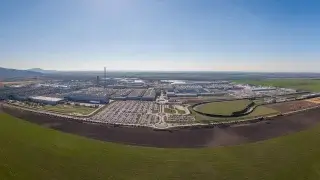 Four in Ten Companies Would Not Choose Slovakia
Concise Headline: Germany Launches Digital Visa Processing System

Germany has officially transitioned to fully digital work visa processing, marking a significant milestone in the modernization of its immigration framework. On 20 February 2026, the Federal Foreign Office confirmed that the nationwide e-visa portal established under the 2024 Skilled Workers Immigration Act is now operational across all 167 German missions abroad as well as local foreigners’ authorities within Germany.
Digital Visa Portal for Skilled Workers
The new system allows employers to submit complete work visa applications online, including labor market approval, qualification recognition checks, and residence permit issuance. The platform is directly connected with the Federal Employment Agency and regional recognition authorities, eliminating multiple paper submissions that previously delayed corporate transfers for months.
Behind the scenes, automated plausibility checks and optical character recognition tools identify missing or inconsistent documents before applications move forward. According to the Interior Ministry, pilot locations have already reduced average processing times for EU Blue Card and ICT permits to 27 days, down from 66 days in 2025. Mobility managers now receive real-time application status updates, reducing uncertainty that often disrupted project start dates for engineers and IT specialists.
Integration with Employers and Digital Providers
Service providers such as Jobbatical have integrated the government’s APIs into their corporate dashboards, enabling companies to combine visa tracking with relocation management, housing search, and onboarding workflows. HR teams at Siemens, SAP, and several mid-sized exporters informed the German Employers’ Association BDA that the reform will save thousands of staff hours annually.
The rollout comes at a time when Germany’s unemployment rate stands at approximately 3.7 percent, close to historic lows. In a tight labor market, faster visa processing is viewed as a strategic lever to strengthen Germany’s competitiveness in attracting global talent.
Improved User Experience for Foreign Applicants
For foreign professionals, the process has become significantly more streamlined. Biometric data are captured once at a visa center, while renewals and family reunification applications can now be handled entirely online. A multilingual chatbot assists applicants in navigating documentation requirements, and automatic data exchange with qualification recognition databases removes the need for separate paper notarization for vocational credentials.
Companies are advised to update their internal mobility procedures accordingly. Electronic signatures are now accepted, original diplomas are no longer required at the embassy stage, and the €75 national visa fee can be paid by credit card. While security screenings remain partially manual and may require up to two weeks, overall lead times have shortened considerably compared with 2025.
Expert Insight from International Investment
As reported by experts at International Investment, the launch of Germany’s fully digital visa platform represents a structural shift in skilled migration policy and significantly enhances the country’s ability to compete for international engineers, IT specialists, and high-demand professionals.