







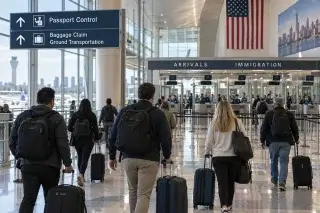
 US Introduces Visa Bonds of Up to $20,000 for Tourists From 50 Countries
 Portugal Secures €1.5 Billion for Social Housing
 Mortgage Lending in Georgia Increased by Nearly 50%
 Irish Homes Are 17% Overvalued as Supply Lags
 Buses from Latvia to Russia and Belarus May Be Cancelled
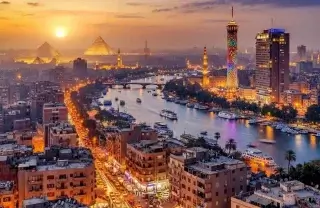 Egypt’s Economy Accelerates to 5.1%
Green cards in the U.S. will be issued outside the country

U.S. Citizenship and Immigration Services (USCIS) announced changes to the rules for foreigners seeking to adjust their status. Most of them will now be able to obtain a green card only through consular offices outside the United States. The changes are expected to affect hundreds of thousands of applicants.
New rules for applications in the United States
USCIS issued a new directive on May 22, 2026, outlining changes to the adjustment-of-status procedure for foreign nationals. A USCIS spokesperson, Zach Kahler, explained that from now on, foreigners must return to their home country to apply for a green card, with exceptions only in cases where this is not possible due to circumstances beyond their control.
Students, temporary workers, and tourists come to the United States for a short period and for a specific purpose. They are expected to leave when their authorized stay ends, and such visits should not become the first step toward obtaining a green card, Kahler emphasized.
Existing law allows the State Department to handle most of these cases through U.S. consular posts abroad, freeing limited USCIS resources to focus on other cases. Officials say this option was ignored for many years, but enforcing it will make the system “fairer and more efficient.” The new rules are also expected to reduce the need to locate and deport people who remain in the U.S. illegally after being denied residency.
Possible consequences for migrants in the United States
The Department of Homeland Security said the change will not prevent eligible applicants from obtaining a green card. They will simply need to apply from abroad. The department also stated that the policy is not expected to have a significant impact on highly skilled professionals and applicants who have followed the law.
Shev Dalal-Dheini, senior director of government relations at the American Immigration Lawyers Association, said the changes may target people who overstayed their visas, including parents of U.S. citizens, company employees, and individuals on religious worker visas.
HIAS, a humanitarian organization that assists refugees and other migrants, said the new rules may affect survivors of human trafficking, as well as children who have experienced abuse or neglect. Such applicants may be forced to return to the countries they fled in order to complete their green card applications.
Experts say the changes could affect hundreds of thousands of green card applicants. Many companies may also become more reluctant to hire foreign workers. “This is simply an attempt to restrict legal immigration and discourage people,” said immigration attorney Charles Kuck, adding that he expects legal challenges. Attorney Flavia Santos Lloyd said the new policy is likely to slow down application processing.
Kevin Miner, a partner at the immigration law firm Fragomen, expects exceptions for holders of work visas such as H-1B. He noted that these fall under the category of “dual intent” and allow nonimmigrant visa holders in the U.S. to apply for a green card simultaneously.
Conclusion
The immigration changes in the United States are part of a broader policy shift under the Trump administration. Over the past year, visa durations for students, exchange program participants, and media representatives have already been reduced. Since his presidency, more than 100,000 visas have been revoked.
The refugee admission system has also been scaled back, with priority given to a limited group of applicants. The humanitarian parole system, previously expanded under the Biden administration, is also being reconsidered.
For more than half a century, foreign nationals with legal status were able to apply for permanent residency from within the United States, including spouses of U.S. citizens, students, workers, refugees, and asylum seekers. That system is now being revised, increasing uncertainty for a wide range of migrants already in the country.