







 How Ukraine’s New-Build Housing Market Has Changed Over Four Years
 European Prime Rents Rise as Property Yields Turn Higher
 The Most Expensive Airlines in Europe in 2026
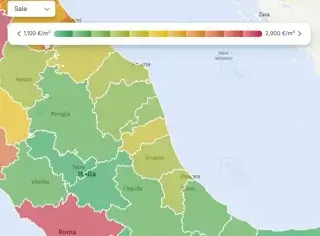 Housing Prices in Italy Reach a Two-Year High
 Travellers Increasingly Choose Cooler Scandinavia
 Serbia Property Sales Decline as Transaction Value Rises

South Africa is stepping up enforcement against undocumented migration as public anger, unemployment and anti-immigrant protests intensify. The government says it will act within the law, but the campaign has already become a political, social and economic risk for businesses, foreign workers and neighbouring countries.
Migration enforcement has moved to the centre of politics
South Africa is tightening measures against undocumented migration, turning the issue of papers, deportations and border control into one of the country’s most contentious domestic debates in 2026. Bloomberg’s Next Africa newsletter reported that authorities are intensifying pressure on undocumented immigrants amid public demand for tougher enforcement.
The Department of Home Affairs has said that 109,344 people without legal status were deported over the past two financial years. It also said deportation costs in the 2024/25 financial year were close to 80 million rand. That shows migration policy is no longer only an administrative issue, but also a visible item of public spending.
For the government, the situation is difficult. Authorities must control borders, verify documents and enforce immigration law. At the same time, South Africa has a serious history of xenophobic violence, meaning raids, public statements and mass inspections can deepen fear among migrants and raise tensions in poor communities.
Unemployment is feeding anti-immigrant sentiment
The main backdrop to the migration dispute is the labour market. Statistics South Africa reported that official unemployment rose to 32.7% in the first quarter of 2026 from 31.4% in the fourth quarter of 2025. The expanded unemployment rate, which includes discouraged job seekers, reached 43.7%.
In such an economy, migration can quickly become a political explanation for deeper problems. Job scarcity, weak growth, inequality, crime, pressure on hospitals, schools and municipal services create an environment in which foreigners are seen as competitors for limited resources.
Official demographic data, however, do not support popular claims of tens of millions of foreigners. Stats SA says South Africa had about 2.4 million immigrants in 2022, equal to 3.9% of the population. That figure includes people with different legal statuses and is not the same as the number of undocumented migrants.
Protests have moved from politics to local threats
In 2026, pressure has come not only from the state, but also from street movements. South African media reported protests against undocumented migrants and demands that the government address the issue by the end of June. The Guardian described an atmosphere of fear among African migrants after a series of marches and outbreaks of violence, including incidents in the Western Cape.
One especially worrying factor is that legal status does not always protect people from intimidation. In an atmosphere of street mobilisation, a foreign appearance, accent, language or workplace can become a source of pressure even if a person has valid documents.
For South Africa, this is sensitive because of past experience. In 2008, xenophobic riots killed dozens of people and displaced large numbers of migrants inside the country. Since then, waves of anti-immigrant rhetoric have periodically returned, especially during economic downturns and political competition.
Authorities promise deportations but warn against vigilantism
President Cyril Ramaphosa said in early June that the country must combat illegal migration, while also warning against xenophobia, violence and vigilantism. That balance has become the government’s central line: the state wants to show voters that it controls the borders, but it cannot allow private groups to replace the police and courts.
Home Affairs has used a hard message, telling foreigners in the country illegally to leave voluntarily or risk being found, deported and banned from entering South Africa legally in the future. The policy relies not only on actual deportations, but also on deterrence.
Yet immigration enforcement requires precision. Wrongful detentions, corruption, a lack of interpreters, weak digital infrastructure and an overloaded asylum system can turn a lawful campaign into a source of new violations. For a country with a strong constitutional tradition, that creates risks of court challenges and criticism from rights groups.
The asylum and documentation system remains overloaded
South Africa has long been the main destination for labour migration in Southern Africa. Workers have come from Zimbabwe, Mozambique, Lesotho, Malawi, Eswatini, Ethiopia, the Democratic Republic of Congo and other countries. Some arrive for work, some seek protection and others enter through informal channels.
The asylum and documentation system has been criticised for delays, administrative gaps and weak capacity to distinguish economic migration from refugee protection. The White Paper on Citizenship, Immigration and Refugee Protection, approved by the cabinet in 2024, proposed a major overhaul of migration law and a more coherent system.
A white paper is a government policy document that outlines planned legal and institutional reforms. In South Africa’s migration context, it covers citizenship, permanent residence, immigration permits and refugee protection. But there is still a large gap between approving a policy framework and delivering administrative reform.
Business depends on migrants but fears legal risk
The crackdown affects not only migrants, but also employers. Foreign workers in South Africa are active in agriculture, construction, retail, restaurants, delivery, domestic work, small business, security, informal trade and some professional services.
For companies, the main risks are document checks, fines, reputational damage and disruption to labour supply. If the state sharply increases inspections, employers must prove that visas, permits and contracts are valid. Small businesses, where human-resources and legal processes are often less formal, are especially exposed.
There is also an opposite risk. If migrants leave certain areas in large numbers or move deeper into the informal economy, local markets may face labour shortages, shop closures, service disruption and higher prices. The economic issue is therefore not only deportation, but how to legalise needed labour and bring it out of the grey economy.
Neighbouring countries are watching the fallout
South Africa remains the largest and most diversified economy in the region. Its migration policy therefore directly affects neighbours. For Zimbabwe, Mozambique, Lesotho, Malawi and other countries, work in South Africa is often a source of remittances, household income and social stability.
If deportations accelerate, neighbouring economies may receive returning workers without jobs or income. That can increase pressure on local labour markets, foreign-currency inflows and social services. In some cases, governments may have to organise returns, provide temporary assistance or negotiate with Pretoria.
The regional dimension matters for South Africa as well. An overly harsh migration policy can complicate relations within the Southern African Development Community, where economic integration, trade and labour mobility are closely linked. The country must enforce its own laws without damaging regional ties.
Migration is becoming a test of state capacity
South Africa’s situation shows that the migration crisis is not only about the number of people without papers. It reflects deeper problems: a weak labour market, slow growth, inequality, distrust of institutions, poor municipal services, overloaded courts and border infrastructure.
If the state relies only on raids, public demand for order may be satisfied temporarily, but the root causes of tension will remain. If authorities combine digital registration, fair asylum procedures, faster visa decisions, penalties for illegal hiring and protection against violence, migration policy can become more manageable.
For investors and business, the key issue is not only the number of deportations. What matters more is predictability of rules, quality of enforcement, absence of mass violence and the state’s capacity to preserve social stability. South Africa is already dealing with an energy crisis, logistics constraints, unemployment and weak growth. A new migration conflict adds another layer of risk.
As experts at International Investment report, South Africa’s tougher migration enforcement should not be viewed only as a security issue. The critical risk is that a state campaign may overlap with street pressure and xenophobic sentiment, turning lawful enforcement into a source of social instability. For the economy, the key issue is not a deportation record, but the state’s ability to separate illegal migration from lawful labour, protect documentation systems from corruption and prevent migrants from becoming a substitute for real labour-market reform.