










Calls to expel migrants in Belfast after attack on local resident
The Sun
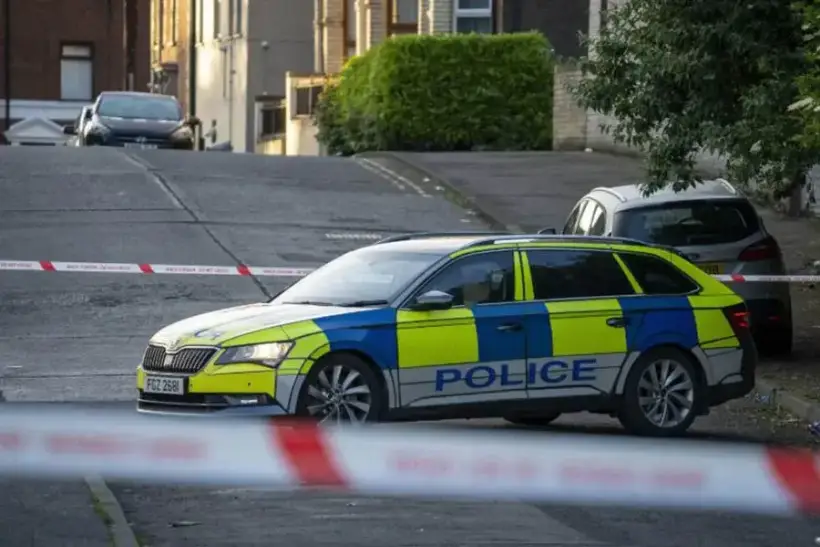
Belfast has been engulfed by a wave of anti-immigrant unrest following an attack on a local resident. A Sudanese national, previously granted refugee status in the United Kingdom, has been charged with attempted murder. Over several days, the protests escalated into riots: participants set fire to houses and cars, attacked police officers, and targeted areas where migrants live.
Attempted murder
On the evening of June 8, Hadi Alodid from Sudan attacked a Belfast resident in the Kinnaird Avenue area. Video footage shows him sitting on top of the victim and repeatedly stabbing him with a knife. Witnesses reported that he appeared to be trying to cut off the victim’s head. Passers-by and police officers managed to save 40-year-old Stephen Ogilvie, but he sustained serious injuries to his face, neck, and back, and lost his left eye.
The attacker also injured his hand and, while in hospital, threatened to kill medical staff. The court hearing in this case took place on June 10. The Sudanese national was charged with a serious offence and denied bail due to a high risk of further incidents, flight risk, and danger to the public. The next hearing is scheduled for July 8.
The Chief Constable of the Police Service of Northern Ireland, Jon Boutcher, said the 30-year-old Hadi Alodid is believed to have travelled from Sudan to Paris, and then to Dublin. He arrived in Belfast by bus in February 2023 and applied for asylum. In September 2023, he was granted permission to remain in the United Kingdom. He lived in the area where the attack took place.
Conservative Party leader Kemi Badenoch stressed that this was a horrific incident and said many would again question whether the attacker should have been in the country.
Riots in Belfast
Video of the attack quickly spread online. After that, many local residents took to the streets calling for migrants to be expelled. Hundreds of masked young people began setting fire to cars and migrant homes in the Oakley Street, Crumlin Road, Lenadoon Street, McMaster Street, and Newtownards Road areas. Outside Belfast, crowds also set buildings on fire in Portadown, Dundonald, and Newtownabbey. The fire service received 256 calls and responded to 62 incidents.
Leaders of five major political parties issued a joint statement condemning the stabbing attack and calling for restraint: “We call for calm and for justice to be allowed to take its course.” Jim Allister, leader of the Traditional Unionist Voice party, asked: “What will be done to stop the imposition of an alien culture, which appears to now include attempts at beheading?”
Criminal situation in Northern Ireland
Previously, far-right political figures have claimed that immigrants and refugees are taking over housing, imposing foreign customs, and committing crimes, while the police are failing to act, arguing that people must take action themselves. Such rhetoric has previously contributed to unrest in England and Belfast.
At the same time, crime levels in Northern Ireland fell by 3.3% last year compared to the previous 12 months, reaching their lowest level since 1998. In particular, incidents of violence and bodily harm decreased sharply. However, hate crimes and racially motivated incidents reached their highest level since 2004.
Kashif Akram, board member of the Belfast Islamic Centre, said that some politicians are looking for scapegoats for Stormont’s failure to build enough housing. “The blame is being placed on the most vulnerable — immigrants.” Patrick Corrigan, director of Amnesty International’s programme in Northern Ireland, noted that this is the third consecutive summer in the region marked by organized outbreaks of racist violence, each more severe than the last.
Conclusion
Analysts at International Investment note that many countries around the world are tightening migration policies. The United Kingdom is currently introducing stricter laws regarding foreign investors, while overall control over migrants and their integration remains insufficient.
Authorities and law enforcement agencies often limit themselves to general statements condemning violence and expressing sympathy for victims, while responding weakly to growing public discontent and local tensions. Combined with increasing political and public rhetoric, this could lead to further escalation of tensions.