













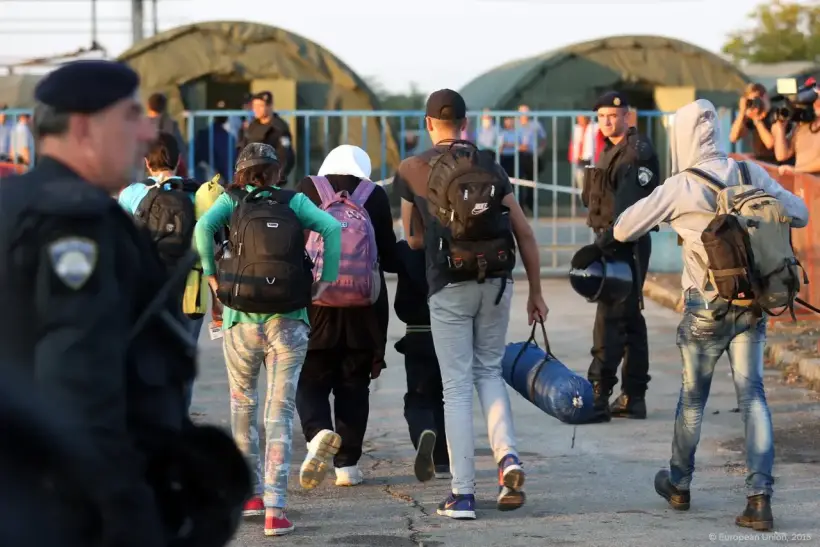
European lawmakers have approved a tougher approach to returning third-country nationals who have no right to remain in the European Union. The reform complements the EU Pact on Migration and Asylum, which became applicable on June 12, 2026, and is designed to speed up procedures, expand digital tools, strengthen mutual recognition of return decisions and open the way for some people to be placed in centres outside the EU.
EU Migration Policy Moves From Pact to Enforcement
InfoMigrants reported that European lawmakers approved a tougher migration policy focused on speeding up the return of people whose applications to stay or receive protection have been rejected. For the European Union, this marks a shift from years of migration-policy negotiations to practical implementation.
This is not a single isolated decision, but a package of new rules. The EU Pact on Migration and Asylum, adopted in 2024, became fully applicable on June 12, 2026. It changes how people are screened at external borders, how responsibility is allocated between countries, how international-protection claims are examined and how support is provided to member states under the greatest pressure.
A separate element is the Return Regulation. A regulation is an EU legal act that applies directly in all member states once it enters into force, without the need for separate national legislation. Its purpose is to create a more unified system for returning third-country nationals who are staying illegally in the EU or have lost the right to remain.
In EU law, “return” means a procedure under which a person must leave the territory of the Union after being denied the right to stay. It can mean voluntary departure, assisted return organized by authorities or enforced removal if the person does not comply.
The EU Tries to Close the Gap Between Decisions and Enforcement
The main problem Brussels is trying to solve is weak enforcement of return decisions. In practice, many people who receive a refusal remain in the EU because procedures drag on, countries of origin do not issue documents, the person moves to another member state or national systems do not exchange information quickly enough.
The European Commission said the new agreement should give member states the tools to make returns more effective. The political logic is clear: if return decisions are not enforced, the entire asylum and migration-control system loses credibility with governments, voters and countries bearing the heaviest pressure.
The new approach is meant to unify rules, reduce opportunities for repeated procedures in different countries and make the consequences of refusal more predictable. If one EU state has issued a return decision, other states should have greater ability to take it into account rather than effectively starting the process again.
For people in the procedure, this means a tighter link between refusal, the obligation to leave and enforcement. For governments, it means faster information exchange and greater use of common digital systems.
Return Centres Outside the EU Become the Key Innovation
The most controversial part of the reform is the possibility of creating so-called return hubs in third countries. These are places outside the EU where people who have been ordered to leave the Union could be temporarily placed.
Such centres may be used for people who have no right to remain in the EU but cannot be quickly returned to their country of origin. The idea is that part of the procedure and waiting period would take place outside the Union, subject to international law and human-rights guarantees.
The Council of the EU said the agreement on the new return system complements the Pact on Migration and Asylum. According to the latest Frontex data cited in the Council’s statement, 64% of Frontex-supported returns have been voluntary. Frontex is the European Border and Coast Guard Agency, which assists EU countries in managing external borders and organizing returns.
The critical questions are which countries will agree to host such centres, who will manage them, what guarantees will be provided to people placed there and how judicial control will operate. This remains the most politically and legally sensitive part of the reform.
Human Rights Become the Main Point of Dispute
Human-rights groups warn that the new system may expand detention, accelerate procedures to the point where people cannot properly present their claims and effectively shift part of the EU’s responsibility beyond its territory. Human Rights Watch said the Pact on Migration and Asylum increases risks to the right to asylum, especially through border procedures, accelerated examination and broader detention.
Supporters of the reform say the new rules must be applied in line with the EU Charter of Fundamental Rights, the Geneva Refugee Convention and the principle of non-refoulement. Non-refoulement means a ban on returning a person to a country where they may face persecution, torture, inhuman treatment or serious danger.
But there is a large gap between formal guarantees and practice. If procedures are too fast, interpreters are unavailable, legal assistance is limited and a person is held in a closed centre, the risk of an erroneous decision increases. This is the core of the criticism.
For the European Union, the task is double: accelerate enforcement while preserving the legal foundation of protection. The more emphasis there is on speed, the greater the risk of court challenges and political conflict between EU institutions, national courts and international organizations.
Border Procedures Will Become Faster and Stricter
The EU Pact introduces more standardized screening of people arriving at external borders. Initial screening should include identification, registration, security checks, health assessment and the collection of biometric data. Biometric data are digital identifiers based on unique physical features, such as fingerprints or facial images.
For some applicants, an accelerated border procedure will be used. It may apply when a person arrives from a country considered safe, when a claim appears manifestly unfounded or when there are grounds for enhanced security screening.
Faster procedures are meant to reduce pressure on national asylum systems. But they also mean people may spend longer in closed or restricted border areas without full access to ordinary life in the receiving country.
For countries at the EU’s external borders, including Greece, Italy, Spain, Cyprus and Malta, the new rules are an attempt to create a more predictable model. For countries inside the Union, they are a way to reduce secondary movements, when a person arrives in one state and then moves to another.
Solidarity Between EU Countries Remains Contested
The Pact introduces a solidarity mechanism between member states. Its purpose is to ensure that countries not receiving large numbers of people help those at the external borders in other ways: by relocating some applicants, financing support or providing operational assistance.
This is one of the most difficult parts of the reform. Southern countries want real burden-sharing because they are often the first to face arrivals across the Mediterranean and other external routes. Some Central and Eastern European countries resist mandatory relocation and prefer financial or technical forms of participation.
The solidarity mechanism is designed to make the system more resilient, but its political cost remains high. If countries dispute contributions, relocation and pressure criteria, implementation may proceed more slowly than the legal entry into force of the rules.
For business, labour markets and municipalities, this also matters. EU migration policy affects not only borders, but also workforce access, integration costs, social housing, schools, health care and local budgets.
Digital Databases Change Migration Control
One technical element of the reform is the greater role of EU-wide information systems. They are intended to help governments see more quickly who has already applied, where a person was registered, what decisions were taken and whether a return order is in force.
Eurodac is particularly important. It is the European biometric database for people seeking asylum and crossing external borders. The updated system is expected to become not just an archive of fingerprints, but a broader tool for managing migration procedures.
For authorities, digitalization means fewer opportunities for duplicate applications and movement between countries without a trace. For applicants, it means a higher level of control and less room to correct errors by filing again in another jurisdiction.
The risk lies in data quality. If information is entered incorrectly, if a person is wrongly identified or if national authorities interpret status differently, an error can spread quickly through the system. Digital efficiency therefore needs to be accompanied by correction mechanisms and judicial protection.
The New System Expands Frontex’s Role
Frontex is set to play a more visible role in the return system. The agency already helps states organize voluntary and enforced returns, coordinate flights, exchange information and work with third countries.
Under the new model, the agency’s importance may grow because return is becoming not a secondary stage after refusal, but a central part of migration policy. If the EU wants to increase enforcement, it needs a common operational mechanism, not only national procedures.
But a larger role for Frontex also raises questions about transparency, accountability and rights oversight. The agency has faced criticism in recent years over operations at external borders. The more authority it receives, the more important independent supervision becomes.
For member states, Frontex is a useful tool: not every country has the resources to organize complex returns alone. For rights groups, it is an area of heightened concern because centralized enforcement may increase speed at the expense of individual assessment.
Labour Markets and Legal Migration Remain on the Agenda
Tougher return rules do not remove Europe’s need for legal migration. Many EU countries face population aging and labour shortages in care, construction, transport, agriculture, hospitality, technology and health care.
The new policy therefore sends a dual signal. Irregular stay and repeated unfounded procedures will be restricted more firmly, but legal channels for work, study, family and skilled migration must remain open. Otherwise, Europe risks tightening control while deepening labour shortages.
This balance matters especially for employers. If returns become faster but visa and work procedures remain slow, businesses will not get the workers they need, and pressure on irregular channels may persist.
For investors and companies with international teams, the main conclusion is that the EU is moving toward a more formalized migration system. Documents, grounds for stay, deadlines, digital registration and compliance with the declared purpose will be checked more strictly.
Political Consensus Is Built Around Control
The reform became possible because demand for a more manageable migration system has grown across the EU. After the 2015 crisis, rising applications in some years and pressure on border countries, governments increasingly demand not only humanitarian guarantees but also enforcement.
The new approach reflects a shift in European politics: the right to asylum formally remains, but procedures become faster and the consequences of refusal tougher. For centrist parties, this is a way to show that the system is manageable; for right-wing forces, it confirms stricter control; for left-wing and rights groups, it raises concerns about lower protection standards.
The practical result will depend not on one vote, but on implementation. Border centres, trained staff, interpreters, lawyers, digital systems, agreements with third countries, transport logistics and judicial oversight will all be needed.
If these elements are not ready, the new rules may produce not speed, but the accumulation of people in border procedures, more court disputes and conflicts between member states.
The EU Enters the Hardest Stage of Migration Reform
Approval of tougher rules is only the beginning. The EU now has to prove that the new system is enforceable, legally durable and compatible with basic protection guarantees. That is far more difficult than adopting a regulation.
For external-border countries, infrastructure and real solidarity matter most. For destination countries, the priorities are enforcement and reducing secondary movements. For people seeking protection, the key issues are access to a fair procedure, interpreters, legal counsel and appeal. For third countries, the questions are cooperation terms, funding and the political cost of participating in return mechanisms.
In the coming months, the main issues will be the practical application of the Pact, negotiations on return centres outside the EU, the functioning of Eurodac, the role of Frontex and how national courts assess the new procedures.
As experts at International Investment report, the EU’s new migration policy marks a shift from reform declarations to an enforcement-based system. The critical risk is that faster returns may make borders more manageable while creating new legal and humanitarian vulnerabilities if access to protection becomes formal rather than effective. The real test for the EU is not how tough the rules are, but whether it can combine control, legal safeguards and the economy’s need for legal migration.
FAQ: The EU’s New Migration Policy
What did European lawmakers approve?
They agreed on tougher rules for returning third-country nationals who have no right to stay in the EU. The reform complements the EU Pact on Migration and Asylum, applicable from June 12, 2026.
What is the EU Pact on Migration and Asylum?
It is a package of binding rules changing border screening, protection-claim procedures, responsibility-sharing among EU countries and returns of people without the right to remain.
What does “return” mean in EU migration law?
It is the procedure under which a person must leave EU territory after being denied the right to stay. Return may be voluntary or enforced.
What are return hubs outside the EU?
They are proposed centres in third countries for people ordered to leave the EU but not quickly returnable to their country of origin. The mechanism remains controversial and requires agreements with host states.
Why do rights groups criticize the reform?
They warn about expanded detention, accelerated procedures without sufficient legal support, erroneous decisions and the transfer of responsibility beyond EU territory.
How will the rules affect countries at the EU’s external borders?
They should receive more standardized procedures, digital tools and a solidarity mechanism. But they will also need infrastructure for border screening and faster claim processing.
Does the reform end legal migration to the EU?
No. It focuses on irregular stay and enforcement of return decisions. Legal channels for work, study, family and skilled migration remain, but documentation and compliance may be checked more strictly.