







 Scandinavian Prefab Housing Market Seen Reaching $7.9 Billion
 Denmark Sets First-Half Tourism Record as Germans Lead
 Drought Dries Bärenschützklamm Waterfalls in Austria
 Thailand Industrial Property Faces Rising Vacancy Risk
 Apartment Prices in Estonia Differ by 51 Times
 European Property Investment Rises to €54 Billion
US Supreme Court approves tightening of rules for migrants
The Guardian
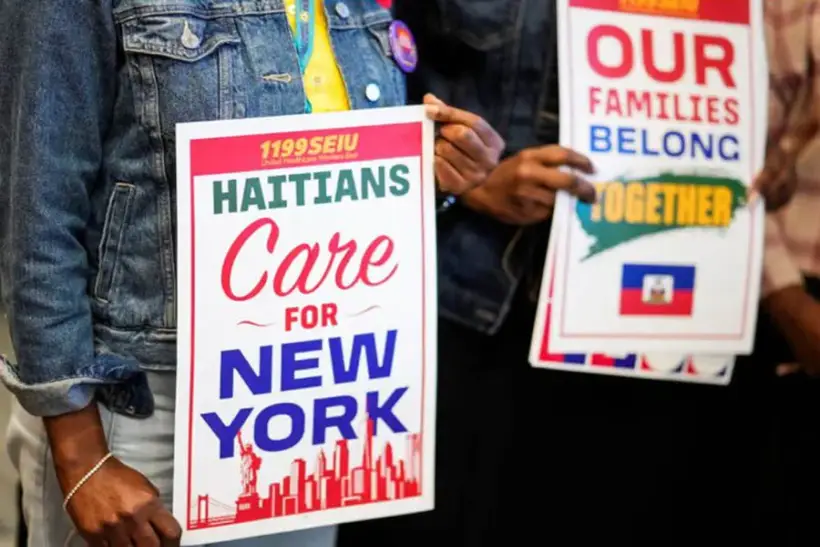
The US Supreme Court has upheld decisions by the Donald Trump administration allowing asylum to be denied at the border and ending temporary protection for certain groups of migrants, The Guardian reports. The ruling also expands powers to deport foreign nationals holding valid residence permits.
What will change for migrants in the US
Over the course of a week, the US Supreme Court issued several rulings in favor of the Trump administration. On June 25, it allowed the termination of Temporary Protected Status (TPS) for nationals of Haiti and Syria. For more than a decade, this program had allowed people from countries affected by war, political crises, and natural disasters to live and work legally in the United States.
On the same day, the Court ruled that the so-called “metering” policy at the US-Mexico border could be applied again. This policy allows US border officials to physically prevent entry to migrants who intend to apply for asylum.
Earlier, on June 23, the Court expanded the authority of immigration enforcement agencies to deport green card holders. Immigration authorities now have broader powers to detain and remove permanent residents who have committed offenses classified as “crimes involving moral turpitude.”
In all three cases, a conservative majority prevailed on the Court by a vote of six to three.
US birthright citizenship: outlook
The rulings are part of a broader US government policy aimed at significantly restricting immigration, primarily from countries in the Global South. The Supreme Court is also expected to rule on whether Donald Trump can restrict birthright citizenship for children born in the United States to temporary visitors and undocumented migrants.
Since returning to the White House, Trump has largely suspended refugee admissions, making an exception only for white South Africans. His administration has also attempted to redesign the admissions system to prioritize English-speaking applicants and migrants from Europe.
In addition, the White House previously suspended immigration applications from nationals of 39 countries, mostly in Africa and the Middle East, including green card and asylum applications. The measure was later blocked by a federal judge.
US immigration policy and court rulings
The practice of limiting access to asylum at the border began forming in the United States in 2016, when the Barack Obama administration introduced measures in response to rising migration, according to Reuters. During Donald Trump’s first term in 2018, border authorities were allowed to stop processing asylum applications when officials deemed the system unable to handle the volume. This became known as the “metering” policy. In 2021, the Biden administration rescinded these restrictions.
After Trump’s return to the White House, his team said the practice could be reinstated if border conditions changed, without specifying criteria. The administration also returned to a more hardline approach on immigration.
Legal challenges to the metering policy have been ongoing since 2017, brought by the rights group Al Otro Lado. In 2024, the US Court of Appeals for the Ninth Circuit ruled that federal law requires border officials to inspect all asylum seekers who “arrive” at designated ports of entry, even if they have not physically crossed into the United States, and found the policy inconsistent with those requirements.
The Supreme Court has previously supported the Trump administration in several emergency immigration-related cases, including allowing deportations to third countries and revoking temporary legal status for hundreds of thousands of Venezuelan migrants.
Expert views on migrants in the US
White House adviser Stephen Miller described asylum claims at the border as “fake,” arguing they are not based on genuine persecution in countries of origin. He said that “America’s doors are fully closed to asylum seekers.” Many experts note that the administration is seeking a return to policies of the 1920s, when the United States sharply restricted immigration and effectively reduced net migration to zero.
Rights groups warn that the consequences of Supreme Court decisions could affect millions of people. The TPS ruling alone directly affects around 350,000 Haitians and about 400,000 Syrians who were allowed to live in the US after fleeing political instability, economic crisis, natural disasters, and civil war.
José Palma, coordinator of the National TPS Alliance, said the administration is effectively stripping legal status from people who have lived in the US lawfully for years. Syrian plaintiff attorney Ahilan Arulanantham said the Supreme Court’s reasoning raises serious concerns not only in immigration law but also regarding racial justice in the country more broadly.
Erika Pinheiro, executive director of the rights group Al Otro Lado, said the ruling violates international law and Congress’s intent. It undermines the US position as a global leader in refugee protection and could set a dangerous precedent for other countries restricting access to asylum.