







 Housing Prices in Israel Fell 1.5% Year-on-Year
 Immigration Slowdown Reshapes the US Sun Belt
 Slovakia Reforms Building Rules as Housing Starts Slide
 EU Proposes New Restrictions on Short-Term Housing Rentals
 Canada Fast-Tracks Tax Rulings for C$1 Billion Investments
 China Nears a Decision on Fresh Stimulus
Up to 10,000 Migrants Are Living on the Streets of Ceuta
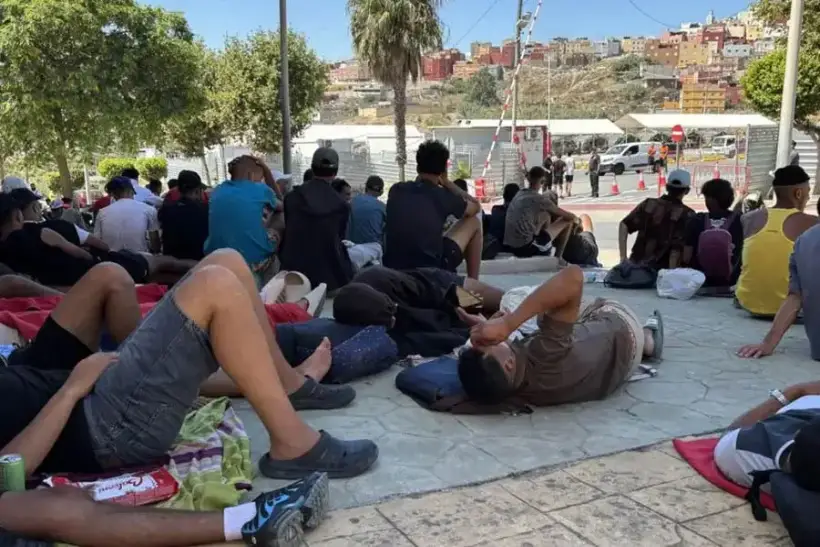
EFE - Laura Rincón
The Spanish autonomous city of Ceuta continues to deal with the consequences of a large-scale influx of migrants from Morocco. Between 8,000 and 10,000 foreigners who entered illegally remain on the streets. The number of thefts, fights and calls to the 091 police emergency number has increased, while police are struggling with the heavier workload. Sanitary conditions are also deteriorating, 20minutos reports.
Migration Crisis in Ceuta
Almost a month ago, Ceuta faced a mass attempt to cross the border illegally from Morocco. More than 70,000 migrants entered the Spanish autonomous city within a short period. For Ceuta, which has a population of around 80,000, such an influx placed a serious strain on urban infrastructure and law enforcement.
Some of the foreigners were subsequently returned to Morocco or accommodated in temporary centers, but the authorities have been unable to resolve the problem completely. According to estimates by the National Police and the Civil Guard, between 8,000 and 10,000 people remain on the streets of Ceuta 24 days after the mass border crossing.
Representatives of the JUPOL police union accuse the Spanish government of inaction and say the resources deployed by the Interior Ministry to address the situation are insufficient. The organization says tensions in the city continue to rise.
Rise in Crime
According to police, the number of calls to 091 has increased tenfold, averaging 200 per day. Most reports concern theft and petty crime. Assaults and fights between groups of migrants are also being reported. Police say Ceuta is now facing types of crime that were previously uncommon in the city.
Residents of Ceuta have become afraid to go out, while the city’s summer nightlife has almost disappeared. Bar terraces that would normally remain full until 2 a.m. are now empty, and some establishments do not open in the evenings because of the lack of customers.
Spain’s Interior Ministry has reinforced National Police and Civil Guard units, but around 400 officers are responsible for maintaining public order. The military has also been deployed to help provide security. Soldiers are stationed near supermarkets, among other locations, while trucks delivering food to stores in the morning are escorted by the military.
Illegal Crossings to Mainland Spain
Police have detected groups that charge migrants to take them across the Strait of Gibraltar to mainland Spain. Small boats and jet skis are used for the crossings, and some vessels have already been seized.
The Civil Guard association says migrants are sometimes offered the possibility of paying for the journey later, leaving them indebted to the organizers. After reaching the mainland, some are forced to engage in illegal activities to repay their debts. Women, according to AUGC, may be drawn into prostitution. The organization says such networks operate professionally, providing forged documents and accommodation and arranging migrants’ onward movement across Spain.
Ceuta Lacks Temporary Accommodation
The authorities have set up two temporary accommodation facilities with a capacity of 1,800 people each. Many migrants go there for food or stay overnight, but most remain on the streets.
Some unaccompanied migrant minors have been housed in schools. According to police, other educational institutions have been occupied by groups of foreigners who sleep in courtyards and inside buildings. Law enforcement officials fear this could cause problems when the school year begins. Makeshift camps have also appeared in city parks and on beaches, leaving some public spaces effectively unavailable to local residents.
Toilets and showers have been installed for the arrivals, including at Trampolín Beach, but there are not enough of them. The Unified Association of Civil Guards, AUGC, says migrants are relieving themselves in streets, on beaches and in the sea. The organization warns that this is creating serious sanitation problems.
Conclusion
The JUCIL Civil Guard association says the return of migrants to Morocco is proceeding extremely slowly, with only 10 to 20 people leaving Ceuta each day. At this pace, the tense situation could persist for a long time.
The lack of a clear strategy is also having an impact, with no precise instructions for officers working amid the crisis. Police clear makeshift camps from Trampolín Beach, but migrants return the following day because they have nowhere else to stay.
Authorities in other European countries have criticized Spain’s relatively lenient migration policy, including its program to legalize people who entered the country illegally. International Investment analysts note that the EU as a whole is tightening rules for foreigners, particularly refugees and undocumented migrants. Spain has so far maintained a different approach that contrasts sharply with the broader trend, although the crisis could push the authorities toward new measures.