







read also
 Australia’s Spring Auctions Rise but Remain Well Below 2025
 Number of Foreigners Holding Turkish Residence Permits Exceeds 1.27 Million
 Demand from Russian Tourists for Holidays in Georgia Rises by 20–25%
 Montenegro Property Buying Costs in 2026
 Four in Ten Companies Would Not Choose Slovakia
 Gulf Countries Prepare Unified Tourist Visa
Georgia’s Passport Recognised as the Strongest in the Region
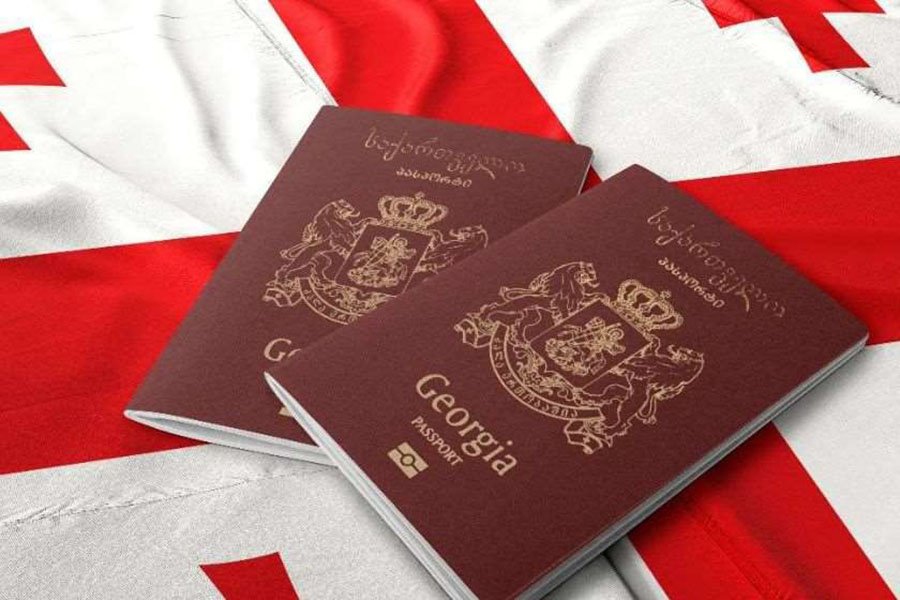
Photo: Imedi
Georgia has strengthened its position in the international passport mobility index following the results of 2026. In the Passport Index ranking, the country ranked 33rd globally, achieving the strongest result in the region. The indicators reflect expanded opportunities for visa-free international travel.
Georgia’s dynamics
The Passport Index evaluates visa regimes applicable to national passports and is used for a comparative assessment of citizens’ international mobility. The Georgian passport outperformed those of Armenia, Azerbaijan, Turkey, and Russia. In the global ranking, the country placed 33rd. Georgia’s position has steadily improved over the past decade. In 2015, the country ranked 59th, followed by 57th in 2016, 45th in 2017, 40th in 2018, and 39th in 2019.
Georgian citizens are entitled to visa-free entry to 79 countries out of the 133 included in the ranking. In a further 50 destinations, visas can be obtained on arrival. Travel to four destinations requires an electronic visa.
Best conditions for business
Previously, Georgia entered the group of global leaders in terms of business conditions, ranking 4th in the World Bank’s Ready for Business (B-READY 2025) index among 101 countries. It shared this position with South Korea, Singapore, and Estonia, outperforming a number of developed economies, including the United Kingdom, Spain, Canada, the United States, the Czech Republic, Croatia, and Latvia.
In terms of operational efficiency, Georgia ranked second globally, уступив only to Singapore. This indicator reflects the speed of administrative procedures, the level of bureaucratic burden, and the effectiveness of interaction between businesses and public authorities.
The B-READY index was launched by the World Bank as a replacement for Doing Business and focuses not only on formal regulatory norms but also on their practical implementation. The methodology assesses how rules operate in practice, including the quality of public services, procedural transparency, and actual administrative pressure on businesses.
Georgia’s high position in the B-READY ranking aligns with the country’s long-term trajectory. In previous editions of Doing Business, Georgia consistently ranked among the world’s top ten economies, indicating the preservation of competitive advantages in the business environment under the World Bank’s updated assessment framework.
Georgia completes construction of the Rikoti Pass motorway[/url]
Georgia’s economy demonstrated resilient performance in 2025 despite ongoing geopolitical risks. GDP growth reached 7.5% over the first eleven months of the year, according
to the National Statistics Office (Geostat). The largest contributions to economic growth in November came from transportation and storage, manufacturing, real estate activities, financial and insurance services, as well as mining and quarrying. A decline in activity was recorded in construction and energy.
Georgia’s external trade turnover increased by 9.5% year-on-year in January–November, reaching $23.2 billion. Exports amounted to $6.6 billion (+10.1%), while imports rose by 9.3% to $16.6 billion. VAT payers’ turnover used in rapid estimates of economic growth reached 15.1 billion lari in November (+10.1%).
Georgia’s Prime Minister Irakli Kobakhidze noted that over the first ten months of 2025, consolidated and state budget revenues exceeded 100% of the plan. External debt declined to 34% of GDP, compared with more than 60% in 2020. The stability of the national currency was also ensured.
Economic development
Georgia’s economy demonstrated resilient performance in 2025 despite ongoing geopolitical risks. GDP growth reached 7.5% over the first eleven months of the year, according
to the National Statistics Office (Geostat). The largest contributions to economic growth in November came from transportation and storage, manufacturing, real estate activities, financial and insurance services, as well as mining and quarrying. A decline in activity was recorded in construction and energy.
Georgia’s external trade turnover increased by 9.5% year-on-year in January–November, reaching $23.2 billion. Exports amounted to $6.6 billion (+10.1%), while imports rose by 9.3% to $16.6 billion. VAT payers’ turnover used in rapid estimates of economic growth reached 15.1 billion lari in November (+10.1%).
Georgia’s Prime Minister Irakli Kobakhidze noted that over the first ten months of 2025, consolidated and state budget revenues exceeded 100% of the plan. External debt declined to 34% of GDP, compared with more than 60% in 2020. The stability of the national currency was also ensured.
GDP growth in Georgia for 2024 revised up to 9.7%: new Geostat estimate
Analysts at [url=https://internationalinvestment.biz/o-nas.html]International Investment note that institutional changes and Georgia’s macroeconomic indicators for 2025 were accompanied by lower regulatory and operational risks and increased predictability of business conditions. This has heightened investor interest in sectors where rule stability and income manageability are key factors.
Among the most attractive areas are tourism and hospitality real estate, where sustainable demand, transparent management models, and a long-term planning horizon are essential. Rising international mobility and the development of tourism infrastructure are strengthening the role of this segment within the structure of investment demand. The branded luxury hotel segment is considered the most resilient both globally and in Georgia. One of the largest projects of this type is being implemented in the resort area of Batumi. The guaranteed yield of the Wyndham Grand Batumi Gonio complex is estimated at 10%, while potential returns are assessed at 19% and above.
Such assets contribute to the formation of a more structured hospitality market and are oriented toward a solvent tourist flow. Overall, institutional changes, economic momentum, and deeper international integration create conditions for investments in assets with a clear income logic and more predictable operating rules.
Investment strategies
Analysts at [url=https://internationalinvestment.biz/o-nas.html]International Investment note that institutional changes and Georgia’s macroeconomic indicators for 2025 were accompanied by lower regulatory and operational risks and increased predictability of business conditions. This has heightened investor interest in sectors where rule stability and income manageability are key factors.
Among the most attractive areas are tourism and hospitality real estate, where sustainable demand, transparent management models, and a long-term planning horizon are essential. Rising international mobility and the development of tourism infrastructure are strengthening the role of this segment within the structure of investment demand. The branded luxury hotel segment is considered the most resilient both globally and in Georgia. One of the largest projects of this type is being implemented in the resort area of Batumi. The guaranteed yield of the Wyndham Grand Batumi Gonio complex is estimated at 10%, while potential returns are assessed at 19% and above.
Such assets contribute to the formation of a more structured hospitality market and are oriented toward a solvent tourist flow. Overall, institutional changes, economic momentum, and deeper international integration create conditions for investments in assets with a clear income logic and more predictable operating rules.