







read also
 Vienna Leads Rentals, Alpine Resorts Earn More
 US Prepares to Revoke Up to 200,000 Visas of Asylum Applicants
 Denmark Pushes EU Toward Tougher External Borders
 New-Build Home Prices in Russia Rise 34% in Three Years
 Singapore Core Inflation Hits Highest Since 2024
 High Prices Cool Hong Kong New-Home Demand
Record Air Travel Demand Masks Capacity Shortages
Global Aviation Closes 2025 at Historic Highs
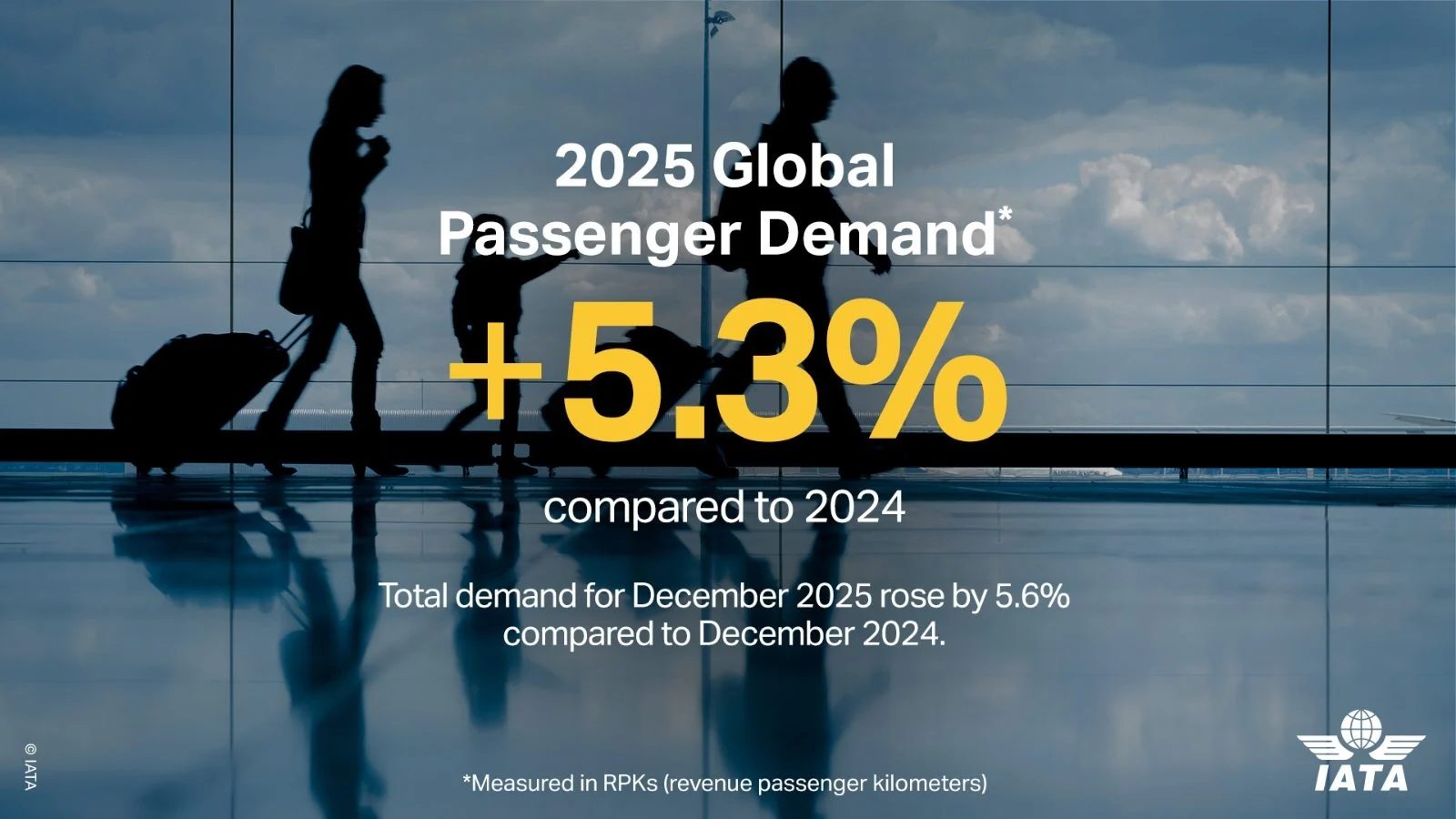
The global air passenger market reached historic highs in 2025, delivering strong demand growth while continuing to face deep-rooted capacity constraints. According to the International Air Transport Association (IATA), total passenger demand, measured in revenue passenger kilometers (RPKs), rose by 5.3% compared with 2024, bringing industry growth back in line with long-term historical trends after the post-pandemic rebound. Capacity expanded by 5.2%, while the global passenger load factor climbed to a record 83.6%, underscoring the intense utilization of existing aircraft fleets.
International Travel Drives Market Expansion
International traffic was the main engine of growth, with demand rising by 7.1% and capacity increasing by 6.8%. The international load factor reached an all-time high of 83.5%, reflecting renewed cross-border mobility and strong consumer appetite for international travel. Domestic markets expanded more modestly, with demand up 2.4% and capacity growing by 2.5%, resulting in a broadly stable but slightly lower average load factor.
Regional Trends Highlight Uneven Recovery
Performance varied significantly by region. Asia-Pacific airlines recorded the fastest growth in international traffic, approaching 11% for the full year, and ended 2025 with the highest load factor globally. European and Middle Eastern carriers also posted solid gains alongside improving capacity utilization. By contrast, North America lagged, with weaker domestic performance in the United States weighing on overall results. African carriers achieved record load factors for the region, despite remaining the lowest globally.
Supply Chain Constraints and Climate Pressure
Behind the headline demand figures, airlines continue to face severe supply-side challenges. Aircraft and engine delivery delays, limited maintenance capacity, and broader supply chain disruptions forced carriers to keep older aircraft in service and operate flights at very high load factors. These constraints generated estimated additional costs exceeding $11 billion in 2025. At the same time, the industry faces mounting pressure to decarbonize, with IATA stressing that large-scale deployment of sustainable aviation fuel will be essential to support long-term growth.
As reported by experts at International Investment, the strength of global passenger demand in 2025 conceals structural capacity bottlenecks that could limit future expansion. Addressing supply chain fragility and accelerating investment in sustainable aviation technologies will be critical for maintaining growth momentum without exacerbating operational and environmental risks.