







 Vietnam Mortgage Surge Pushes Homes Out of Reach
 Lithuanian Apartment Prices Accelerate Across Major Cities
 London Flats Lose Value Ahead of Leasehold Reform
 Construction of the Batumi–Sarpi Highway Begins in Georgia
 Baltic Property Investment Accelerates in 2026
 Hong Kong and Singapore Renew Their Expat Rivalry
War in the Middle East: resumption of air travel
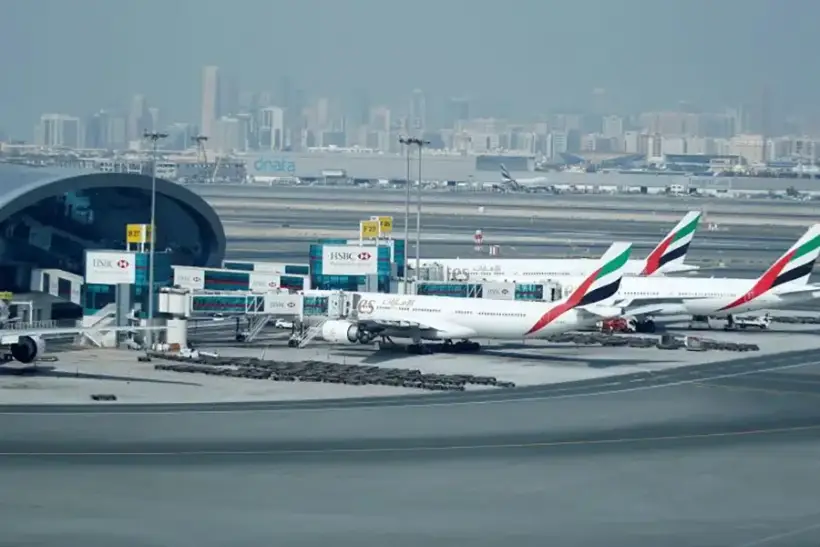
UAE and Russia launch evacuation flights
The escalation of the conflict between Israel, the United States, and Iran has led to the cancellation of 13,000 flights in the Middle East, according to aviation analytics company Cirium. Air traffic in the UAE began to recover on March 3, but only in a limited capacity. Israel has announced plans to resume operations. Meanwhile, the airspace over Iran, Iraq, Qatar, and Kuwait remains closed. Most international flights have been canceled or postponed indefinitely.
UAE airports resume operations
Since the evening of March 2, UAE aviation authorities have lifted some restrictions. Authorities reported that Dubai International Airport and Dubai World Central are accepting and dispatching only a small number of flights. Passengers are advised not to go to terminals without confirmation from their carriers. Emirates has resumed flights on a limited basis, prioritizing passengers with early bookings.
According to Flightradar24, at least 16 Etihad Airways flights departed from Abu Dhabi on March 2 to London, Amsterdam, Moscow, and Riyadh. Commercial Etihad operations are suspended until 14:00 on March 3; only repositioning, cargo, and repatriation flights are allowed. Flydubai has started sending passengers from Dubai to Moscow, Novosibirsk, Yekaterinburg, and Kazan, with nine flights planned for March 3.
Russian airlines begin evacuating tourists
The first flight in three days from Abu Dhabi arrived in Moscow on the evening of March 2. The Etihad Airways flight EY843 landed at Sheremetyevo at 21:08 Moscow time. The flight took about seven hours, following a rerouted path to avoid closed zones. Passengers greeted the landing with applause.
Aeroflot is operating three high-capacity flights on March 3: SU525 and SU525D from Dubai to Moscow, and SU531 from Abu Dhabi to Moscow. Priority is given to passengers whose February 28 flights were canceled, according to Fontanka. The airline requested permits for evacuation flights on March 4; on both days, flights from Moscow to the UAE will operate empty. Regional Aeroflot flights from Saint Petersburg, Yekaterinburg, and Krasnodar are canceled until March 8, with passengers being routed via Moscow.
S7 Airlines is operating a Dubai–Novosibirsk flight on March 3 at 18:00 local time with a technical stop in Antalya for refueling. The airline has also requested flights from Dubai to Moscow on March 3, 4, and 5, and from Dubai to Novosibirsk on March 4–5. Priority is given to passengers holding tickets from February 28.
On the morning of March 3, flydubai’s 05:50 flight from Tolmachevo Airport (Novosibirsk) to Dubai was canceled. Another aircraft was delayed, and arrivals from Dubai were postponed.
Israel: Ben Gurion Airport remains closed
Ben Gurion Airport in Tel Aviv was expected to reopen on March 3, but remained closed in the morning. Authorities stated that resumption of flights is planned for a later time. Once the situation stabilizes, operations will gradually expand, initially allowing only Israeli carriers.
National airline El Al is preparing a large-scale operation to return Israelis from abroad. The company plans evacuation flights from 22 cities, including New York, London, Paris, Rome, and Los Angeles, but these will begin only after the airport reopens. Flights will be free for passengers with canceled tickets.
During the restrictions, Israeli airlines organized alternative routes via land borders. Arkia operates flights from Athens, Rome, and Larnaca to the Egyptian airport in Taba, from where Israelis can return home via the border crossing, which operates 24/7.
According to the Israeli Population and Immigration Authority, around 34,000 foreign tourists remain in the country. About 300,000 Israelis abroad cannot return home.
Impact of the war on other countries
Around one million travelers worldwide are affected by flight cancellations and airspace closures. Associated Press reports that more than 58,000 Indonesian citizens are in Saudi Arabia performing Umrah during Ramadan. Approximately 30,000 German tourists are stuck on cruise ships, in hotels, or in closed airports in the Middle East and cannot return home.
Germany has sent planes to Oman and Saudi Arabia to evacuate sick passengers, children, and pregnant women. The Czech Republic is sending aircraft to Egypt and Jordan to evacuate its citizens from Israel and neighboring countries. The United Kingdom is preparing various options, including possible evacuation; over 102,000 British citizens have registered their presence in the region.
Paris airports have also felt the crisis. At Charles de Gaulle, 300 flights were canceled from March 2 to 8, affecting 35,000 passengers over the past weekend alone. Traffic dropped 7% at Roissy and 1% at Orly. The International Air Transport Association (IATA) has called on the parties not to target airplanes and airports.
Scale of the Middle East war’s consequences
Since the conflict escalated on February 28, about 13,000 flights in the Middle East have been canceled. Of the roughly 32,000 flights scheduled for arrivals and departures in the region, 40.3% were not carried out, Cirium reports. On Saturday, airlines canceled 3,133 flights; on Sunday, 5,270; and on Monday, another 4,500.
Gulf airports serve as major transit hubs between Europe and Asia. Daily flights from London Heathrow to Dubai and Doha total ten in each direction, and Abu Dhabi sees eight flights. The airspace closure affected not only local carriers: Emirates has 277 aircraft, Qatar Airways 273, and Etihad Airways 122. All were stranded in foreign airports.
International Investment analysts note that the aviation sector has not faced a crisis of this scale since the COVID-19 pandemic. Preliminary losses are in the hundreds of millions of euros, considering Gulf carriers handle about 45% of passenger traffic between Europe and Asia. If the conflict lasts several weeks, key routes may become unprofitable, and insurers and regulators may raise operational costs.