











Puerto Vallarta in Mexico regains momentum after a security shock
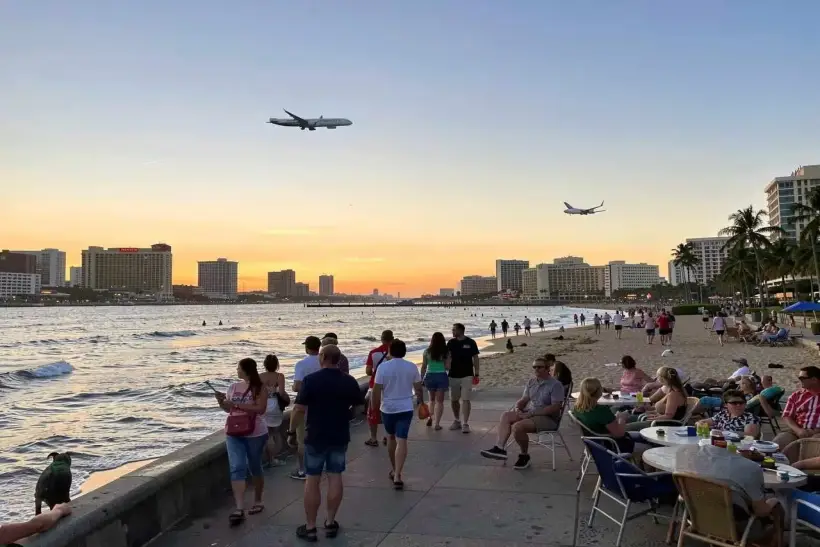
The Mexican resort is recovering, but the “tourists are rushing back” line overstates the story
Puerto Vallarta in Mexico remains one of the country’s best-known Pacific resort markets, but the claim that travelers from the United States, Canada and the United Kingdom are rushing back without regard for recent cartel-related violence goes too far. A more accurate picture as of March 13–14, 2026 is that the resort suffered a short-term shock after major security incidents in Jalisco in late February, faced cancellations and travel disruption, and is now moving through an early recovery phase. British and Canadian travel advisories both referred to roadblocks, vehicle burnings and clashes in the aftermath of the violence, while also noting that conditions later stabilized. U.S. travel guidance for Mexico continues to emphasize elevated caution, including stronger concern around Jalisco.
The violence disrupted travel, but it did not break the destination
The late-February violence clearly affected tourism operations. During the crisis, some flights were disrupted, foreign nationals were advised to shelter in place, and parts of the local transport and visitor economy were temporarily affected. The U.S. Embassy said airports did not shut entirely, but roadblocks disrupted airline operations and led to some domestic and international cancellations in Puerto Vallarta. International reporting also described cancellations and heightened anxiety among visitors. That makes the story less about tourists ignoring the violence and more about a resilient destination beginning to recover after a meaningful operational and reputational shock.
Airport traffic suggests resilience rather than a simple boom
Official and market-linked data point to a mixed but still resilient picture. GAP reported that Puerto Vallarta airport’s passenger traffic fell 5.3% in February 2026 compared with February 2025. That confirms the security crisis had a measurable impact on demand and movement. At the same time, the drop was limited enough to suggest that the resort has not suffered a structural collapse. The market appears weakened in the short term, but still fundamentally active and recoverable.
U.S. and Canadian airlines remain central to the recovery story
The strongest evidence of continuing demand comes from North America. United Airlines continues to market flights to Puerto Vallarta, and U.S. media reported that the airline had resumed operations after the February disruption, while still offering flexibility to affected customers. Air Canada is also actively selling Toronto–Puerto Vallarta service, reinforcing the depth of Canadian demand for the destination. In practical terms, this means the recovery story is being driven primarily by the U.S. and Canada rather than by the UK market.
The U.K. angle is weaker than the original claim suggests
The most fragile part of the original narrative is the role assigned to British Airways. At the time of review, there is no reliable confirmation that British Airways operates nonstop London–Puerto Vallarta flights. Flight search evidence instead points to connecting itineraries rather than direct service between London and Puerto Vallarta. That does not mean British travelers are absent from the market, but it does mean the claim that British Airways is leading the return of visitors to the resort is not supported by the available evidence. For the U.K., the safer conclusion is that travelers can still reach Puerto Vallarta, but not through a clearly confirmed British Airways nonstop recovery push.
Safety remains the defining factor for spring travel demand
By mid-March 2026, Puerto Vallarta in Mexico does not look closed to international tourism, but neither does it fit a carefree narrative. Foreign governments say conditions have stabilized after the February violence, yet they continue to urge travelers to stay informed and weigh the risks of travel in Jalisco. For the tourism market, that means recovery is happening under a security shadow. Demand may return, but it remains highly sensitive to new warnings, operational disruption and traveler perception. The most accurate conclusion is therefore not that tourists are flooding back despite cartel violence, but that a major Mexican resort is working through the aftershocks of a serious security event while retaining its long-term appeal.
As International Investment experts note, Puerto Vallarta in Mexico shows that even a serious security shock does not automatically destroy demand in a strong resort market, but recovery is rarely linear. For investors and tourism businesses, the real indicators to watch now are route stability, booking normalization and the ability of authorities to preserve confidence through the rest of the high season.