







 Fines for Illegal Rentals in Spain Reach €800,000
 Australia’s Spring Auctions Rise but Remain Well Below 2025
 Number of Foreigners Holding Turkish Residence Permits Exceeds 1.27 Million
 Demand from Russian Tourists for Holidays in Georgia Rises by 20–25%
 Montenegro Property Buying Costs in 2026
 Four in Ten Companies Would Not Choose Slovakia
Gulf Air Reroutes Flights as Bahrain Airspace Stays Shut
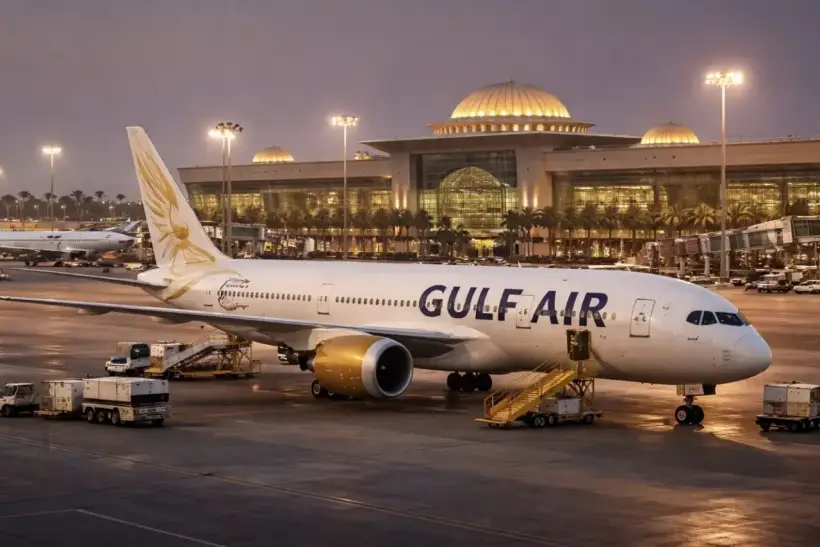
Gulf Air shifts part of its operation to Dammam
Bahrain’s national carrier Gulf Air has been forced to reshape its flight network after the closure of the country’s airspace amid escalating regional conflict. As of March 16, the airline’s regular services to and from Bahrain International Airport remained temporarily suspended, while part of its operations had been moved to temporary commercial flights through King Fahad International Airport in Dammam, Saudi Arabia. The move has become Gulf Air’s main emergency response, allowing it to preserve limited international connectivity while Bahrain remains outside normal aviation operations.
Gulf Air’s official website states clearly that scheduled services to and from Bahrain International Airport remain temporarily suspended and that the airline is currently operating temporary commercial flights via Dammam. For passengers, that means the normal logic of travel through Manama has been broken. Instead of routine departures and connections from Bahrain, travelers now have to rely on alternative infrastructure outside the country. In practical terms, this is no longer a simple schedule adjustment but a temporary redesign of the airline’s operating model.
Why Gulf Air had to suspend Bahrain operations
The trigger was the continuing closure of Bahrain’s airspace during a period of military escalation in the Gulf. The Wall Street Journal reported that Bahraini authorities moved empty passenger and cargo aircraft out of Bahrain International Airport as a precaution after missile and drone attacks affected infrastructure and residential areas. Flightradar24 tracked 21 aircraft, including several Gulf Air jets, being repositioned to other countries in about an hour. That suggests both the airline and authorities were responding not to a short operational disruption, but to a broader need to protect assets and maintain readiness for eventual recovery.
This reading is reinforced by airport and diplomatic updates. Bahrain International Airport has said operations remain suspended until the airspace can reopen safely, while the US State Department continues to advise Americans to reconsider travel to Bahrain because of terrorism and armed conflict. The department also ordered non-emergency US personnel and family members to leave the country on March 2. Together, these signals show that the disruption is part of a wider regional security crisis rather than an isolated airline issue.
Temporary flights through Saudi Arabia became the emergency workaround
With Bahrain’s hub effectively unavailable, Gulf Air launched a limited transport scheme through Dammam. The airline’s official special flights page says it is operating assistance flights for Bahrain residents and GCC nationals affected by the Middle East airspace closure. Regional aviation coverage also reported that Gulf Air had begun running limited international services under this temporary arrangement and planned to resume full operations only after authorities confirmed safe conditions.
The significance of this move is twofold. It allows the airline to preserve at least part of its passenger network, but it also creates a new layer of complexity for customers who now have to reach another country to board Bahrain’s national carrier. In regional aviation terms, this is an unusual case where an airline has effectively externalized part of its home-base operation because its domestic airspace has become unusable.
What Gulf Air is offering passengers instead of normal scheduling
At the same time, Gulf Air has introduced more flexible booking policies. The French version of the airline’s site states that passengers holding tickets with original travel dates up to March 21, 2026 may change their reservations free of charge onto Gulf Air-operated flights up to May 15, 2026. That matters because it shows the airline is planning not for a one-day interruption, but for a wider period of passenger disruption that could extend well beyond the initial closure window.
For travelers, that policy reduces direct financial losses but does not eliminate the disruption. They still need to monitor whether their itinerary is operating through Dammam, determine whether they qualify for special assistance flights and reorganize their ground transport. In that sense, descriptions of “temporary schedule changes” understate the scale of what has happened. A more accurate description is that Gulf Air has moved into an emergency operating pattern with a partial substitute airport model.
Why Gulf Air’s situation matters across the Gulf aviation market
This is not only a Bahrain story. It shows how exposed Gulf carriers are to the closure of airspace and to military escalation near core transport corridors. Once a home hub stops functioning normally, airlines must simultaneously protect their fleets, retain passengers, preserve route structures and contain reputational damage. That is why Bahrain’s decision to relocate empty aircraft and Gulf Air’s decision to use Saudi Arabia as a fallback base look like connected parts of one broader resilience strategy.
For the wider market, the episode is also a reminder that aviation stability in the Gulf now depends not only on demand, fuel prices or airline balance sheets, but on the physical security of the airspace itself. Even a relatively small country with a strategically important national carrier can be forced to rebuild its operating model within days. Gulf Air has therefore become one of the clearest current examples of how geopolitics can directly alter routes, hubs and passenger experience.
As experts at International Investment note, the Gulf Air disruption shows that backup logistics and route flexibility are no longer optional for Gulf carriers but essential to resilience. If Bahrain’s airspace closure lasts longer, the airline may need to deepen its temporary model through external airports, with implications not only for passengers but also for the broader competitive balance of regional aviation.