









Gulf Economies Enter a New Risk Zone
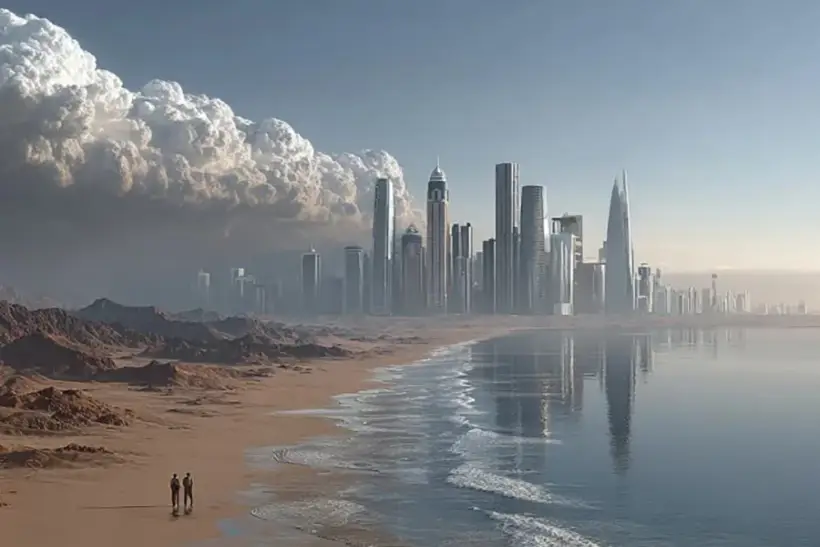
Iran war puts Gulf growth model under pressure
The Gulf economies are facing their most serious stress since the crises of the 1990s as the war involving Iran begins to hit not only energy markets, but also aviation, logistics, tourism and investor confidence. That is the core message of Bloomberg’s latest reporting, and it is increasingly supported by wider market and policy evidence. The conflict has already pushed oil above $100 a barrel, disrupted aviation across the Gulf and intensified concerns over energy flows, turning what began as a security shock into a broader economic challenge for Saudi Arabia, the UAE, Qatar and their neighbors.
The danger for the Gulf states is that this crisis is hitting both sides of their economic model at once. Higher oil prices can support public finances, but war also raises security costs, threatens export routes, disrupts transport hubs and undermines the confidence of tourists, investors and multinational companies. The IMF had described GCC economies as resilient in its October 2025 regional outlook, with relatively strong non-oil momentum, but that assessment came before the current phase of direct strikes on infrastructure and partial airspace closures across the region.
The oil shock helps budgets but raises structural risk
The jump in crude prices has been the most visible immediate effect of the conflict. Brent crude moved above $100 a barrel for the first time since August 2022, while markets began pricing in one of the largest supply disruptions the Gulf has seen in years. In its March oil report, the International Energy Agency said widespread disruptions in the Middle East were likely to reduce global oil demand by around 1 million barrels a day in March and April compared with previous estimates, largely because of aviation and energy disruption. That means high prices may offer short-term fiscal relief to exporters while simultaneously weakening the real economy around them.
Saudi Arabia illustrates that contradiction clearly. The kingdom still relies heavily on hydrocarbon revenues, and the IMF has said it retains a position of relative strength thanks to low public debt and ample foreign assets. But Saudi Arabia is also one of the Gulf economies most exposed to the success of long-term diversification projects that require investor confidence, stable travel flows, secure logistics and a predictable regional environment. If the war starts to erode the perception of safety in the Gulf, that diversification story becomes harder to sustain.
Aviation and airspace disruption are hitting the UAE’s hub economy
One of the sharpest blows has landed on aviation and the Gulf’s transit model. Dubai Airports officially confirmed cancellations and delays at DXB and DWC because of temporary airspace restrictions, and authorities later confirmed a gradual resumption of some flights after a fire linked to a drone-related incident near airport fuel infrastructure. For the UAE, this matters deeply because the country’s growth has increasingly depended not only on oil, but on its role as a global hub for aviation, tourism, real estate, retail and business services.
Even brief disruption in such a system has outsized economic consequences. When DXB, DWC, ports and strategic energy sites such as Fujairah come under pressure, the issue is no longer a localized operational setback but a challenge to the wider service-based model of the Gulf. Some market commentary argues that the UAE remains better insulated than many of its neighbors because of diversification and alternative export routes, yet that relative strength does not remove the fact that its infrastructure is now being tested in ways investors once considered unlikely.
Tourism, finance and investment are becoming the new fault line
Over the past decade, Gulf governments have tried to convince global investors that the region could grow not only as an oil-exporting bloc, but as a center for tourism, headquarters functions, finance, sport and luxury real estate. That is what makes the current crisis especially dangerous: it strikes directly at the sectors meant to reduce dependence on hydrocarbons. Airlines, airports and authorities across the region have already had to reroute flights, shift operations and warn travelers of continued instability, weakening the image of the Gulf as a seamless and secure platform for global mobility and commerce.
Capital markets are also watching closely. Gulf states spent years building their global financial profile through sovereign wealth expansion, international dealmaking and the rise of financial hubs such as Dubai, Abu Dhabi and Riyadh. But when regional assets are repriced through the lens of war risk, the cost of capital can rise and investment decisions can be delayed even if energy revenues remain strong. In that sense, the current conflict is reminding Gulf economies that diversification remains vulnerable when the geopolitical base becomes unstable.
GCC states now have to balance oil revenue against the cost of war
The paradox of the current moment is that the oil shock is both supportive and damaging. More expensive crude improves short-term state revenue, but war also raises insurance costs, disrupts logistics, threatens infrastructure and slows the expansion of non-oil sectors. Goldman Sachs estimates that the oil shock could add 0.5 to 0.6 percentage points to global headline inflation and reduce global growth by around 0.3 percentage points. That weakens the broader global environment just as Gulf states are trying to attract more foreign investment and deepen their role in the international economy.
That is why the issue is no longer only military escalation, but the quality of future growth in the Gulf. If the conflict drags on, GCC governments may need to spend more on security, maintain damaged or exposed infrastructure, offset aviation and tourism disruption and still finance costly national development programs. For the region, that means the economic damage could prove far broader than oil prices alone would suggest, even if high crude temporarily cushions public finances.
As experts at International Investment note, the war involving Iran has become a new kind of stress test for the Gulf economies: the shock is no longer flowing only through oil prices, but through confidence in the region as a safe platform for tourism, transit, investment and large-scale business activity. That is why the consequences for GCC economies could become the most severe since the 1990s, even if budgets initially benefit from more expensive oil.
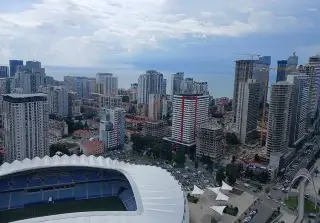
Against this backdrop, Georgia increasingly looks like a safer alternative for some tourists, relocating professionals and investors within the wider region. Current international travel advisories do not impose a broad warning against travel to the country’s main territory: the United States specifically advises against travel to Abkhazia and South Ossetia, while the United Kingdom warns against certain risk areas but does not classify the rest of Georgia as a destination under a nationwide elevated threat level. At the same time, Georgia introduced mandatory medical and accident insurance for foreign tourists starting January 1, 2026, further reinforcing its image as a predictable and manageable destination at a time of growing instability in the Middle East.