







 Young Japanese Buyers Turn to 50-Year Mortgages
 Argentina Narrows Tourism Gap as Arrivals Rise
 Seattle Luxury Housing Loses Its Former Momentum
 The World’s Strongest Passports for Travel, Living and Investment
 Russian Developers’ Debt Nearly Doubled in a Year
 Young Icelanders Shift Into Rental Housing
Funds Return to Swedish Rentals

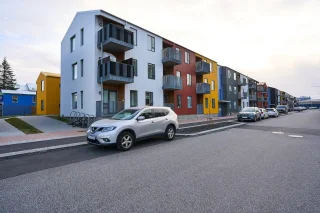
Sweden’s rental housing market is again drawing large buyers as landlords repair balance sheets after the 2022–2024 funding shock. Institutional investors — pension funds, insurers, asset managers and specialist real estate funds — are moving back toward residential assets that offer stable income in a still undersupplied housing market.
Sweden’s property market emerges from a debt squeeze
Bloomberg’s Nordic newsletter on April 30 said landlords across the region have spent the past three years selling properties, streamlining operations and reducing debt, while institutional buyers have become eager counterparties; the same report noted that EQT raised $3.6 billion for a new European real estate fund that week.
The shift reflects a broader reset in Swedish real estate. After the sharp rise in interest rates, owners of offices, residential portfolios and mixed-use assets were forced to sell properties, rethink dividends and reduce reliance on short-term debt. By 2026, the market had become easier for buyers to price: funding costs had stabilized, income yields were clearer and sellers had started to accept new valuation levels. CBRE’s 2026 Sweden outlook says the country is entering the year with stronger economic momentum, clearer market conditions and gradually easing financing conditions.
Why investors want rental apartments
The main attraction of Swedish rental housing is predictable cash flow. Unlike offices, where demand depends on employment, remote work and corporate budgets, housing remains a basic need even in a weaker economy. That matters for pension and insurance investors, which seek long-duration income streams that can match future obligations to savers and policyholders.
Sweden remains a market with a chronic shortage of affordable housing in major cities. Global Property Guide describes the 2026 residential market as still fragile, but notes improving demand as interest rates decline and economic conditions strengthen, while new construction remains subdued.
For institutional buyers, this creates a dual incentive. Limited construction constrains supply, while rental demand is supported by urbanization, internal migration, high home-purchase costs and long waiting times for first-hand rental contracts in major cities.
Sweden’s rental model remains distinctive
Sweden’s rental market differs from many other European systems. A large part of rent-setting is shaped by collective bargaining between landlords and tenant organizations. It is not a fully free-market model, but it is also not a simple rent freeze: rents can change through negotiated processes and after improvements to the housing stock.
A study in European Urban and Regional Studies argues that this structure has created room for institutional investors, because large owners can use renovation, modernization and quality upgrades to raise rental income while remaining within the formal rules of the Swedish model.
That makes the market attractive but politically sensitive. For an investor, renovation is a way to lift building value and net operating income. For a tenant, the same modernization can mean higher payments and the risk of displacement, especially in cities where supply is tight.
Large landlords are gaining weight
The sector is no longer dominated only by small private landlords. Sweden has municipal housing companies, private owners, listed developers and large portfolio managers. A study of public housing says about 16% of Swedish households live in municipal rental housing and about 17% in privately owned rental housing, a sector that includes both small property owners and large institutional investors.
Fastighets AB Balder, one of Sweden’s largest property owners, said its portfolio was valued at SEK 236.6 billion as of March 31, 2026; the company owns, manages and develops residential and commercial properties in Sweden, Denmark, Finland, Norway, Germany and the United Kingdom.
Heimstaden Bostad’s first-quarter 2026 investor materials showed real economic occupancy of 98.7%, a net operating income margin of 70.8% and SEK 2.6 billion of apartment sales under its privatization program. Those figures show why the residential sector is viewed as defensive: tenants keep paying, vacancy is limited and owners can release capital through selective disposals.
Sellers cut debt as buyers demand quality
Transactions in Sweden have become more selective since 2022. Buyers are focusing on location quality, energy performance, occupancy, debt structure and the ability to manage income without triggering excessive social conflict. Sellers, meanwhile, are trying not to unload their best properties at steep discounts, but still need liquidity to repay debt and strengthen balance sheets.
The European Valuers’ Alliance previously noted that buyer interest was shifting toward properties with stable tenants and green characteristics, with investment funds, institutions, low-leveraged property companies and foreign investors becoming more prominent buyers.
That matters in Sweden because European energy-efficiency requirements are becoming more important. Older residential stock needs investment in insulation, ventilation, heating and lower energy consumption. Large funds may be able to finance those upgrades more cheaply and systematically than small landlords, but they then seek to recover the investment through higher asset values and rental income.
Rates and the krona support deal flow
The renewed interest in Swedish property is not only about housing. It is also about monetary conditions. After high inflation and a sharp rise in borrowing costs, the market became highly sensitive to rate expectations. Once investors see that the cost of capital has stopped rising, they can again underwrite income-producing assets.
For foreign capital, the currency adds another layer. A weak Swedish krona has at times made assets cheaper in euro or dollar terms, although currency risk remains a central part of any transaction. For long-term funds, that can be an advantage if rental income is seen as sufficient compensation for exchange-rate volatility.
International Investment’s overview of foreign capital returning to Swedish real estate said investment volume reached about SEK 39 billion in the first quarter of 2026, while foreign buyers accounted for 17% of the total, below the five-year average of around 20%. That suggests the recovery is visible in selected deals and sentiment, but the market has not yet returned to a full international cycle.
New rental rules may shift the balance
Regulation remains a key risk. On May 20, 2026, the Riksdag, Sweden’s parliament, approved the government’s proposal for a private rental law, including amendments to the Land Code and the Tenant-Ownership Act.
That matters because private renting in Sweden has long been a complex segment with strict rules, limited supply and highly valuable first-hand rental contracts. Any move toward greater flexibility could increase supply and transparency, but it may also intensify tenant concerns about affordability.
The European Central Bank has argued that the expanding role of institutional investors changes the link between housing and the wider economy: such buyers can affect prices, mortgage borrowing and the way property markets respond to monetary policy more strongly than individual households.
Housing finance becomes a political issue
The market case for funds in rental housing is usually presented as a way to bring long-term capital into an aging housing stock. There is a factual basis for that argument: municipal budgets are constrained, construction has become more expensive, banks are more cautious and energy-efficient modernization requires large investment.
The social side is equally important. When housing becomes a financial asset for funds, building management is shaped by yield targets, capital costs and exit strategies. For tenants, renovation, rent adjustments and ownership changes may feel less like quality improvement and more like pressure on household budgets.
The Guardian, in a column on European housing finance, cited an estimate that institutional investors have become landlords for 24% of private rental apartments in Sweden, underscoring that the issue has moved beyond individual deals and into a broader European debate over the financialization of housing.
What it means for investors
For buyers, Swedish rental housing looks more defensive than many other real estate segments. High occupancy, a regulated but functioning rent model, strong cities, low vacancy and demand for energy-efficient upgrades create a base for long-term capital.
The risks remain substantial. A transaction may look stable in a financial model but run into constraints from rent negotiations, political resistance, renovation costs, energy standards and public dissatisfaction. In Sweden, investors need to understand not only the price per square meter, but also the social contract between tenants, owners and municipalities.
As experts at International Investment report, institutional demand for Swedish rental blocks does not mean easy money has returned to real estate. The market is moving from debt-fueled expansion toward a more selective hunt for quality assets with durable income. The critical risk is that funds can accelerate housing modernization while also increasing pressure on tenants; for investors, yield and entry price matter, but so do regulatory resilience, manager reputation and the ability to work with residents without conflict.