







 Egypt Prepares New Law for Property Developers
 Young Japanese Buyers Turn to 50-Year Mortgages
 Argentina Narrows Tourism Gap as Arrivals Rise
 Seattle Luxury Housing Loses Its Former Momentum
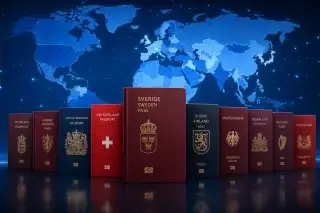 The World’s Strongest Passports for Travel, Living and Investment
 Russian Developers’ Debt Nearly Doubled in a Year
Estonia Tightens Property Rules

Estonia is preparing to ban property purchases by Russian and Belarusian citizens who do not hold permanent residence rights in the country. The amendments are expected to take effect on January 1, 2027, and would extend restrictions beyond sensitive land areas to apartments, companies and transactions involving beneficial owners.
Tallinn prepares a new property restriction
Estonia’s Ministry of the Interior has drafted amendments to the Restrictions on Acquisition of Immovables Act. ERR reported that the new rules would bar Russian and Belarusian citizens without permanent residence status in Estonia from buying real estate, and would also apply to companies from those countries and legal entities in which such citizens are beneficial owners.
The amendments are planned to enter into force on January 1, 2027. Authorities are framing the measure not as housing policy or price regulation, but as a national security step. The explanatory memorandum says real estate may be used by hostile states or persons under their control for intelligence activity, influence operations and sabotage preparations against Estonia.
Who will be affected from 2027
The restriction will apply to Russian and Belarusian citizens who do not have permanent residence rights in Estonia. Permanent residence is a long-term legal status granted after the state has reviewed a person’s residence record, legal position and compliance with national requirements. Under the government’s logic, people with that status have already been vetted, which is why they are excluded from the proposed ban.
The bill would also cover companies registered in Russia and Belarus, as well as legal entities in other jurisdictions if the ultimate beneficial owner is a citizen of a country deemed to pose a threat to Estonia’s national security or public order. A beneficial owner is the natural person who ultimately controls a company or benefits from it, even when the formal owner is another legal entity.
Apartments move into the restricted category
One of the most important changes is the inclusion of apartment ownership. Estonia’s existing restrictions have mainly focused on land, agricultural and forest properties and assets relevant to public interest or national security. The current act states that it regulates restrictions on the acquisition of immovables for reasons of public interest and national security.
In practice, the amendment would close a gap under which apartment purchases in multi-unit buildings were not fully covered by the earlier restriction framework. For the real estate market, this matters more than narrow limits on borderland: apartments are the most common and liquid form of property for private buyers.
Existing property will not be confiscated
The amendments will not apply retroactively. That means Russian and Belarusian citizens who already own real estate in Estonia will not lose property simply because the law takes effect. They will be able to keep existing assets, although future acquisitions by people without permanent residence will be blocked.
As of April 2025, 36,952 Russian citizens and 896 Belarusian citizens were listed among property owners in Estonia. As of January 9, 2026, Estonia had 7,797 Russian citizens with temporary residence permits and 70,237 with long-term residence permits; among Belarusian citizens, 1,476 held temporary permits and 1,190 held long-term permits.
Market impact is expected to be limited
The drafters estimate that the restriction may affect about 600 transactions a year and should not have a significant effect on the overall property market. That assessment is plausible for the national market: most transactions in Estonia are generated by domestic buyers, European Union residents and investors outside the new security regime.
The local impact could still be more visible in segments where Russian-speaking buyers have traditionally had a presence. That includes Tallinn, Ida-Viru County, Narva, border areas and selected properties purchased as homes, family assets or investments. In those locations, the new regime may reduce the number of buyers with temporary status and increase the relative weight of residents, EU citizens and local demand.
Humanitarian exceptions will remain possible
The draft allows for exceptions. Estonia’s government may permit a property purchase for reasons significant to the state or on humanitarian grounds. That matters in cases where a formal ban could affect people who are not linked to security risks, such as families with long-standing ties to Estonia or applicants with special circumstances.
This structure allows Tallinn to keep a strict general rule without making it completely automatic. In practice, much will depend on how procedures, review periods, exemption criteria and appeal rights are written into the final framework.
Estonia follows a regional security trend
The property restriction fits into a broader Baltic and Nordic security shift after Russia’s full-scale invasion of Ukraine. Estonia, Latvia and Lithuania have already introduced entry restrictions for Russian citizens, transport-related measures and other tools aimed at reducing risks linked to Russian state influence. Associated Press reported that Poland and the Baltic states agreed in September 2022 to restrict the entry of Russian citizens, citing security concerns linked to the war.
Similar approaches to real estate already exist in neighboring countries, although their strictness varies. Meduza, summarizing regional rules, reported that in Latvia and Finland Russian citizens may purchase property only with permanent residence permits, while Latvia also limits them to one apartment; Lithuania allows purchases by Russians holding any residence permit, including temporary residence.
Why real estate has become a security issue
Estonian authorities are treating real estate not only as an economic asset but also as a potential infrastructure point of influence. An apartment, land plot or commercial property can be used for residence, storage, observation, logistics, establishing presence in a sensitive area or creating a legal basis for deeper ties to the territory.
That approach is particularly common in small states bordering Russia. For Estonia, the concern is not only direct military risk but also hybrid threats: intelligence activity, information influence, hidden financing, pressure on local communities and the use of private-law transactions to bypass public restrictions. That is why the bill targets not only individuals, but also companies and beneficial ownership structures.
What changes for buyers and notaries
Once the law enters into force, transactions involving Russian and Belarusian citizens without permanent residence status will face stricter checks. Notaries, banks, real estate agencies and sellers will need to consider not only a buyer’s passport, but also residence status, company ownership structure and ultimate beneficial ownership.
That will increase the role of compliance, meaning the process of verifying the customer and the legality of the transaction. Purchases through foreign companies, funds, nominee structures and layered ownership chains will become especially complex. For legitimate buyers, this means more documentation and a longer process; for the market, it means a larger role for lawyers and notaries in cross-border transactions.
Investment implications of the new regime
For real estate investors in Estonia, the new regime means that political and legal risk becomes part of deal analysis. A property in Tallinn or Narva cannot be assessed only by price per square meter, rent and yield. Citizenship, residence status, source of funds, bank screening and possible future regulatory changes must also be considered.
The Estonian market is not closing to all foreigners. The restrictions target specific categories of citizens and companies linked to states that Tallinn considers security threats. Buyers from the European Economic Area, the United Kingdom and other countries outside the security regime will continue to be able to buy property under ordinary rules.
As experts at International Investment report, Estonia’s amendments show that real estate in Europe’s border states is increasingly shifting from a conventional investment sector into part of security policy. The critical risk for investors is not only the ban itself, but the fact that nationality, residence status and ownership structure are becoming liquidity factors. Even when a property can legally be sold, the pool of potential buyers may narrow and transaction checks may become longer and more expensive.