







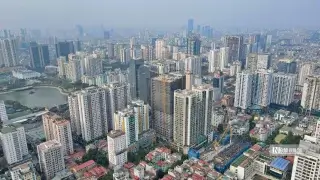
 Vietnam Mortgage Surge Pushes Homes Out of Reach
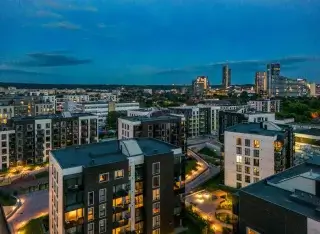 Lithuanian Apartment Prices Accelerate Across Major Cities
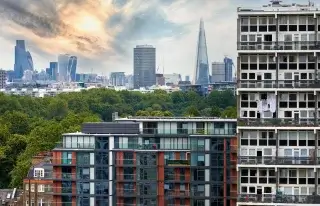 London Flats Lose Value Ahead of Leasehold Reform
 Construction of the Batumi–Sarpi Highway Begins in Georgia
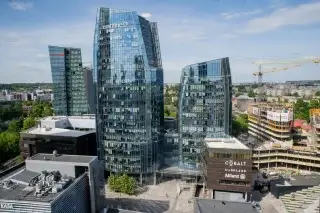 Baltic Property Investment Accelerates in 2026
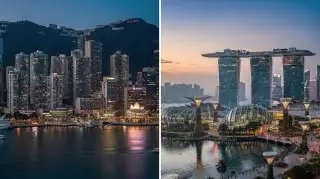 Hong Kong and Singapore Renew Their Expat Rivalry
Saudi Hotels Shift Further Upmarket

Saudi Arabia is pushing its hotel sector deeper into the upper end of the market, with premium formats now dominating both existing stock and future development. Knight Frank says the kingdom had 167,500 hotel keys at the end of the first quarter of 2025, while the total volume of announced, planned and under-construction supply is projected to reach 362,000 keys by 2030. Of the current inventory, 61% already sits in the luxury, upscale and upper-upscale segments, and 78% of future supply is expected to fall into the same categories.
Saudi Arabia hotel market 2025
The scale of expansion remains one of the largest in the region. Knight Frank estimates that 99,500 keys are either under construction or in final planning. Existing supply is concentrated in the kingdom’s main religious and urban centers, with 88,704 keys in Makkah, 47,160 in Madinah, 31,455 in Riyadh and 17,262 in Jeddah. Future clusters are tied to giga-projects including NEOM, Rua Al Haram, Rua Al Madinah, Knowledge Economic City and Masar Makkah.
That supply mix shows the market is being built not only for volume but for higher-yield demand. Knight Frank’s data suggests Saudi Arabia is increasingly shaping its hospitality platform around affluent leisure, business and pilgrimage travel, even as the report also notes room for more mid-market capacity to broaden appeal and better serve domestic demand.
Saudi tourism growth and the 2030 target
Hotel expansion is tied to the state’s target of 150 million visits by 2030. For 2024, however, the Saudi Ministry of Tourism’s official dashboard shows 115.9 million tourists, including 29.7 million inbound visitors and 86.2 million domestic travelers. That is lower than the 127 million figure cited in some market commentary, making the ministry’s updated dashboard the firmer benchmark for current reporting.
Inbound demand continued to rise last year. Saudi Central Bank data cited by Knight Frank show inbound tourism spending reached a record SAR 153.61 billion in 2024, while international arrivals climbed to 29.7 million from 27.4 million a year earlier. That combination of higher arrivals and higher spending helps explain why developers and global operators continue to favor upper-tier accommodation.
Saudi eVisa and international accessibility
One of the clearest enablers of growth has been easier access. Saudi Arabia’s official tourism visa platform allows travelers from 66 countries to apply for a one-year multiple-entry eVisa permitting stays of up to 90 days. Eligible markets include Russia, the UK, Germany, Japan, the US and China. The visa framework covers tourism, visits to friends and relatives, and Umrah, while Hajj remains subject to a separate seasonal visa system.
For hotel investors, that matters because it supports a broader year-round demand base beyond the traditional religious calendar. The visa system is helping Saudi Arabia position itself as a mainstream international destination rather than a market defined only by pilgrimage peaks and state-backed mega-events.
Religious tourism in Makkah and Madinah
Religious travel remains the structural backbone of the hospitality market. Official GASTAT figures show that 1,833,164 pilgrims performed Hajj in 2024, including 1,611,310 from outside the kingdom and 221,854 domestic pilgrims.
Knight Frank says 252,000 hotel keys are planned, announced or under construction in Makkah and Madinah alone for delivery by 2030, with 64% of that pipeline in the four-star and five-star categories. The largest projects include Rua Al Haram, Rua Al Madinah, Knowledge Economic City and Masar Makkah. That means even the religious tourism product is being upgraded toward higher-end accommodation.
Umrah is growing even faster. Knight Frank estimates that 35.8 million domestic and international pilgrims performed Umrah in 2024, up 33% from the previous year. Quarterly GASTAT data underline the strength of that trend: in the fourth quarter of 2024 alone, total Umrah performers reached 7,435,625, including 5,283,795 external pilgrims.
Mega events and hotel investment in Saudi Arabia
Upcoming global events are adding another layer of demand. Saudi Arabia is preparing to host the 2029 Asian Games, Expo 2030 and the 2034 FIFA World Cup. Expo 2030 is expected to be especially important for Riyadh, with market estimates pointing to around 40 million visitors over the six-month event and a major economic boost for the capital.
Institutional backing is also deepening. International operators including Hilton, Marriott, IHG, Accor and Radisson are already expanding in the kingdom, while the opening of investment channels into listed real estate companies with assets in Makkah and Madinah is expected to strengthen sector liquidity and project financing.
Labor demand is rising in parallel. Knight Frank estimates that by the end of the decade the Holy Cities alone may require housing for 161,000 to 322,000 hotel workers. That widens the investment case beyond hotels themselves and into staff housing and adjacent rental formats.
As International Investment experts report, Saudi Arabia’s hospitality market is moving along a premium-led growth path, with capital and new supply clustering in luxury and upper-upscale formats while pilgrimage and mega-events provide the volume base. Georgia offers a different comparison point: official data show 5.4 million international visitors in 2024, tourism revenue above $4.4 billion, real GDP growth of 9.7% in 2024 and a relatively high safety ranking by regional standards. Yet Tbilisi and Batumi remain far smaller and shallower luxury markets, meaning that constrained top-end supply against rising tourism demand could make Georgia one of the region’s more interesting premium hospitality and residential stories over the next several years.
Problems of Saudi megaprojects and their economics
Alongside the rapid expansion of Saudi Arabia’s tourism and hotel sectors, a growing number of analysts and investors have raised doubts about the economics of some of the kingdom’s flagship megaprojects. The criticism is aimed less at diversification itself than at the scale, pace and capital intensity of individual schemes, where branding value and geopolitical signaling can appear to run ahead of proven commercial viability. NEOM has become the clearest example. Bloomberg reported in April 2024 that Saudi Arabia had scaled back its medium-term ambitions for The Line, with the expected population by 2030 cut from 1.5 million to fewer than 300,000.
That criticism has been reinforced by the broader reprioritization of spending. In its 2024 Article IV materials, the IMF said the recalibration of Saudi Arabia’s investment plans would help reduce overheating risks and ease pressure on fiscal and external accounts, while also welcoming the authorities’ fiscal-space analysis and resulting reprioritization of projects. In practical terms, that means even supportive international institutions are acknowledging that the original rollout of some Vision 2030 projects was too aggressive to execute simultaneously without economic strain.
This is why critics increasingly describe part of the Saudi giga-project pipeline as expensive prestige assets with weakly tested economics: very high upfront capital costs, long payback periods and continued reliance on oil-linked state funding can leave some projects struggling to match their launch narratives with sustainable demand. The Financial Times has also pointed to the sheer scale of the kingdom’s financial commitments and the risk of overheating from launching so many developments at once, while Reuters reported in 2024 that rising costs were forcing a scaling back of NEOM ambitions. That said, the criticism is best applied to the most ambitious showcase developments rather than to Saudi Arabia’s tourism strategy as a whole, because the kingdom’s broader non-oil growth, labor market and visitor indicators remain comparatively strong.
FAQ
Why does 78% of Saudi Arabia’s new hotel pipeline sit in upper segments?
Because developers are aligning new supply with higher-spending international leisure travelers, upgraded religious tourism, major global events and the kingdom’s ambition to build a stronger luxury destination profile.
How many hotel rooms are planned in Saudi Arabia by 2030?
Knight Frank puts the total announced, planned and under-construction pipeline at 362,000 keys, with 99,500 of those already under construction or in final planning.
How strong is Saudi Arabia’s tourism market already?
Official ministry data show 115.9 million tourists in 2024, while Saudi Central Bank data cited by Knight Frank show inbound tourism spending hit SAR 153.61 billion, a record level.
Why are Makkah and Madinah so important for hotel development?
Because religious tourism remains the market’s most durable demand driver. Hajj drew more than 1.83 million pilgrims in 2024, and the hotel pipeline in the Holy Cities alone stands at 252,000 keys through 2030.
Is there a risk Saudi Arabia is building too many expensive hotels?
That risk exists. Knight Frank itself notes the need for more modest accommodation as well, since domestic demand and part of the international market extend well beyond luxury travel.