













Mexico Inflation Picks Up Before Central Bank Decision
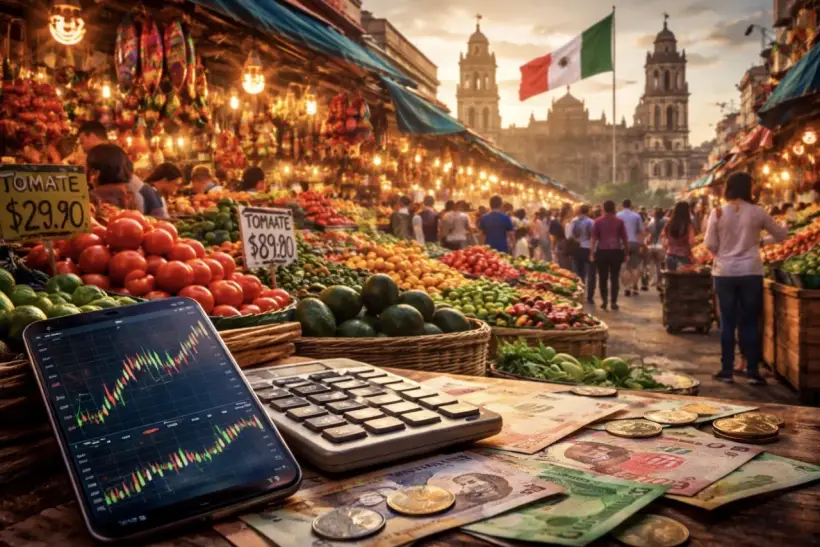
Price growth in Mexico is back in focus
Inflation in Mexico accelerated more than markets expected just ahead of the next policy decision by Banco de México, the country’s central bank. According to Mexico’s National Institute of Statistics and Geography, known as INEGI, consumer prices rose 0.25% in the first half of February 2026 from the previous fortnight, while annual inflation reached 3.92%. That leaves inflation much closer to the upper end of the range the central bank is willing to tolerate around its 3% target.
The index in question is Mexico’s National Consumer Price Index, or INPC, the main gauge used to track how the cost of a representative basket of household goods and services changes over time. It is the number investors watch, policymakers quote and households ultimately feel in daily life. This time, the reading was high enough to reopen the debate over how quickly interest rates can come down.
What the INEGI data actually showed
The official INEGI release matters not only because of the headline number, but because of what sits underneath it. Core inflation, which strips out the most volatile items and is usually seen as a better guide to persistent price pressure, rose 0.22% over the fortnight and stood at 4.52% on an annual basis. That is the figure Banco de México tends to watch most closely when deciding how cautious it needs to be.
Within core inflation, goods prices rose 0.20% and services prices increased 0.24%. That detail matters. When services inflation remains firm, central banks usually read it as a sign that price pressures are spreading more broadly through the economy rather than being driven only by temporary moves in food or energy. In plain terms, it suggests inflation is proving sticky.
At the same time, the non-core part of the index, which includes more volatile items, rose 0.32%. Fruit and vegetable prices jumped 2.10%, while energy prices and government-regulated tariffs edged down 0.01%. That mix shows inflation pressure is not coming from a single source. It is broad enough to keep policymakers on alert.
Which prices pushed inflation higher
INEGI’s breakdown shows that tomatoes, potatoes and other tubers, as well as green tomatoes, were among the products that contributed most to the rise in prices in the first half of February. Prices for deodorants, zucchini, chicken and onions moved lower, but not enough to offset the broader increase in the index.
Services are also telling an important story. INEGI’s services basket includes small eateries, taquerias, restaurants, mobile phone services, car maintenance, medical consultations and package tourism. When inflation stays visible across these kinds of everyday services, it becomes harder for a central bank to dismiss it as temporary. Those prices usually adjust more slowly and tend to reflect deeper inflation momentum in the economy.
Why Banco de México has a tougher choice now
Banco de México, often referred to as Banxico, is due to announce its next monetary policy decision on March 26, 2026. That date appears in the bank’s official 2026 policy calendar. The timing matters because the new inflation data arrived shortly before the meeting and immediately changed the tone of the discussion around rates.
At its previous meeting on February 5, the governing board left the target for the overnight interbank interest rate unchanged at 7.00%. In that statement, the central bank said headline inflation had eased from 3.80% to 3.77%, but core inflation had increased from 4.43% to 4.47%. That persistent underlying pressure was one of the main reasons the bank chose not to rush into another rate cut.
In the same statement, Banco de México said it now expected headline inflation to return to the 3% target only in the second quarter of 2027. That point is important because it shows policymakers already believed the disinflation process would take longer even before the latest upside surprise. A reading of 3.92% does not automatically mean rates will stay unchanged, but it clearly makes the decision harder and leaves less room for a soft message.
Why core inflation matters more than it sounds
For non-specialists, the distinction between headline inflation and core inflation can sound technical. For a central bank, it is central. Headline inflation includes everything households buy. Core inflation removes the most volatile categories so policymakers can see whether price growth is becoming embedded more deeply in the economy. In Mexico, that is exactly the uncomfortable part of the story right now: headline inflation is 3.92%, but core inflation is still running at 4.52%.
That explains Banxico’s caution. Even if the headline figure remains formally within the tolerated range around the target, the underlying trend still looks too strong for policymakers to declare that inflation is safely under control. As long as core inflation stays well above target, any move toward lower rates becomes harder to justify.
What this means for borrowers and markets
For borrowers, companies and investors, the message is straightforward: Banco de México is likely to remain cautious. Even if rate cuts resume later, the path lower could be slower than markets had hoped at the start of the year. In its February statement, the central bank said inflation risks remained tilted to the upside, meaning the danger of stronger-than-expected price pressures still outweighed the chances of a rapid cooling.
External analysts are also taking a measured view. In its March 2026 outlook, BBVA Research still expected the easing cycle to continue, but it also raised its end-2026 inflation forecast for Mexico to 3.9%. That captures the policy dilemma neatly: growth is not strong enough on its own to demand tight monetary conditions, but inflation is still persistent enough to prevent the central bank from moving quickly.
As International Investment experts report, the latest inflation number in Mexico matters less because of the headline figure alone and more because of what is driving it. As long as price increases remain visible across a broad range of goods and services, Banco de México will have to move carefully and markets will likely keep revising their rate expectations toward a slower easing path.
FAQ
Question: What is Mexico’s current inflation rate?
Answer: According to INEGI, annual inflation in the first half of February 2026 was 3.92%, while prices rose 0.25% over the fortnight.
Question: What is INEGI?
Answer: INEGI is Mexico’s National Institute of Statistics and Geography. It is the official agency that publishes inflation, employment and other major economic indicators.
Question: What does core inflation mean in simple terms?
Answer: Core inflation is a measure of price growth that excludes the most volatile items. Central banks use it to judge whether inflation pressure is persistent rather than temporary. In Mexico, it stood at 4.52% in the first half of February 2026.
Question: When is Banco de México’s next rate decision?
Answer: The next monetary policy announcement is scheduled for March 26, 2026, according to the bank’s official calendar.
Question: What is Mexico’s current benchmark rate?
Answer: After the February 5, 2026 decision, the target for the overnight interbank interest rate remains at 7.00%.
Question: Why is Banco de México being cautious about cutting rates?
Answer: Because core inflation remains elevated and the bank now expects headline inflation to return to the 3% target only in the second quarter of 2027.