












Branded Residences Erode US Dominance
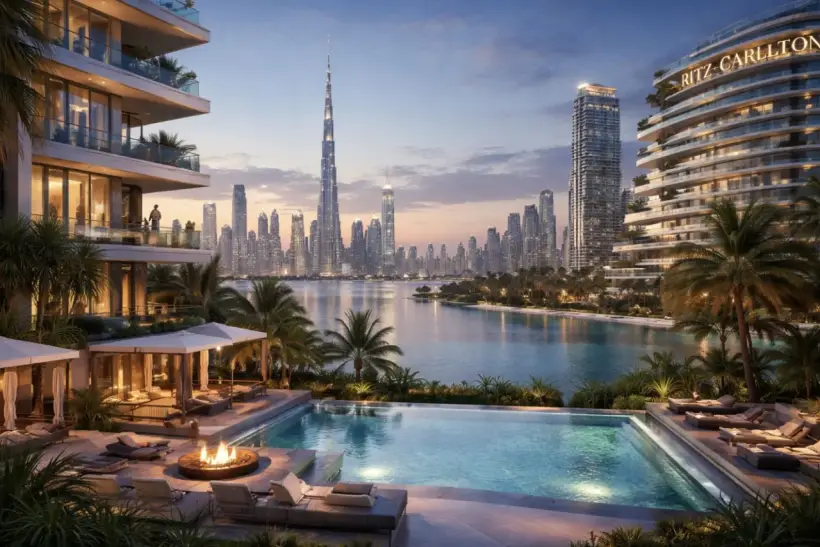
The global branded residences market accelerated again in 2025, with growth spreading beyond its traditional US core and into the Middle East, Asia and a wider group of emerging luxury destinations. Knight Frank says in The Global Branded Residence Survey 2025 that the number of schemes has risen from 169 in 2011 to 611 in 2025 and could reach 1,019 by 2030. The survey covers more than 1,000 live and pipeline schemes across 83 countries.
Global branded residences growth in 2025
Knight Frank is also tracking a sharp increase in scale. The number of units has grown from just over 27,000 in 2011 and is projected to exceed 162,000 by 2030. That pushes branded residences further away from being a niche luxury product tied to a few resort addresses and closer to becoming a distinct segment within global high-end residential development.
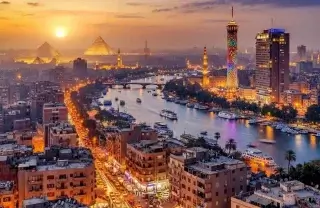
The market’s geography is changing at the same time. North America remains the largest region, but its share of live schemes stands at 32.7% while its share of pipeline projects falls to 26.2%. The Middle East moves in the opposite direction, rising from 15.9% of live projects to 26.7% of future supply.
US leadership holds, but the Middle East is gaining ground
That shift changes the investment map. Branded residences are no longer defined mainly by Miami, New York and a narrow group of mature resort markets. Knight Frank identifies Saudi Arabia, Egypt, Japan, France and additional US cities beyond New York and Miami as growth areas in the next cycle.
The trend suggests that new branded supply is increasingly following tourism growth, high-end urban development and premium lifestyle infrastructure. In markets where those forces are building together, developers appear more willing to use global brands to establish pricing power and faster market recognition.
Why luxury residential growth is moving east
Knight Frank says the center of gravity in branded residences has been moving eastward and slightly southward over time. Asia moved first. The Middle East is now accelerating more visibly. That matters because branded projects are increasingly tied to tourism flows, mobility and large-scale place-making rather than to hotel adjacency alone.
In practical terms, the brand acts as a trust mechanism. For buyers entering a newer market, it can reduce perceived risk. For developers, it can help justify a higher price point and a more ambitious premium positioning.
Hotel brands still dominate branded residences
Hotel operators remain the dominant force in the market. Knight Frank says 83% of existing branded residences are linked to hotel brands, with that share only easing to around 80% in future supply. That points to a market still anchored in service standards, operating consistency and hospitality-led management.
But the product is changing. Among hotel-branded schemes, 82% of live projects are co-located with a hotel, compared with 70% in the future pipeline. In North America, 49% of hotel-branded pipeline schemes are planned as standalone developments. In the Middle East, the figure is 43%. The market is increasingly selling private branded living rather than direct hotel integration.
Standalone and wellness define the next cycle
Knight Frank highlights standalone formats, wellness and niche branding as the defining themes of 2025. Wellness is expanding beyond the usual spa-and-gym formula into a broader proposition that includes clinics, therapies, longevity concepts and biophilic design.
The brand roster is expanding too. Knight Frank points to Bentley, Karl Lagerfeld, Jacob & Co., SHA and Major Food Group as examples of how developers are using non-hotel partnerships to sharpen differentiation in a more crowded luxury field.
That creates a more competitive market. A well-known name may still draw attention, but it no longer guarantees equal value across projects. Execution, service delivery and product quality matter more as the sector scales up. This is an analytical inference based on the report’s findings.
What the Knight Frank survey means for investors
A move from 611 schemes today to a projected 1,019 by 2030 signals continued expansion, but also greater divergence between strong and weak projects. The report strongly suggests that branding alone is becoming less decisive unless it is backed by a durable operating model and a location with sustained international demand.
That matters for capital allocation. In mature markets, branded projects compete directly with one another. In newer markets, they compete against the buyer’s assessment of whether the promised five-star lifestyle can actually be delivered over time. The next winners are therefore likely to be projects where brand, location and operations reinforce each other. This is an inference grounded in Knight Frank’s framework rather than a direct quote.
Georgia as an early-stage luxury market
Against that backdrop, Georgia stands out as an earlier-stage market with strengthening fundamentals. Geostat’s preliminary estimate shows nominal GDP at GEL 104.6 billion in 2025, with real growth of 7.5%. Real estate activities accounted for 9% of GDP structure in the fourth quarter of 2025.
Tourism is also expanding. Geostat says the number of international visitors reached 5.8 million in 2025, up 7% year on year, while tourist-type visits totaled 5.5 million, up 8.4%. The National Bank of Georgia separately reported travel exports of $1.1 billion in the second quarter of 2025 and $1.7 billion in the third quarter, pointing to continued hard-currency inflows from tourism.
Georgia comparison: strong demand, thin luxury supply
The supply side remains the weaker link. Forbes Georgia has described the country’s premium segment as present but limited in scale, while internationally branded luxury hospitality is only beginning to develop more fully. That leaves Georgia in a different position from mature branded residence hubs, where luxury inventory is already much deeper.
That combination of fast GDP growth, rising tourism, a relatively workable safety profile and still-limited upscale inventory makes Georgia a notable comparison point in the broader branded residences story. Tbilisi and Batumi, in particular, appear to fit the pattern of markets where demand is forming faster than top-end supply. This is an analytical interpretation based on the cited macro, tourism and sector data.
As International Investment experts note, Georgia’s key advantage is the imbalance itself. Demand is being supported by tourism growth, GDP expansion and a relatively stable investment profile, while luxury and branded supply remain comparatively scarce. If global developers continue moving beyond traditional Western strongholds, Georgia could become one of the markets to watch, especially where branding is supported by real service capacity and credible international management. This is an expert assessment grounded in the market comparison above.
FAQ on branded residences in 2025
What are branded residences? They are residential projects developed in partnership with a recognized brand, most often a hotel operator, offering both real estate and a branded service framework.
How fast is the market growing? Knight Frank says schemes increased from 169 in 2011 to 611 in 2025 and could reach 1,019 by 2030.
Why is the Middle East important? Because its share of pipeline projects is rising faster than any other major region, reaching 26.7%.
Why are standalone projects growing? Because affluent buyers increasingly want brand-backed service and privacy without necessarily being attached to a hotel property.
Why is Georgia relevant here? Because it combines 7.5% real GDP growth in 2025, growing visitor numbers and relatively limited premium and luxury supply.