







 Fines for Illegal Rentals in Spain Reach €800,000
 Australia’s Spring Auctions Rise but Remain Well Below 2025
 Number of Foreigners Holding Turkish Residence Permits Exceeds 1.27 Million
 Demand from Russian Tourists for Holidays in Georgia Rises by 20–25%
 Montenegro Property Buying Costs in 2026
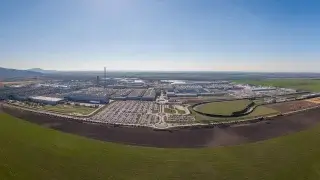 Four in Ten Companies Would Not Choose Slovakia
Philippines Halts Power Market as Prices Jump

Philippines freezes spot power market amid fuel shock
The Philippines on March 26, 2026 suspended electricity sales on the WESM, or Wholesale Electricity Spot Market, the country’s real-time wholesale power exchange where prices are set by market conditions. Authorities said the move was driven by fuel supply risks and sharp price volatility linked to the war in the Middle East. The suspension was imposed without a fixed end date.
Why the Philippines suspended the WESM
The market intervention followed a broader emergency response. On March 24, President Ferdinand Marcos Jr. signed Executive Order No. 110, declaring a state of national energy emergency. According to the Associated Press and Philippine News Agency, the measure was introduced as the government warned of threats to fuel stability and broader energy security stemming from the Middle East conflict.
Days earlier, Energy Secretary Sharon Garin told Reuters the government was prepared to step into the power market to prevent another surge in electricity bills. She said power prices could rise by 16% as soon as the following month unless authorities acted, and indicated that the government was considering reducing reliance on costly LNG, or liquefied natural gas, in favor of coal-fired output and renewable energy.
How much electricity prices rose in March 2026
Data from the Independent Electricity Market Operator of the Philippines, or IEMOP, showed that average spot power prices jumped 58% this month. Prices in Mindanao and the Visayas nearly doubled, while those in Luzon, the country’s biggest demand center, rose 42%. That surge became the central justification for suspending normal market trading.
The ERC, or Energy Regulatory Commission, said the old pricing model no longer reflected market realities shaped by geopolitical tensions and fuel supply constraints. It is now shifting to a modified pricing framework. Under the temporary approach, coal plants may be paid at a fixed rate, while natural gas plants may be compensated based on contracted prices.
What changes under the temporary pricing scheme
During the suspension, the power system will operate under interim rules designed to contain prices, preserve critical fuel inventories and prioritize generation sources considered more secure or more affordable under current conditions, including renewables. The ERC also said it expected to finalize the revised pricing approach by the Wednesday following the March 26 announcement.
For Asia, this is an unusual step. Reuters noted that the Philippines is one of the few markets in the region where consumer electricity bills remain meaningfully linked to market prices rather than being fully smoothed by administratively set tariffs. That makes external fuel shocks more visible in household and business power costs.
How the Middle East war hit Philippine power costs
The shock did not originate at home. Reuters reported that logistics through the Gulf and the Strait of Hormuz deteriorated sharply after the escalation of the war involving the U.S., Israel and Iran. Spot LNG prices more than doubled and climbed to their highest level in more than three years, including after a production halt in Qatar, which supplies about one-fifth of global LNG output.
That is particularly serious for the Philippines because the country relies on imported fuel. The government has been in talks with Indonesia to secure stable coal supplies and has also explored using uncommitted domestic gas volumes for power plants that currently run purely on LNG. Meralco, the country’s biggest distribution utility, told Reuters it supported efforts to rein in prices and had sufficient contracted coal volumes.
What consumers were already paying before the suspension
Consumers were already seeing higher power bills before the market was halted. On March 10, Meralco said it was raising residential rates by 0.6427 pesos per kilowatt-hour, bringing the overall tariff to 13.8161 pesos per kilowatt-hour from 13.1734 pesos in February. For a typical household consuming 200 kilowatt-hours, that meant an increase of about 129 pesos in the monthly bill.
Meralco also said that lower charges from the WESM had partly offset other cost pressures in March, including higher transmission and reserve market charges. That matters because the full impact of the latest external fuel shock had not yet fed through to end-user tariffs, which is exactly what the government is now trying to contain through direct intervention.
Why the decision matters for the Philippine economy
Reuters had earlier noted that Philippine electricity tariffs were already among the highest in Asia and second only to Singapore in the region. For an archipelago of more than 100 million people, that means higher energy costs can quickly spill into inflation, transport expenses, industrial production costs and household spending.
The WESM suspension shows Manila has moved from warning about the risks to actively suppressing price volatility. It also marks a short-term shift away from greater dependence on gas, with the government effectively leaning on coal generation, temporary market controls and fuel conservation to stabilize the system.
As International Investment experts report, Manila’s decision illustrates how quickly an external geopolitical shock can reshape domestic energy policy in a fuel-importing economy. For investors and businesses, the key signal is not only the temporary suspension of spot trading, but the fact that the government judged price volatility severe enough to justify replacing a market mechanism with direct stabilization measures.
FAQ
What is the WESM in the Philippines?
The WESM, or Wholesale Electricity Spot Market, is the country’s wholesale spot electricity market where power is traded at prices that move with demand, supply and fuel costs.
Why did the government suspend the WESM?
Authorities cited fuel supply risks and sharp price volatility linked to the Middle East war. Average spot prices rose 58% in March, with some regional prices nearly doubling.
What are the ERC and IEMOP?
The ERC is the Energy Regulatory Commission, the country’s power regulator. IEMOP is the Independent Electricity Market Operator of the Philippines, which runs the WESM and publishes market data.
Does the suspension mean electricity bills are frozen?
No. The government did not announce a full freeze on consumer tariffs. It suspended normal spot market trading and is replacing it with a modified pricing scheme aimed at limiting further price spikes.
Why does the Middle East conflict affect Philippine electricity prices?
Because the Philippines depends on imported fuel, while disruptions in Gulf shipping and the Strait of Hormuz pushed LNG prices sharply higher and increased procurement risks.