







 Vietnam Mortgage Surge Pushes Homes Out of Reach
 Lithuanian Apartment Prices Accelerate Across Major Cities
 London Flats Lose Value Ahead of Leasehold Reform
 Construction of the Batumi–Sarpi Highway Begins in Georgia
 Baltic Property Investment Accelerates in 2026
 Hong Kong and Singapore Renew Their Expat Rivalry
Gulf States Prepare Retaliatory Measures Against Iran
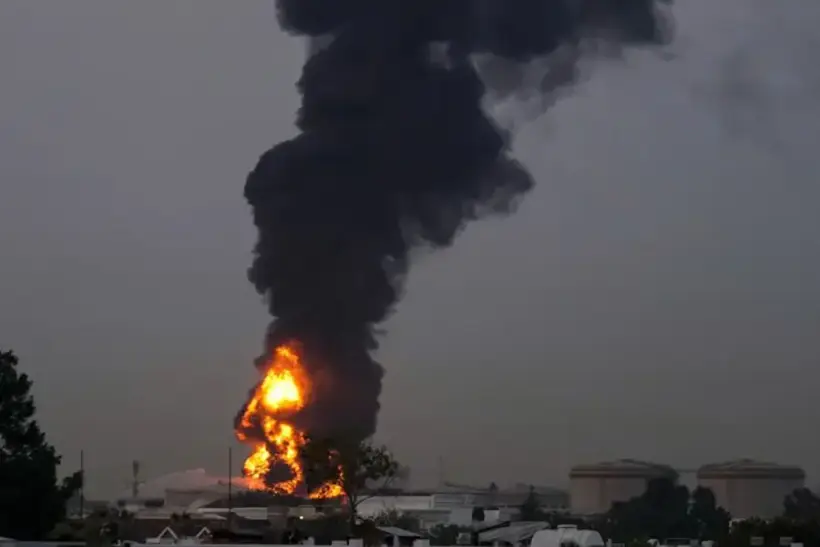
Атака на аэропорт Дубая, AP
U.S. allies in the Persian Gulf had previously stated their intention to stay out of the conflict, but after repeated Iranian drone and missile attacks, they are changing their position. Saudi Arabia and the UAE are preparing to take active measures, reports The Wall Street Journal. This shift in policy implies direct support for U.S. air forces and opening a new front against Tehran’s finances.
Military Infrastructure and Economic Pressure
Saudi Arabia: Access to Airbase
Riyadh has agreed to grant U.S. forces access to King Fahd Air Base on the Arabian Peninsula following Iranian attacks on the capital and energy facilities. Previously, Saudi Arabia had stated that its facilities would not be used to attack Iran, seeking to maintain neutrality. Now, Crown Prince Mohammed bin Salman is close to having the kingdom join the fight against Tehran.
“Saudi Arabia’s patience with Iranian attacks is not unlimited,” said Saudi Foreign Minister Prince Faisal bin Farhan. “Any belief that Gulf countries are incapable of responding is a miscalculation.”
UAE Closes Iranian Facilities
In the UAE, energy facilities, hotels, shopping centers, and airports were targeted. In response, authorities began closing Iranian institutions in the Emirates. These measures may freeze billions of dollars in assets.
The UAE government stated that certain institutions directly linked to the Iranian regime and the Islamic Revolutionary Guard Corps (IRGC) will be closed. It was found that they were used to advance programs that violate UAE law.
Protecting the Strait of Hormuz
Tehran has informed its Arab neighbors of its intention to gain full control of the strait and to charge passage fees, similar to Egypt’s approach with the Suez Canal. Gulf states may unite to protect the Strait of Hormuz, a key trade route through which 20% of global oil shipments pass.
Task Force
The United Arab Emirates has already informed the U.S. and other Western allies that it will participate in a multinational maritime task force to reopen the Strait of Hormuz, writes Financial Times. The UAE has faced more attacks than any other country in the region, including Israel, and is now calling for the creation of a “Hormuz Security Force” to protect the strait from Iranian attacks and escort shipping.
The UAE is also working on a U.N. Security Council resolution together with Bahrain to give the future task force a mandate, though Russia and China may oppose this move.
Readiness Without Action
The UAE Ministry of Foreign Affairs published a statement signed by 22 countries, declaring their readiness to “contribute to ensuring freedom of navigation in the region” and condemning attacks on “unarmed commercial vessels in the Persian Gulf.” Signatories include the UAE, the United Kingdom, many EU countries, Japan, Canada, South Korea, New Zealand, and Australia. However, most representatives did not specify concrete actions.
U.S. President Donald Trump proposed that allies send ships to unblock the strait, but some have already declined. France stated that it held talks with about 35 countries seeking partners and proposals for a mission to restore navigation, but this would only take place after the war with Iran ends.
Risks of Entering the War
Analysts from International Investment note that the unification of Gulf states could influence the outcome of the war, but with limited participation, the effect would be less significant. The risks are substantial. A prolonged regional conflict with high uncertainty could put pressure on all countries worldwide.
An additional factor is the dependence on the U.S. position. If Washington’s policy changes, the Gulf states risk facing Iran without sufficient external support.
In the near future, the region will likely remain highly risky for tourism and business activity. Flows of travelers and investors are already shifting toward safer destinations, notably in Southern Europe and Georgia.