







 Fines for Illegal Rentals in Spain Reach €800,000
 Australia’s Spring Auctions Rise but Remain Well Below 2025
 Number of Foreigners Holding Turkish Residence Permits Exceeds 1.27 Million
 Demand from Russian Tourists for Holidays in Georgia Rises by 20–25%
 Montenegro Property Buying Costs in 2026
 Four in Ten Companies Would Not Choose Slovakia
Iran escalates attacks in the Persian Gulf: Trump’s threats fail to deter Tehran
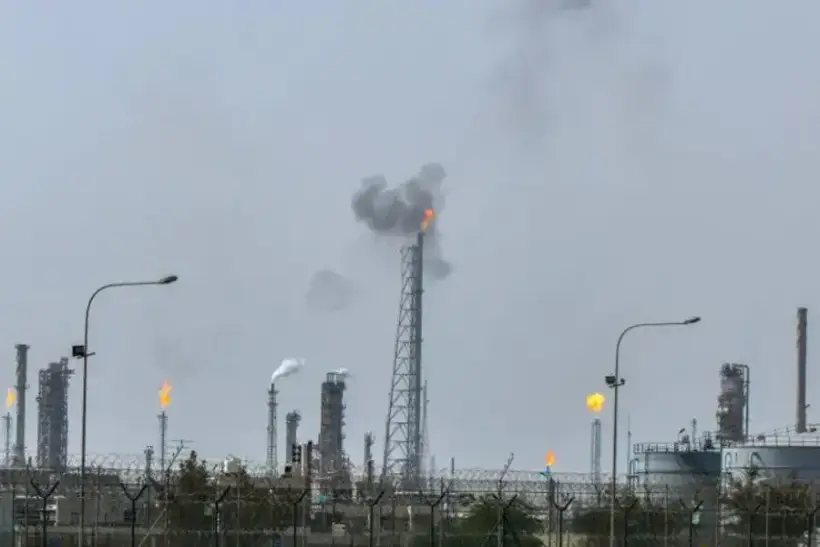
Нефтеперерабатывающий завод Мина аль-Ахмади в Кувейте [Фото: AP]
On April 3, 2026, Iran carried out new strikes on facilities in Kuwait and Abu Dhabi. This followed warnings from U.S. President Donald Trump about possible attacks on the country’s infrastructure if hostilities continued. The conflict, ongoing since late February, has driven up oil prices, blocked part of the shipping lanes through the Strait of Hormuz, and disrupted the global economic balance.
Compelling peace
In early April 2026, U.S. President Donald Trump posted a video of a destroyed bridge and warned that “much more destruction” would follow if Iran did not agree to a peace deal. He also threatened strikes on the country’s energy and water treatment facilities, which experts say could potentially violate the Geneva Conventions.
Iranian Foreign Minister Abbas Araghchi stated that attacks on civilian infrastructure “will not force Iranians to surrender.” According to CNN, about half of Iran’s missile launchers remain operational despite more than 12,000 U.S. and Israeli strikes, and thousands of one-way attack drones remain in the country’s arsenal, maintaining significant strike capability.
Iranian strikes on Kuwait, Abu Dhabi, and Saudi Arabia
On the night of April 3, Iran attacked Kuwait. A drone strike caused a fire at the Mina Al Ahmadi refinery, which produces 346,000 barrels of oil per day. Early in the morning, a power and desalination plant was attacked, resulting in damage to some equipment components.
In Abu Dhabi, operations at the Habshan gas facilities were temporarily suspended after a fire caused by debris from intercepted drones and missiles. Al Jazeera reported that 12 people were injured in the UAE. Saudi Arabia announced it had intercepted several drones.
Strait of Hormuz: blockade and international response
Shipping through the Strait of Hormuz remains nearly completely blocked. According to media reports, Iran is preparing a protocol with Oman to control vessel traffic, including potential tolls. Oman has not yet commented on the situation.
A small number of ships have managed to pass through the strait since the start of the conflict. More than 40 countries held a virtual meeting to discuss safe passage through the Strait of Hormuz. France and the UK stated that military measures are likely ineffective, and the key tool remains a ceasefire. The UN Security Council plans to consider a resolution proposed by Bahrain and supported by several Arab states to establish a legal framework for safe navigation.
Economic consequences
Global energy markets are under pressure. WTI crude rose above $110 per barrel, diesel in Europe exceeded $200 per barrel, and gasoline in the U.S. surpassed $4 per gallon — the highest level in nearly four years.
Markets were closed for Easter, limiting trading. Trump stated that prices would fall once the conflict ends, justifying his actions as necessary to prevent Iran from acquiring nuclear weapons and to destroy its missile capabilities.
Conclusion: rising tensions and global risks
Analysts at International Investment note that the conflict between the U.S. and Iran continues to escalate, and Trump’s threats have so far failed to restrain Tehran. New attacks on Persian Gulf countries demonstrate that Iran retains significant strike capability, including missiles and one-way drones. The blockade of a key shipping route and rising energy prices increase global economic risks, putting pressure on governments and international organizations.
With diplomatic efforts limited, any escalation could further drive up oil prices, deepen economic instability, and increase political pressure on the U.S. and its allies. Finding a compromise to reopen the strait and reduce regional tensions remains crucial.