







 How Ukraine’s New-Build Housing Market Has Changed Over Four Years
 European Prime Rents Rise as Property Yields Turn Higher
 The Most Expensive Airlines in Europe in 2026
 Housing Prices in Italy Reach a Two-Year High
 Travellers Increasingly Choose Cooler Scandinavia
 Serbia Property Sales Decline as Transaction Value Rises
Syria Opens Airspace and Reopens Damascus Airport
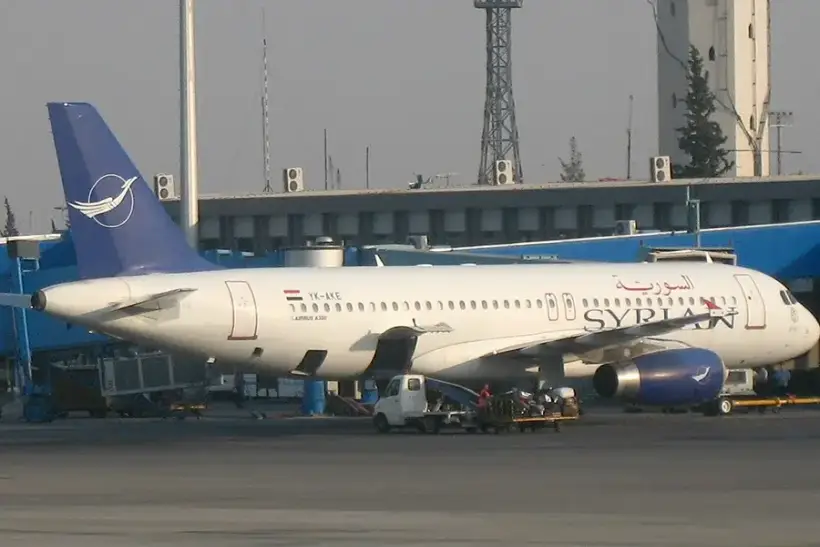
On April 8, Syria announced the full restoration of air traffic and the return to normal operations of key aviation infrastructure. The decision follows the announcement of a possible US-Iran truce and comes into effect after a technical assessment of the country’s aviation system.
Airspace Is Open Again
On April 8, the Syrian Civil Aviation and Air Transport Authority reported the full reopening of the country’s airspace. The announcement was published on the agency’s official Facebook page.
The statement emphasized that, after analyzing the current situation and conducting the necessary technical assessments, the decision was made to reopen all previously closed air corridors. This means the full resumption of civil aviation over Syrian territory.
Simultaneously with the reopening of airspace, Damascus International Airport resumed operations. The airport is accepting and dispatching flights according to the approved schedule. Authorities noted that the reopening followed a comprehensive inspection and coordination with regional and international aviation safety organizations.
Previously, escalating tensions in the region had led to major aviation restrictions. On February 28, Bahrain, Qatar, and the UAE closed their airspace. Kuwait later made a similar decision. Flights over Syria were also prohibited.
Regional Context: Truce and Escalation Risks
Syria’s decision follows changes in the regional situation. On the evening of April 7, the US and Iran agreed to a two-week conditional truce. The agreement includes the temporary opening of the Strait of Hormuz and cancels US President Donald Trump’s ultimatum threatening large-scale strikes.
Negotiations scheduled for April 10 will be based on Iran’s plan, which includes the lifting of all sanctions, withdrawal of US troops from the Middle East, and cessation of hostilities. The plan also calls for the return of frozen assets and maintaining Iran’s control over the Strait of Hormuz. Reports indicate that the Farsi version additionally mentions the right to uranium enrichment.
Israel supported the US truce while emphasizing that it does not apply to Lebanon. Other countries also reacted positively, hoping that the short-term truce could evolve into a lasting peace agreement.
Market Reaction and Economic Impact
The announcement of the truce triggered sharp movements in financial markets:
- Brent fell 15% to $93.48, WTI down 14.7% to $96.27;
- Japan’s Nikkei +5%, Australia’s S+P/ASX 200 +2.55%, South Korea’s Kospi +7.5%;
- European futures: Germany’s Dax +5.3%, UK’s FTSE 100 +2.9%;
- Gold +2% to $4,812 per ounce; Bitcoin +2.9% to $71,327; Ether +5.6% to $2,234.
International Investment analysts note that the two-week truce creates space for a partial crisis exit, but oil and LNG production are unlikely to recover without confidence in a long-term ceasefire. The key factor is the success of upcoming negotiations and restoring the trust of tanker operators for the normal passage through the Strait of Hormuz. Even then, short-term measures will not fully stabilize the situation: energy prices and supply flows remain vulnerable, and any new escalation could again sharply increase uncertainty in global markets.