







 Vietnam Mortgage Surge Pushes Homes Out of Reach
 Lithuanian Apartment Prices Accelerate Across Major Cities
 London Flats Lose Value Ahead of Leasehold Reform
 Construction of the Batumi–Sarpi Highway Begins in Georgia
 Baltic Property Investment Accelerates in 2026
 Hong Kong and Singapore Renew Their Expat Rivalry
Qatar Restores Shipping in Its Waters
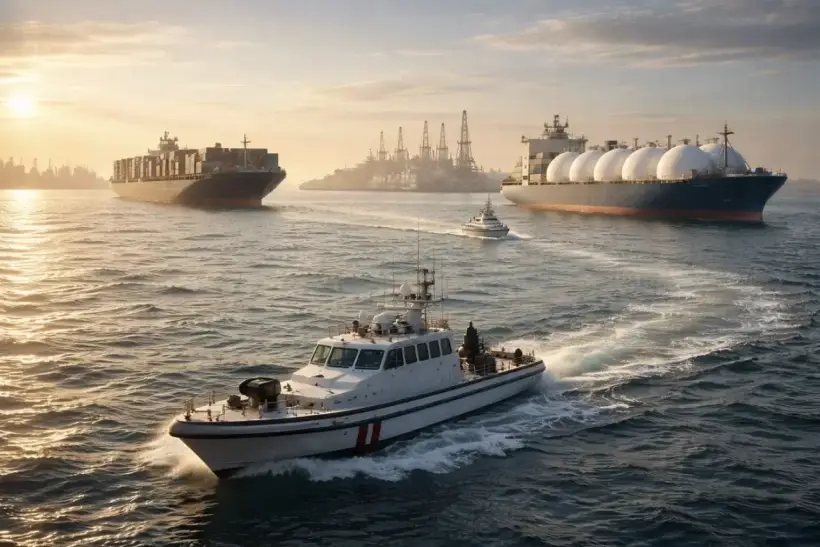
Qatar has announced the full resumption of maritime navigation in its territorial waters after a period of restrictions imposed amid the war involving Iran and severe disruptions around the Strait of Hormuz. Qatar’s Ministry of Transport said that, starting Sunday, April 12, 2026, navigation for all vessel types and marine craft would be allowed again from 6:00 a.m. to 6:00 p.m. local time. Qatar News Agency and regional outlets confirmed the timing, while Bloomberg tied the move to the gradual normalization of shipping conditions in the Gulf after weeks of acute tension.
Qatar resumes maritime navigation after phased restrictions
The decision marks a second phase rather than a sudden full reversal. On March 29, Qatar’s Ministry of Transport had allowed only vessels licensed for marine fishing activity to resume operations, and that reopening came with strict technical requirements. Those included seaworthiness checks, mandatory use of the Automatic Identification System, or AIS, which transmits vessel identity and position, and continuous monitoring of Very High Frequency radio Channel 16, the international maritime distress and calling channel. From April 12, the regime was broadened to include all vessel types, though most movements remain limited to daylight hours.
Qatar’s official notice also made clear that licensed fishing vessels can continue operating around the clock under earlier instructions. That distinction suggests authorities are still managing maritime risk carefully rather than declaring a full return to pre-crisis conditions.
The Strait of Hormuz remains central to Gulf shipping risks
The importance of the move extends well beyond Qatar’s coastline. The Strait of Hormuz remains one of the world’s most important energy chokepoints for crude oil, refined fuels and liquefied natural gas cargoes leaving the Gulf. Bloomberg reported on April 8 that more than 800 vessels were still trapped in the Persian Gulf or waiting for clarity on transit conditions after US and Israeli strikes at the end of February and Iran’s subsequent tightening of control over the waterway. On April 6, Bloomberg also reported that traffic through Hormuz had risen to the highest level in weeks as more apparent safe-passage arrangements emerged.
Against that backdrop, Qatar’s decision to restore navigation in its own waters looks less like a local administrative adjustment and more like part of a broader attempt to re-establish maritime flows across the region. Bloomberg’s April 12 coverage framed the reopening as a sign that Gulf shipping conditions were beginning to normalize, even though strategic uncertainty remained high.
Qatar LNG flows remain the bigger global question
The development is especially important for gas markets. Qatar is one of the world’s largest exporters of liquefied natural gas, which is natural gas cooled into liquid form for seaborne transport. Bloomberg reported on April 6 that more than four dozen empty Qatari LNG tankers were idling across Asia because the country’s export plant remained shut and the Strait of Hormuz was still largely inaccessible for normal commercial flows. The same day, Bloomberg reported that two tankers carrying Qatari LNG attempted to leave the Gulf but later turned back, delaying what would have been the first exports to buyers outside the region since the war began.
That distinction matters. Even if navigation in Qatar’s territorial waters resumes, the decisive issue for global energy trade is whether ships can safely and predictably exit the entire Gulf through Hormuz. In other words, the reopening improves domestic, coastal and port-side operations, but a fuller recovery in export logistics still depends on sustained de-escalation along the wider maritime route.
Qatar pairs reopening with stricter safety enforcement
Qatari authorities are not treating the reopening as a return to business as usual. Ministry guidance and local coverage stressed that operators must ensure all safety and security equipment is present and functioning properly before and during voyages. The Peninsula reported on April 8 that safety compliance had become the central condition underpinning the phased maritime reopening.
That approach suggests Doha is trying to reduce operational risk while regional security conditions remain fragile. The emphasis is particularly relevant for smaller craft, passenger services and coastal commercial traffic, all of which are more vulnerable to abrupt restrictions, route disruptions and shifting safety rules.
Doha warns maritime firms against unjustified surcharges
At the same time, Qatar has tried to prevent crisis pricing in maritime services. On April 9, the Ministry of Transport warned licensed maritime entities to follow principles of fairness and transparency and avoid imposing unjustified surcharges. The ministry cited existing maritime and consumer protection law and said violations could trigger legal accountability.
That policy matters because shipping disruptions often feed quickly into higher freight rates, service fees and logistics costs. Doha’s warning suggests the government wants not only to restore movement but also to stop the crisis from translating into excessive costs for cargo owners, fishing operators and consumers.
What the reopening means for Qatar and the Gulf
For Qatar, the resumption of navigation means a gradual restoration of operational continuity at a time when regional trade is still functioning under elevated risk. That affects food supply chains, port operations, the fishing sector, coastal transport services and, indirectly, the future path of LNG exports. For the wider Gulf, it signals that states are beginning to reopen maritime corridors after a sharp contraction in traffic, though under tighter controls and limited operating windows.
As experts at International Investment note, the reopening of Qatar’s waters is an important indicator of partial stabilization in the Gulf, but not yet a full restoration of normal logistics. For global markets, the key variable remains not only the functioning of Qatari ports, but also a durable, predictable and secure passage through the Strait of Hormuz, which remains essential for energy exports and shipping costs across the region.
FAQ in English
When did Qatar fully resume maritime navigation in its territorial waters?
Qatar said full maritime navigation for all vessel types resumed on Sunday, April 12, 2026, between 6:00 a.m. and 6:00 p.m. local time.
Was navigation completely closed before that?
No. Before the full reopening, Qatar had already launched a phased resumption starting March 30, initially allowing only licensed fishing vessels to operate under technical and safety conditions.
Why is this important for LNG markets?
Because Qatar is one of the world’s largest LNG exporters, and shipping disruptions in and around the Gulf immediately affect export flows, tanker availability and expectations for global gas supply.
What matters more for exports: Qatar’s waters or the Strait of Hormuz?
For local and coastal operations, Qatar’s waters matter directly. For full export recovery, however, reliable passage through the Strait of Hormuz remains more important.
What did Qatar require from maritime operators?
Authorities required compliance with safety rules, proper functioning of onboard equipment and an end to unjustified surcharges in maritime services.