







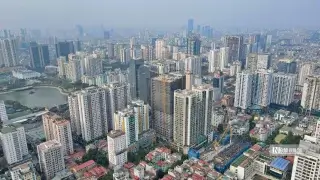
 Vietnam Mortgage Surge Pushes Homes Out of Reach
 Lithuanian Apartment Prices Accelerate Across Major Cities
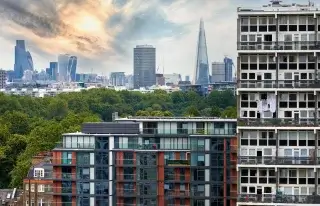 London Flats Lose Value Ahead of Leasehold Reform
 Construction of the Batumi–Sarpi Highway Begins in Georgia
 Baltic Property Investment Accelerates in 2026
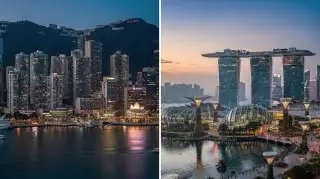 Hong Kong and Singapore Renew Their Expat Rivalry
IMF Meetings Open Under Oil Shock

The International Monetary Fund and World Bank began their Spring Meetings in Washington on April 13 under the pressure of a renewed Middle East shock that has already pushed oil back above $100 a barrel, sharpened inflation risks and prompted the Fund to prepare a downgrade to its global growth outlook. The official calendars of both institutions show that the meetings run from April 13 to April 18, 2026 at IMF and World Bank headquarters in Washington, DC. The agenda covers the global economy, financial markets, debt sustainability, development and policy coordination.
IMF and World Bank Spring Meetings 2026
The meetings are opening at a moment when the Iran war has moved energy costs, inflation and fiscal resilience back to the center of international policy debate. The publication calendar matters as much as the diplomatic schedule. The IMF is due to release the main chapter of its new World Economic Outlook on April 14, meaning governments and markets are entering the week already braced for an official downgrade to the baseline view of the global economy.
IMF Managing Director Kristalina Georgieva has already signaled that downgrade. In comments ahead of the meetings, she said the war around Iran would slow global growth even if a ceasefire proves durable, and that the Fund would revise its forecast lower than its January estimate. According to the Associated Press, the IMF had previously projected global growth of 3.3% for 2026, but is now preparing a weaker outlook because of higher oil and gas prices, damaged energy infrastructure and rising uncertainty for businesses and households.
Oil shock overshadows the Washington agenda
The immediate trigger for the sharper tone in Washington has been the new escalation around the Strait of Hormuz after US-Iran talks collapsed. According to the Associated Press, after Washington announced a blockade of Iranian ports, US crude jumped about 8% to $104.24 a barrel and Brent rose about 7% to $102.29. For finance ministers and central bankers, that brings back a familiar risk: inflation accelerating again before many economies have fully recovered from earlier shocks.
The importance of the Strait of Hormuz makes this a systemic risk rather than a narrow regional story. The US Energy Information Administration says flows through the strait in 2024 and the first quarter of 2025 accounted for more than one-quarter of total global seaborne oil trade and about one-fifth of global oil and petroleum product consumption. Around one-fifth of global liquefied natural gas trade also passed through the route. The International Energy Agency says nearly 15 million barrels a day of crude oil moved through the strait in 2025, equal to about 34% of global crude oil trade, with most of those exports heading to Asia.
That is why the Iran shock is shaping the Washington meetings as a broader macroeconomic event. Reporting on the wider policy debate suggests officials are now focused on containing the fallout from what is being described as one of the largest oil shocks in decades, because higher energy prices are already feeding into inflation, borrowing costs and food insecurity. Different outlets use different framing, but the shared conclusion is clear: the IMF and World Bank enter the week under acute pressure to respond to a fast-moving external shock.
Why the IMF is preparing a weaker global forecast
The IMF’s warning matters because the issue is not just a temporary rise in oil prices. The Associated Press says Georgieva linked the downgrade to damage to energy infrastructure, supply disruption and broader economic uncertainty. That combination works through several channels at once: it lifts fuel and transport costs, weakens consumer confidence, discourages investment and complicates monetary policy decisions as central banks try to balance inflation control against the need to support growth.
Another problem is that fiscal room is limited. According to the Wall Street Journal and AP, Georgieva has stressed that many governments already carry high debt burdens and are poorly positioned for another broad round of crisis spending. She has argued for targeted and temporary support rather than large blanket subsidies that could widen deficits and add to inflation. That warning is especially important for emerging and developing economies, which face the hardest trade-offs if energy prices stay high for longer.
Which economies are most exposed
The IMF has already identified the most vulnerable groups. AP reported that sub-Saharan Africa and small island states are likely to be hit hardest because imported energy and logistics costs absorb a disproportionate share of household and public spending in those economies. Higher fuel costs can quickly pass through into electricity prices, transport bills, food inflation and budget pressure.
That assessment is reinforced by the United Nations system. The United Nations Development Programme has warned that a prolonged conflict and its triple shock across energy, food and growth could push more than 32 million people into poverty worldwide. In its published assessment on Iran and the wider region, UNDP also documented a significant deterioration in income conditions and import costs. That shifts the Spring Meetings away from a narrow discussion about headline growth and toward a broader debate about preventing a new wave of poverty and debt stress.
Washington is also debating debt and support
The Spring Meetings traditionally include the International Monetary and Financial Committee and the Development Committee. The World Bank says the 2026 agenda is focused on international development, the global economy and financial markets. But the combination of costlier oil, weaker growth and already high debt levels almost inevitably makes sovereign vulnerability and possible new support mechanisms central to the week’s discussions. In that setting, even a moderate IMF downgrade carries weight far beyond forecasting because it helps shape lender behavior, rating decisions and government financing plans.
What adds to the concern is that this shock is landing on top of earlier ones. IMF messaging and related reporting explicitly place the current crisis in the lineage of the pandemic and the energy shock that followed Russia’s full-scale invasion of Ukraine. For many countries, this is the third major external blow in only a few years. That means any renewed surge in energy prices can have an outsized impact even if the latest disruption proves shorter than the earlier crises.
As experts at International Investment report, the 2026 Spring Meetings are unfolding not simply under another geopolitical headline, but at a moment when energy risk has again become the central macroeconomic variable. If higher oil prices and supply disruptions persist for more than a few weeks, the world economy could enter the second half of 2026 with weaker growth, stickier inflation and a greater need for targeted international support for the most vulnerable countries.
FAQ: IMF and World Bank Spring Meetings 2026
When are the 2026 IMF and World Bank Spring Meetings taking place?
The official IMF and World Bank websites say the meetings are being held in Washington, DC from April 13 to April 18, 2026.
Why is the Iran war central to the meetings?
Because the latest escalation pushed oil back above $100 a barrel, raised inflation risks, increased shipping costs and created a new threat to global growth just as finance ministers and central bankers gathered in Washington.
When will the IMF publish its new World Economic Outlook?
The main chapter and press briefing for the IMF’s April 2026 World Economic Outlook are scheduled for April 14, 2026.
Why does the Strait of Hormuz matter so much for these meetings?
Because it carries more than one-quarter of global seaborne oil trade and around one-fifth of global liquefied natural gas trade, so disruption there can quickly affect inflation, trade and debt conditions around the world.
Which economies are seen as most vulnerable?
The IMF says sub-Saharan African countries and small island states are among the most exposed, while UN-linked analysis warns of broader poverty risks across developing economies if the shock persists.