







 Vietnam Mortgage Surge Pushes Homes Out of Reach
 Lithuanian Apartment Prices Accelerate Across Major Cities
 London Flats Lose Value Ahead of Leasehold Reform
 Construction of the Batumi–Sarpi Highway Begins in Georgia
 Baltic Property Investment Accelerates in 2026
 Hong Kong and Singapore Renew Their Expat Rivalry
US Changes Military Registration System After Failed US–Iran Negotiations
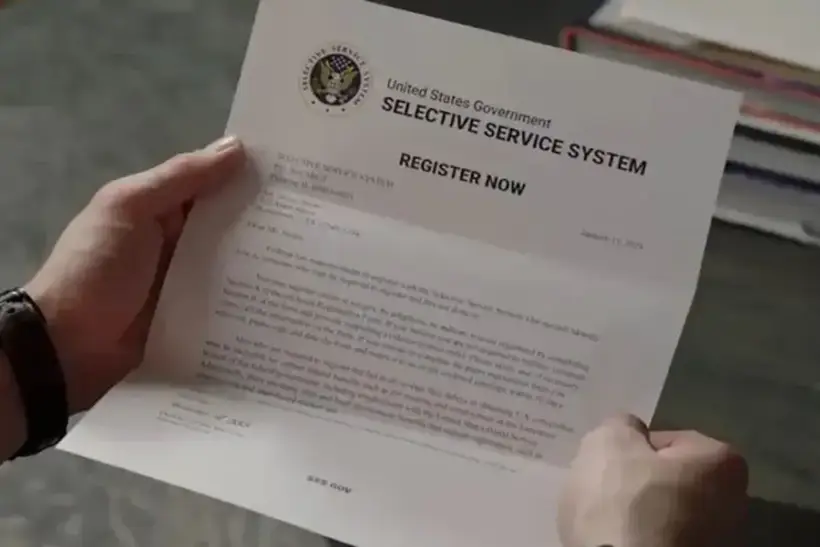
The United States will introduce automatic registration of men of draft age in the Selective Service System starting in December 2026, The Hill reports. The reform, included in the US defense budget and aimed at simplifying procedures and reducing costs, comes amid rising tensions surrounding Iran and discussions of possible military scenarios, which have increased public attention to the issue.
New US Selective Service Registration Model
The Selective Service System in the United States is moving to automatically enroll men of draft age into the registry. Previously, men aged 18 to 25 were required to submit their own information; under the new system, this responsibility will be transferred to government agencies.
Women remain exempt from registration, despite repeated legislative initiatives seeking to change this provision as part of defense-related bills. These proposals have been considered several times but were not included in final versions of the legislation.
The database will be formed through integration with federal information sources without direct participation from citizens. In practice, this represents the centralization of an existing system, as data was already partially collected through administrative processes such as issuing driver’s licenses.
Failure to comply with registration requirements is treated as a violation and may result in serious consequences, including restrictions on access to federal education grants and financial aid programs, as well as difficulties in securing employment in certain government positions.
In some cases, criminal penalties apply, including fines of up to $250,000 and imprisonment for up to five years. For immigrants, failure to register may also affect eligibility for US citizenship and immigration procedures.
US Congress Decision and Implementation Timeline
The transition to the new model was included in the US defense budget for fiscal year 2026, adopted in December 2025. The legislation made automatic registration a mandatory requirement, effectively changing the principle of enrollment in the system.
In late March 2026, the Selective Service System submitted a draft rule to the Office of Information and Regulatory Affairs. The document is currently under review and awaits final approval.
The system is scheduled to be launched in December 2026. It is expected that data on eligible individuals will be entered into the system within 30 days of their 18th birthday. The reform does not change the legal framework of military obligation; it adjusts the registration mechanism rather than introducing new forms of conscription.
In addition, Congress approved an increase in military pay, including a 10.5% rise in basic compensation in 2025.
Historical Context of the US Registration System
The United States ended conscription after the Vietnam War; since 1973, the armed forces have been fully volunteer-based. However, the infrastructure for mobilization registration has remained in place.
In 1980, President Jimmy Carter reinstated the system as a contingency mechanism for national emergencies. It was intended to enable rapid mobilization of military personnel and provide alternative service for conscientious objectors, if authorized by the President and Congress.
Since then, the Selective Service System has remained formally active but unused. The current reform modernizes this framework without changing its core function.
One of the drivers of the change is declining compliance. According to CNBC, in 2024 approximately 81% of eligible individuals were registered. The new system is expected to increase coverage closer to full compliance.
However, several aspects remain unclear, including which data sources will be used and how errors or disputed cases will be handled, leaving questions about implementation.
US Military Recruitment Trends
The US military recruitment system has faced persistent structural challenges in recent years. According to USAFacts, interest in military service in 2022 fell to its lowest level in 40 years. However, in fiscal year 2024, the Pentagon reported 146,473 new recruits, a 14% increase compared to the previous year.
In December 2025, the Department of Defense stated that fiscal year 2025 was the strongest recruitment year in 15 years. All branches except the Space Force met or exceeded recruitment targets. Officials attributed the improvement to faster medical screenings, changes in recruitment procedures, and expanded preparatory programs.
Despite this progress, structural constraints remain. USAFacts estimates that around 77% of young Americans are ineligible for military service without waivers due to health, education, or legal factors. A 2024 survey showed that most people aged 16–21 are not considering military service.
Political Debate and White House Position
The possibility of reinstating the draft periodically resurfaces in US politics, but discussion has intensified in recent weeks amid rising tensions around Iran and stalled negotiations. Reports that the administration is considering military options, including limited strikes, have added sensitivity to any changes related to military policy.
The White House emphasizes that automatic registration does not signal preparation for mobilization. Press Secretary Karoline Leavitt stated that reinstating the draft is “not part of current plans,” while noting that President Donald Trump retains the option to consider different courses of action.
Baylor University political scientist Pat Flavin noted that the decision to introduce automatic registration was made well before the current geopolitical crises and is not connected to US military operations. In his view, the change is technical in nature and aimed at reducing human error rather than preparing for mobilization.
Experts note that the US president cannot reinstate conscription unilaterally; congressional approval and changes to existing law would be required. Even amid increased geopolitical pressure, the registration reform remains a separate administrative process.
Prospects of Conflict in the Middle East
The changes in the military registration system are being viewed against the backdrop of stalled US–Iran negotiations on April 11. According to The Wall Street Journal, President Donald Trump is considering a range of options, including limited strikes and measures involving a blockade of the Strait of Hormuz.
US officials say the administration is weighing all tools of pressure on Iran, including coordination with allies to secure maritime routes. However, similar proposals have been raised previously without significant progress.
Experts believe a full-scale escalation remains less likely due to risks to regional stability and the global economy. Another limiting factor is Washington’s reluctance to become involved in a prolonged conflict ahead of elections. Still, the timing of developments in military policy and changes to the registration system has drawn increased attention to the issue.