







 Vietnam Mortgage Surge Pushes Homes Out of Reach
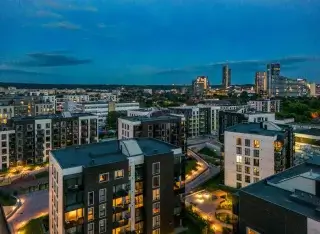 Lithuanian Apartment Prices Accelerate Across Major Cities
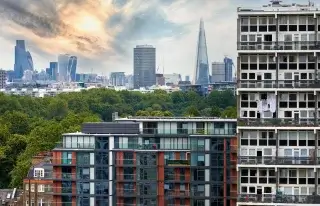 London Flats Lose Value Ahead of Leasehold Reform
 Construction of the Batumi–Sarpi Highway Begins in Georgia
 Baltic Property Investment Accelerates in 2026
 Hong Kong and Singapore Renew Their Expat Rivalry
Australia’s housing costs keep squeezing households

Housing remains one of the sharpest pressure points for Australian households as rents and mortgage costs outpace income growth and new supply still struggles to catch up. Cotality said renters were spending a record 33.4% of pre-tax income on housing in the third quarter of 2025, versus a 10-year average of 29.2%, while the Reserve Bank of Australia held the cash rate at 4.10% after its March increase and total dwelling approvals reached 19,022 in February 2026.
Why housing costs are back at the center of Australia’s debate
Australia’s property market remains under strain even after a prolonged period of tighter monetary policy. Bloomberg has previously noted that Australian homes are among the most expensive in the developed world, with buyers taking on increasingly heavy debt burdens just to enter the market. In 2026, that stress has not disappeared: rents are still feeding inflation while expensive mortgages are limiting affordability for would-be homebuyers.
The pressure is now coming through two channels at once. For renters, housing costs are rising faster than wages. For buyers, the Reserve Bank of Australia’s elevated cash rate and expectations of further tightening are lifting repayment burdens and shrinking borrowing capacity.
Renters are carrying a record burden
The clearest sign of strain is in the rental market. Bloomberg reported in February, citing Cotality, that Australian renters were spending an average 33.4% of pre-tax income on rent in the third quarter of 2025. That was the highest share on record and well above the 10-year average of 29.2%. Over the same 12 months, rents rose 4.3% while wages increased just 3.4%.
ABC, also citing Cotality, said rents had grown 2.5 times faster than wages over five years. That gap means that even when incomes rise in nominal terms, housing affordability is still worsening in real life. The squeeze is especially severe for younger households, recent arrivals and anyone forced to move, since new leases are often priced well above existing ones.
High interest rates are adding mortgage stress
The mortgage market is being hit by the elevated cost of money. Reserve Bank of Australia data show the cash rate stood at 4.10% in March 2026 after increases in February and March. Even if this is not a historic peak, it represents a materially more expensive borrowing environment for households that had grown used to easier credit conditions in earlier years.
Markets have become even more nervous because investors are also pricing a renewed inflation risk tied to higher global energy costs. Australian reporting in April said markets were assigning meaningful odds to another rate increase at the next meeting, as external price shocks threatened to keep inflation above target for longer than previously expected. For housing, that means mortgage expectations can deteriorate even before the central bank actually moves again.
Home prices are no longer moving in one direction everywhere
Australia’s housing market is now more uneven than earlier in the cycle. Bloomberg reported at the end of March that home values in Sydney and Melbourne fell over the month as high borrowing costs and already elevated prices hit affordability. Elsewhere, growth eased but did not fully disappear. That suggests the country is no longer moving as a single market: the most expensive cities are running into affordability ceilings, while tighter or faster-growing regional markets are still showing resilience.
That distinction matters. Australia’s problem is no longer only about rapid price gains. It is also about a market that started from very high price levels, faces insufficient new supply and is now dealing with expensive credit. Even in markets where price momentum has weakened, housing has not become truly affordable because the monthly cost burden remains high.
New supply is improving, but not fast enough
Supply remains one of the core structural problems. The Australian Bureau of Statistics said total dwelling approvals rose to 19,022 in February 2026, up 29.7% from the previous month and 14.0% from a year earlier. Private-sector dwellings excluding houses more than doubled month on month, pointing to a rebound in apartment and higher-density approvals. That suggests the pipeline is improving, but it does not amount to a quick fix.
The reason is timing. Approvals are only the first step, while completions require financing, labor and time. In the meantime, the rental market continues to operate under supply scarcity, which helps keep asking rents elevated. Cotality has said that without a sustained lift in housing supply, meaningful relief for renters is unlikely.
Inflation and housing are now reinforcing each other again
Australia’s housing problem is not only social. It is also macroeconomic. High rents feed directly into inflation, while high interest rates intended to contain inflation also push up mortgage costs and weaken affordability for buyers. The Australian Bureau of Statistics said consumer prices in seasonally adjusted terms rose 0.2% in February, while the Reserve Bank continues to watch how persistent price pressures prove to be.
That is why housing has returned to the center of Australia’s economic debate. Expensive rent is adding to cost-of-living stress and inflation pressure, while high rates and insufficient supply are preventing a quick reset in affordability. The result is that housing remains one of the clearest indicators of household financial strain in the country.
As International Investment experts report, Australia’s current housing crunch can no longer be explained by house prices alone. The problem has become systemic: rent is consuming a record share of income, mortgages remain costly because of tight monetary policy, and the construction pipeline is still too slow to restore affordability quickly.
FAQ
Why is housing in Australia considered so expensive?
Because both renting and buying consume an increasingly large share of household income, while supply growth still trails demand. Bloomberg and other sources continue to describe Australia as one of the least affordable developed housing markets.
How much income are renters spending on housing?
Cotality said renters were spending an average 33.4% of pre-tax income on rent in the third quarter of 2025.
What is the current RBA cash rate?
According to the Reserve Bank of Australia, the cash rate stands at 4.10%.
Is new housing supply increasing?
Yes, dwelling approvals rose to 19,022 in February 2026, but that is still not enough to quickly remove the structural shortage.
Why does weaker price growth not solve affordability?
Because prices remain high, mortgage rates are elevated and rents are still absorbing a record share of household income.