







 Vietnam Mortgage Surge Pushes Homes Out of Reach
 Lithuanian Apartment Prices Accelerate Across Major Cities
 London Flats Lose Value Ahead of Leasehold Reform
 Construction of the Batumi–Sarpi Highway Begins in Georgia
 Baltic Property Investment Accelerates in 2026
 Hong Kong and Singapore Renew Their Expat Rivalry
Russia lifts flight restrictions to the UAE and over Iran
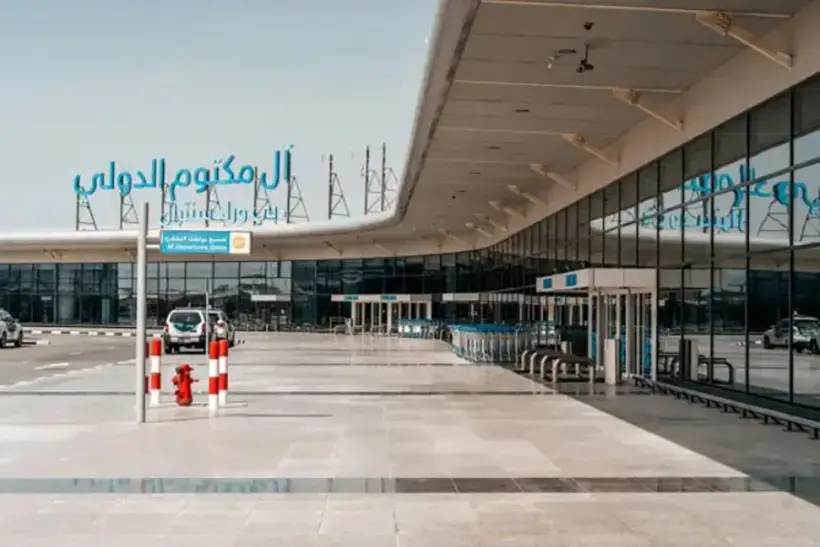
Russia has lifted restrictions on flights to the UAE and through Iranian airspace, Izvestia reports. Tickets are already being sold under normal conditions, but it is still too early to speak about a definitive resolution of the situation in the region.
Iran’s airspace reopening plan
Iran announced a partial reopening of its airspace on April 18. On the same day, the first passenger flight from Oman landed. The authorities have developed a four-stage plan, with flights gradually resuming from the eastern regions and moving westward, according to the Tasnim news agency.
Stages of restoration:
- Transit flights — reopening of airspace primarily for international overflights through the eastern part of the country
- Eastern airports — resumption of terminal operations in eastern Iran
- Tehran hubs — reopening of Mehrabad and Imam Khomeini airports
- Western airports — full restoration of all airports in western Iran
During the period of regional military tensions, only limited categories of flights were allowed, subject to strict prior approval requirements.
Operations have already partially resumed at six Iranian airports, including in Tehran. The airport in Mashhad in northeastern Iran is set to resume international services on April 20. Six terminals across the country will operate until Saturday, April 25, for 11 hours per day — from 03:30 to 14:30 UTC. Airlines must obtain new permits from Iranian aviation authorities, as all previous approvals have been suspended.
Earlier statements from Russia’s Federal Air Transport Agency (Rosaviatsia) indicated that Iranian airspace would remain closed to Russian carriers until May 15, but the situation has since changed. The agency stated in its Telegram channel that transit flights and services to Iranian airports must follow all recommendations issued by local authorities.
Flights to the UAE: partial restrictions remain
Airline capacity to the UAE remains limited, leading to higher ticket prices and reduced travel options. For example, IndiGo previously operated around 40 flights per day, compared to about 11 currently, according to Musafir.com COO Rahish Babu. Turkish and European carriers are expected to resume flights in early May. Emirates, based in Dubai (UAE), is gradually returning to its regular schedule, including flights to Russia. At the same time, many airlines continue to reroute flights to avoid parts of the Persian Gulf region for safety reasons.
“Aeroflot” has suspended ticket sales to the UAE until the end of May, redirecting its operations to airports in the Asia-Pacific region. On April 15, Rosaviatsia extended its recommendation to suspend ticket sales to the UAE until further notice. Since April 20, the stance has slightly softened. The agency continues to monitor the situation in the Middle East and may adjust airline operations if necessary.
The US prepares for a new Middle East operation
Rosaviatsia recommendations do not automatically lead to a full restoration of air traffic. Airlines continue to make decisions based on risk assessments and commercial considerations. The situation remains unstable, and carriers are acting cautiously, maintaining flexible routing and backup operational plans.
According to Turprom, the United States is carrying out a large-scale transfer of ammunition and equipment to the region ahead of a new phase of the “Epic Wrath” operation. Air bridge activity has reached high levels, with Boeing C-17A Globemaster III military transport aircraft continuously operating on transatlantic routes. Between 15 and 20 heavy aircraft arrive daily at bases in Qatar (Al Udeid), Jordan (Muwaffaq Salti), and Kuwait.
Fragile truce and flight risks
Analysts at International Investment note that the ceasefire between Iran and the United States remains fragile, and this uncertainty continues to influence airline decisions and flight dynamics across the region. In practice, routes over the Middle East are no longer treated as standard by carriers: operational adjustments, schedule changes, and route restructuring can occur at short notice.
The risks are also reflected in ticket prices, flight frequency, and the availability of familiar connecting routes. Cancellations and delays remain possible, creating additional challenges for passengers. Airlines continue balancing between restoring regular networks and maintaining higher safety standards.
The civil aviation market in the region remains highly sensitive to political and military developments, and a return to full stability will depend on how the situation evolves. For now, it remains unclear whether the parties will manage to prevent further escalation.