







 Vietnam Mortgage Surge Pushes Homes Out of Reach
 Lithuanian Apartment Prices Accelerate Across Major Cities
 London Flats Lose Value Ahead of Leasehold Reform
 Construction of the Batumi–Sarpi Highway Begins in Georgia
 Baltic Property Investment Accelerates in 2026
 Hong Kong and Singapore Renew Their Expat Rivalry
Investors Return to Real Estate Fundamentals
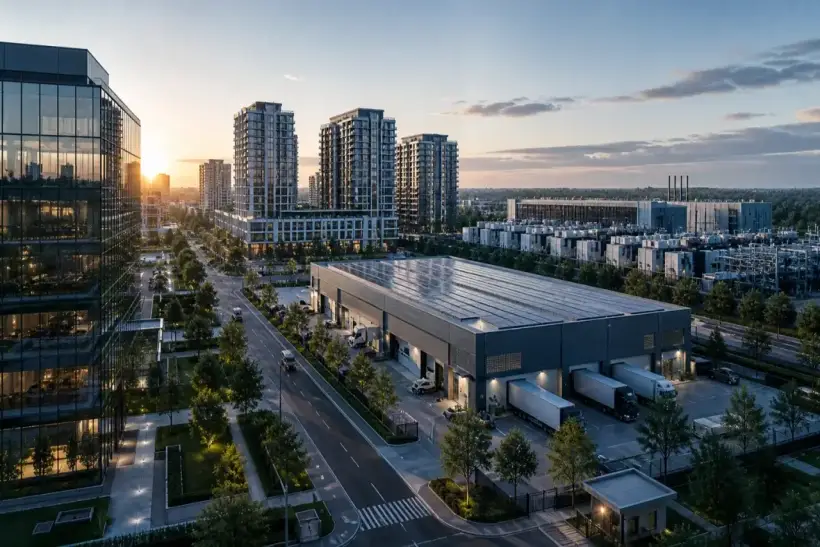
Global commercial real estate investors are re-entering the market in 2026 with a narrower focus on asset quality, tenant strength and durable income. The recovery is no longer framed mainly as a bet on lower interest rates. It is increasingly shaped by cash flow, location, lease structure and the resilience of occupier demand.
PERE reported on May 1, 2026 that David Gross, managing director at Morgan Stanley Real Estate Investing, sees net lease real estate as a core income strategy, while warning that today’s market requires more discipline around both tenant credit and the underlying property.
Net lease income faces a stricter test
A net lease is a rental structure in which the tenant often pays not only base rent but also major property costs such as taxes, insurance and maintenance. For investors, it can provide predictable income, but only if the tenant remains financially strong and the building retains value beyond the lease.
Morgan Stanley Investment Management has argued that elevated volatility and a slowing economy can favor long-term net lease assets with fixed rent increases, while also stressing that investors must understand the residual value of the real estate, not just the credit profile of the tenant.
Cash flow is replacing valuation optimism
Morgan Stanley Real Estate Investing’s 2026 outlook says real estate risks and opportunities are shifting from broad macroeconomic themes to more granular sector, market and asset-level drivers. The firm notes that some assets have repriced by 20–25% over the past three years, while motivated sellers, more active buyers and improved debt availability are supporting a rebound in transactions.
That shift puts operating income ahead of simple valuation recovery. A capitalization rate is the ratio between a property’s net operating income and its market value. When investors rely mainly on falling capitalization rates, they are betting on price appreciation; the current cycle is pushing them toward income growth and asset management.
Housing, logistics and data centers lead demand
The most resilient sectors remain those with visible supply shortages and long-term demand: multifamily housing, student housing, single-family rentals, selected logistics assets, healthcare real estate and data centers. Data centers are benefiting from artificial intelligence infrastructure demand, but they also depend heavily on power access, land availability and grid capacity.
JLL’s global outlook for 2026 says improving economic growth, moderating inflation and lower interest rates should create a more stable environment for commercial real estate, while data centers and living assets are expected to remain major investment themes.
Investors are buying again, but with thresholds
CBRE’s survey of more than 1,400 investors across North America, Europe, Asia-Pacific and Latin America found that investors expect to buy and sell more assets in 2026, with value-add and core strategies ranking as the most preferred globally.
Colliers also sees institutional capital returning and momentum building across offices, industrial assets, data centers, student housing, self-storage and healthcare real estate, while noting that investors are becoming more selective and more focused on risk management.
David Gross, according to North Haven Net REIT’s biography, is a Morgan Stanley managing director and head of acquisitions at North Haven Net REIT; he has led more than $5 billion of real estate investments for MSREI across net lease, industrial, healthcare and residential assets.
As experts at International Investment report, the return of capital to real estate is not a return to the cheap-money cycle. The advantage in 2026 will likely go to investors who can underwrite the tenant, building, location, debt structure and demand base before acquisition. The key risk is overpaying for “stable” income while missing weak asset liquidity or dependence on a single occupier.
FAQ
What is changing in commercial real estate in 2026?
Investors are becoming more active, but they are focusing more on income durability, tenant credit, asset quality and long-term demand.
What is a net lease?
A net lease is a rental structure where the tenant often pays base rent plus major property expenses such as taxes, insurance and maintenance.
Why are fundamentals more important now?
Interest rates remain above pre-pandemic levels, so investors cannot rely only on cheaper financing or broad valuation recovery.
Which sectors look most resilient?
Housing, logistics, healthcare real estate, student housing, self-storage and data centers remain among the most closely watched sectors.