







 Vietnam Mortgage Surge Pushes Homes Out of Reach
 Lithuanian Apartment Prices Accelerate Across Major Cities
 London Flats Lose Value Ahead of Leasehold Reform
 Construction of the Batumi–Sarpi Highway Begins in Georgia
 Baltic Property Investment Accelerates in 2026
 Hong Kong and Singapore Renew Their Expat Rivalry
Rupee Slides to Record Low, Testing Policy Limits
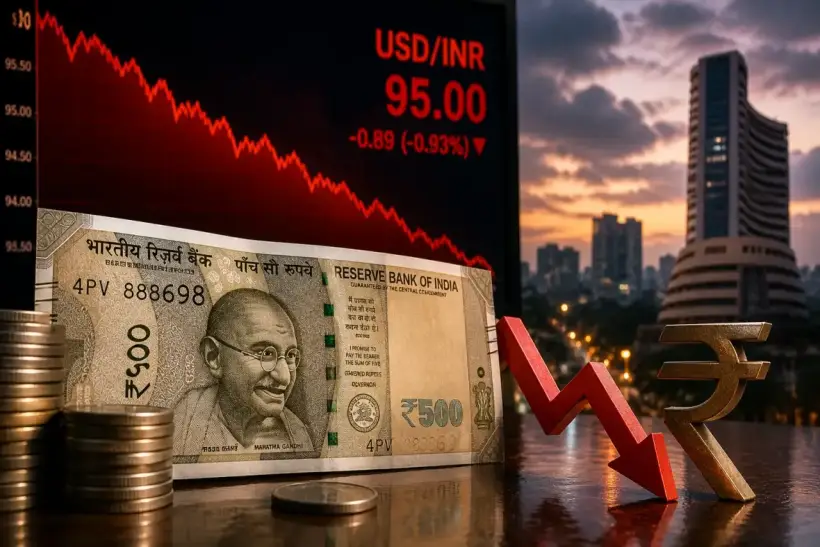
Currency weakens amid external shocks
The Indian rupee fell to historic lows in early May, trading near 95 per dollar as rising oil prices and global dollar strength intensified pressure on emerging markets. India’s reliance on imported energy has amplified the impact of higher crude prices, which increase demand for foreign currency.
Bloomberg reported that the currency’s decline reflects broader capital outflows and global risk aversion, making it one of Asia’s weaker performers.
Central bank revisits crisis-era tools
The Reserve Bank of India is considering measures similar to those used during the 2013 currency crisis, when it boosted foreign currency inflows and tightened financial conditions to defend the rupee.
In the current environment, policymakers are again evaluating tools to strengthen reserves and manage capital flows, while maintaining a market-driven exchange rate system with targeted intervention.
Oil and geopolitics drive volatility
Higher energy import costs remain a central factor behind the rupee’s weakness. As a major oil importer, India faces increased demand for dollars when prices rise, worsening its external balance.
Geopolitical tensions, particularly in the Middle East, are further fueling global uncertainty and pushing investors toward safer assets such as the US dollar.
Capital flows and policy shift risks
The weakening currency is accompanied by foreign capital outflows, adding to market pressure. Even moderate investment withdrawals can significantly affect exchange rates during periods of global caution.
This dynamic is raising expectations that the central bank may need to shift toward tighter monetary policy, potentially ending the era of low borrowing costs.
Inflation and economic impact
A weaker rupee increases import costs and contributes to inflation, affecting fuel, electronics and other goods priced in dollars. At the same time, exporters benefit from higher rupee earnings, though gains are uneven and delayed.
The broader challenge is managing inflation expectations while maintaining economic growth in a volatile global environment.
As experts at International Investment report, the rupee’s decline signals a structural shift in global capital flows, where emerging markets face tighter financial conditions and higher sensitivity to external shocks. The key risk for 2026 is not just depreciation, but the balance between defending the currency and preserving economic growth.
FAQ
Why is the rupee at a record low?
It is driven by higher oil prices, a strong US dollar and capital outflows from emerging markets.
What is the RBI doing?
The central bank is considering crisis-era measures to support the currency and manage capital flows.
How does a weaker rupee affect the economy?
It raises import costs and inflation but can support export revenues.
Why is the 95 level important?
It represents a key psychological threshold for markets and policymakers.