







 Vietnam Mortgage Surge Pushes Homes Out of Reach
 Lithuanian Apartment Prices Accelerate Across Major Cities
 London Flats Lose Value Ahead of Leasehold Reform
 Construction of the Batumi–Sarpi Highway Begins in Georgia
 Baltic Property Investment Accelerates in 2026
 Hong Kong and Singapore Renew Their Expat Rivalry
Global Military Spending Hits Record $2.9 Trillion: Country Rankings
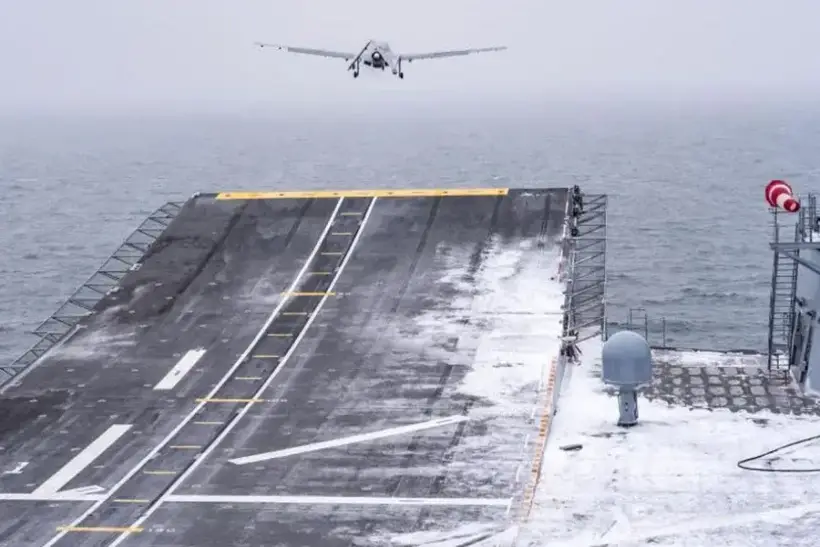
Global military spending continued to rise for the 11th consecutive year. In 2025, this trend intensified, reaching a historic high. A shift in the centre of spending growth from the United States toward Europe and Asia was also observed, according to the Stockholm International Peace Research Institute (SIPRI).
Dynamics of Global Militarisation
In 2025, global military expenditure reached $2.887 trillion, increasing by 2.9% in real terms compared with 2024 and by 11% in nominal terms. Defence budgets worldwide have been rising for 11 consecutive years.
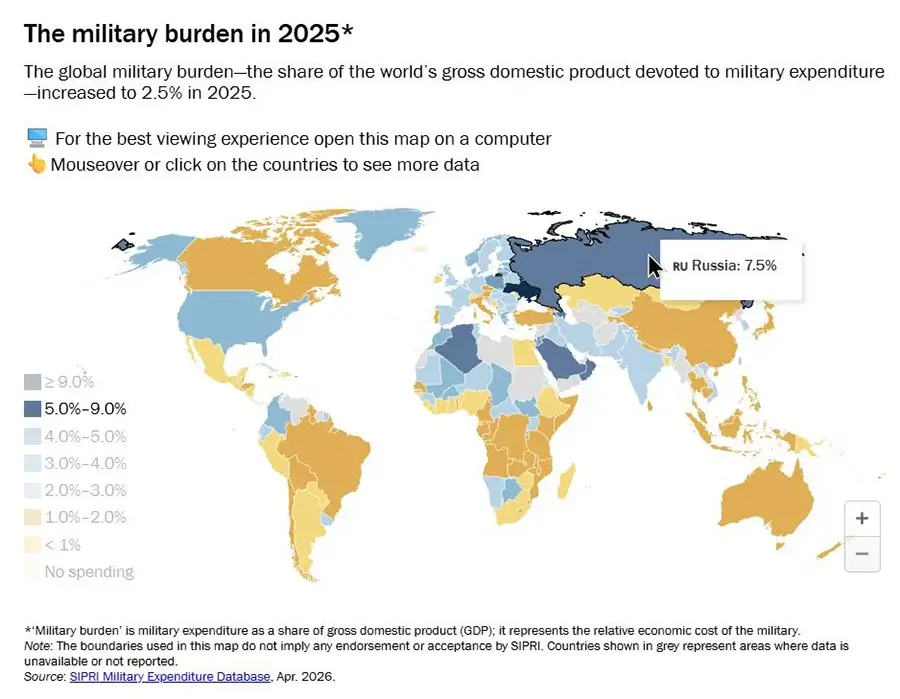
The share of military spending rose to 2.5% of global GDP — the highest level since 2009. This is significantly lower than the 2024 figure (9.7%), although the burden on the global economy from defence spending continues to increase. The slowdown is largely explained by a reduction in US military expenditure. Outside the United States, total spending grew by 9.2% in 2025. Europe (+14%) and Asia and Oceania (+8.1%) led growth rates.
SIPRI researcher Xiao Liang noted that states have responded to conflicts across the world, geopolitical shocks and uncertainty. He expects this trend to continue throughout 2026 and beyond due to ongoing crises and long-term national objectives.
The United States Cuts Spending After Peak Allocations
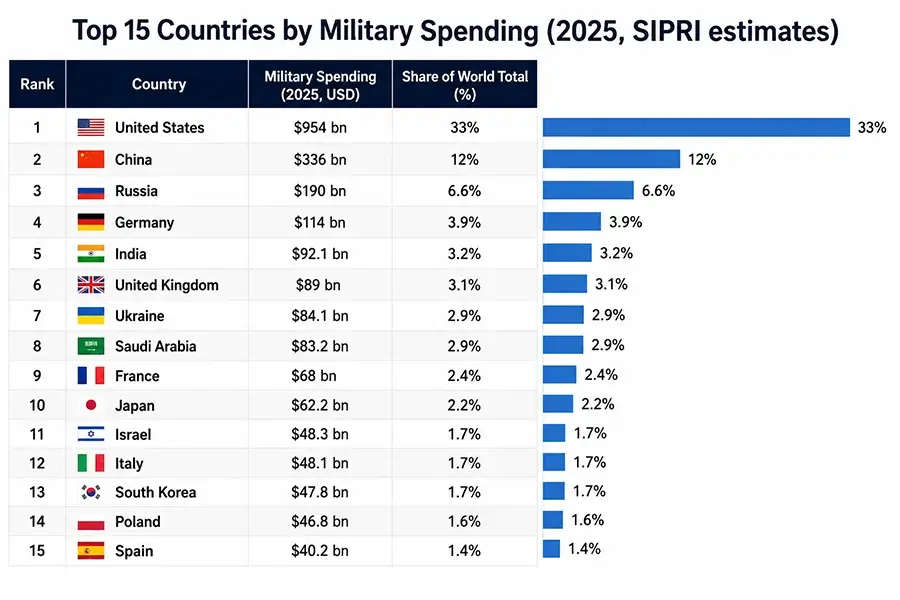
US military spending in 2025 amounted to $954 billion, a decline of 7.5% compared with 2024. This was the main factor slowing global defence spending growth. The decline was primarily driven by the absence of new military aid packages for Ukraine. Over the previous three years, around $127 billion had been approved for this purpose, significantly boosting US defence expenditure.
At the same time, the US strategic course remains focused on expanding military capabilities. Washington continues to invest in nuclear and conventional weapons, prioritising deterrence of China in the Indo-Pacific region and maintaining military superiority in the Western Hemisphere.
Nan Tian, Director of SIPRI’s Military Expenditure and Arms Production Programme, noted that the decline in US spending in 2025 is likely temporary. The approved budget trajectory for 2026 forecasts an increase to over $1 trillion, which could return the US to a path of accelerated defence spending growth.
Europe Accelerates Rearmament Due to the Ukraine Conflict
In 2025, European military spending rose by 14% to $864 billion. This was the main driver of global defence growth, largely due to the ongoing conflict in Ukraine and a broad reassessment of NATO defence policies. The 29 European NATO members collectively spent $559 billion. Twenty-two countries met or exceeded the 2% GDP defence spending target.
In Germany, military spending increased by 24% to $114 billion (2.3% of GDP). Spain increased spending by 50% to $40.2 billion, exceeding 2% of GDP for the first time since 1994. France recorded a 1.5% increase to $68 billion, while the United Kingdom saw a 2.0% decline to $89.0 billion.
Russia increased military spending by 5.9% to $190 billion, equivalent to 7.5% of GDP. Ukraine raised its defence budget by 20% to $84.1 billion, or around 40% of GDP, making it one of the most militarised budgets globally by share.
The expansion of rearmament programmes resulted in the sharpest increase in Central and Western European military budgets since the end of the Cold War. SIPRI researcher Lorenzo Scarazzato noted that if the conflict continues, the upward trend is likely to persist into 2026, supported by increased Russian oil revenues and expected EU financial assistance to Ukraine.
SIPRI researcher Jade Guiberteau Ricard added that in 2025, military spending among European NATO members grew faster than at any time since 1953. She linked this to Europe’s push for greater strategic autonomy and pressure from the United States to ensure more balanced burden-sharing within the alliance.
Asia and Oceania Continue Military Modernisation
Military spending in Asia and Oceania increased by 8.1% in 2025 to $681 billion, the highest regional growth since 2009. China remained the main driver, increasing spending by 7.4% to $336 billion — its 31st consecutive annual rise. Beijing continues large-scale military modernisation alongside anti-corruption campaigns in defence procurement.
Japan increased spending by 9.7% to $62.2 billion, or 1.4% of GDP, the highest level since 1958. Taiwan increased its defence budget by 14% to $18.2 billion (2.1% of GDP), marking its strongest growth since the late 1980s amid frequent Chinese military exercises around the island. India, the fifth-largest military spender in 2025, increased spending by 8.9% to $92.1 billion, while Pakistan raised its budget by 11% to $11.9 billion.
According to senior SIPRI researcher Diego Lopes da Silva, regional defence growth is driven not only by long-standing geopolitical tensions but also by increasing uncertainty over future US support. He noted that Washington’s pressure on allies to raise military spending is an additional factor accelerating militarisation.
Middle East Spending Remains Stable
Military expenditure in the Middle East totalled approximately $218 billion in 2025, rising by just 0.1% year-on-year. The region remained relatively stable despite ongoing conflicts and tensions.
Israel reduced military spending by 4.9% to $48.3 billion due to a decrease in the intensity of fighting in Gaza following the January 2025 ceasefire. However, spending remained nearly double the 2022 level.
Turkey increased its defence budget by 7.2% to $30 billion, driven by ongoing military operations in Iraq, Syria and Somalia. Saudi Arabia increased spending by 1.4% to $83.2 billion, becoming the eighth-largest military spender globally.
Iran reduced military spending by 5.6% to $7.4 billion in real terms, largely due to high inflation of 42%. However, nominal spending still increased. Researcher Zubaida Karim noted that official figures likely underestimate Iran’s true military expenditure, as part of funding is off-budget, including oil revenues used for missile and drone programmes.
In spring 2026, the situation in the Middle East changed significantly due to the Iraq–US conflict, with tensions remaining high in early May 2026.
Africa and Latin America Increase Defence Budgets
Military spending in Africa rose by 8.5% in 2025 to $58.2 billion, driven by internal instability and the activity of armed groups in several countries. Nigeria recorded a particularly sharp increase of 55% to $2.1 billion due to rising threats from insurgent and extremist organisations.
In Latin America, Guyana stood out with a 16% increase in military spending to $248 million, driven by tensions with Venezuela over the Essequibo region. Data on Venezuela remains incomplete due to a lack of transparent reporting, limiting a full assessment of the regional military balance.
Trends and Implications
Analysts at International Investment note that prolonged conflicts, rising regional rivalries and accelerated militarisation of major economies are making defence budgets a long-term feature of global politics. Growth dynamics are shifting from the United States toward Europe and Asia, although these trends may change in 2026. The findings indicate a broader structural transformation of the international security system.
The global picture is becoming less predictable and increasingly shaped by a complex mix of political and economic factors. At the same time, there is a growing risk of blurred boundaries between military spending and broader security-related expenditures, which may reduce transparency and complicate assessments of real military capabilities, particularly in Europe