







 How Ukraine’s New-Build Housing Market Has Changed Over Four Years
 European Prime Rents Rise as Property Yields Turn Higher
 The Most Expensive Airlines in Europe in 2026
 Housing Prices in Italy Reach a Two-Year High
 Travellers Increasingly Choose Cooler Scandinavia
 Serbia Property Sales Decline as Transaction Value Rises
Europe’s Fuel Imports Shrink
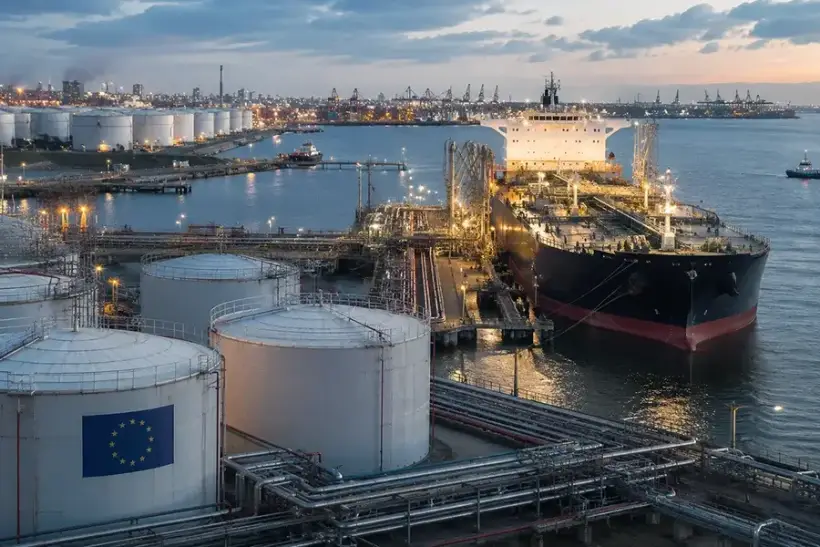
Europe’s imports of diesel and jet fuel are shrinking as the Russia-Ukraine conflict drags on, sanctions tighten around refined products made from Russian crude, and global fuel routes are redrawn. For carriers, airlines, refiners and oil traders, the shift means costlier logistics, stricter origin checks and a thinner safety buffer before the summer demand peak.
Sanctions closed a Russian crude loophole
Europe’s refined-products market is entering a new stage of disruption. After banning direct imports of Russian crude and oil products, the EU has moved to close another supply channel: fuels made in third countries from Russian crude. This covers diesel, gasoil, jet fuel, gasoline and fuel oil that could be refined outside the bloc and then delivered to European ports as products of another country.
Bloomberg reported that Europe’s imports of diesel and jet fuel are shrinking as the Russia-Ukraine conflict continues. The trend reflects not only lower physical inflows, but also a stricter sanctions environment in which buyers, traders, shippers and insurers must prove the origin of the crude used to make the fuel.
The key change took effect on January 21, 2026. From that date, EU operators have been prohibited from directly or indirectly purchasing, importing or transferring petroleum products from third countries if those products were made from Russian crude. The measure is designed to close a route through which Russian crude could be shipped to countries such as India or Turkey, refined locally and then returned to Europe as diesel or jet fuel.
Diesel remains Europe’s weak spot
Diesel has strategic importance for Europe. It is used in freight transport, agriculture, construction equipment, industry, municipal services and part of the passenger-car fleet. Even as electrification accelerates, trucking, logistics and farming remain heavily dependent on diesel.
Before the energy break with Russia, Europe was structurally dependent on external supplies of middle distillates. Middle distillates are refined oil products including diesel, gasoil and jet fuel. After sanctions, the market began searching for new routes, with the Middle East, the United States, India, Turkey and other suppliers partly replacing Russian volumes.
The new ban complicates that model. The port of loading is no longer enough. The origin of the crude used to make the fuel now matters. If diesel is loaded in a country that refines large volumes of Russian oil, the European buyer must have evidence that the specific cargo does not contain banned input. That raises compliance costs and reduces the willingness of market participants to handle questionable cargoes.
Jet fuel is under pressure before the holiday season
Jet fuel is a separate risk. For airlines, fuel is one of the largest operating costs. Europe depends on a complex supply network that includes seaborne imports, pipelines, rail, road tankers, airport storage and contracts with oil traders.
IATA, the International Air Transport Association, has warned that Europe’s jet-fuel supply chains have become more vulnerable because of external shocks, geopolitical tensions and greater reliance on imports. That vulnerability is especially important before the summer travel peak, when demand rises and airports need secure fuel inventories.
If jet-fuel imports fall, airlines do not necessarily cancel flights immediately. The first effects are usually higher fuel surcharges, route adjustments, more expensive tickets, tankering decisions and renegotiated supply contracts. But if the shortage becomes severe, the risk can move from pricing pressure to operational limits.
India and Turkey moved into the center of sanctions scrutiny
After Europe abandoned direct Russian refined products, India and Turkey became important links in the new trade chain. These countries bought Russian crude, refined it and exported products to the global market. For Europe, that model helped cover diesel and jet-fuel shortages for a time, but it also created a political problem: Russian oil could return to the EU after processing.
The EU has tried to close that loophole. Third-country suppliers now need to prove the origin of crude feedstock. For traders, this means documenting the supply chain, checking refineries, cargoes, certificates, blending, terminal storage and tanker routes.
The problem is that the oil market is physically complex. Crude and refined products can be mixed in storage, moved through several ports, sold through intermediaries and change ownership before reaching Europe. Sanctions enforcement is therefore not only a legal issue, but also a technological and operational challenge.
The US and Middle East are more important, and more expensive
As questionable supplies shrink, Europe must rely more heavily on alternative suppliers. These include the United States, Saudi Arabia, Kuwait, the United Arab Emirates and other refining hubs. But replacing routes does not automatically normalize the market.
US cargoes require long Atlantic shipping. Middle Eastern supplies depend on the security of sea lanes, tanker insurance, and conditions in the Red Sea, the Persian Gulf and the Suez route. If geopolitical risks rise in several regions at once, Europe does not get one clean replacement route. It gets a set of longer, costlier and more vulnerable chains.
For oil traders, that creates opportunities. For consumers, it creates price risk. If Europe pays a premium for diesel or jet fuel, cargoes will move where returns are highest. But that also increases competition with Asia, Africa and Latin America for the same barrels of fuel.
The UK approach widened the gap with the EU
A separate source of tension is the United Kingdom’s position. London has allowed imports of diesel and jet fuel made from Russian crude in third countries under certain conditions. That creates a divergence from the EU sanctions line, where such imports are banned.
For the market, the difference is practical. If the EU and the UK use different rules, traders can redirect cargoes toward the jurisdiction with looser requirements. That may ease tightness in one market, but it complicates the sanctions architecture and can create price distortions between neighbouring systems.
Politically, the divergence shows how difficult energy sanctions become over time. The longer the Russia-Ukraine conflict lasts, the harder it is to maintain pressure on Russian revenues while protecting domestic consumers and avoiding fuel-market disruptions.
Refiners get an opportunity, but cannot solve everything
European refineries may benefit from higher margins on diesel and jet fuel. Refining margin is the difference between the price of crude oil and the value of refined products after costs. When imports fall, domestic refineries have an incentive to raise output.
But European refining capacity has limits. Some refineries were closed or converted in previous years because of climate policy, weak profitability, competition and expectations of long-term decline in oil-product demand. Not every plant can quickly shift its output slate toward diesel or jet fuel without technological and crude-quality constraints.
Even if refining output rises, inland logistics remain a bottleneck. Fuel must move from ports and refineries to airports, service stations, storage sites, farms and industrial users. In a tight market, any disruption — a strike, accident, lack of tankers or delayed cargo — can quickly deepen local shortages.
Consumers will feel price before scarcity
For most European consumers, the first effect of lower imports will be felt through prices rather than empty pumps. Diesel affects freight costs, food prices, construction materials and industrial goods. Jet fuel affects airfares, urgent cargo logistics, tourism and airline operating costs.
When fuel becomes more expensive, the effect moves through the supply chain. Hauliers raise rates, farmers face higher field-work costs, builders adjust estimates, and airlines revisit ticket prices and routes. That makes the refined-products market part of the inflation picture even when crude oil itself is not rising dramatically.
For the European Central Bank and national governments, this is an uncomfortable signal. An energy shock can be temporary, but if it affects transport and services, it can gradually feed into broader price pressure. Lower diesel and jet-fuel imports are therefore not just an industry story, but a macroeconomic issue.
Europe is paying for its energy reset
The current situation shows the price of a fast energy-trade reset. The EU wants to cut Russian oil revenues, close circumvention channels and increase sanctions pressure. In the short term, that means more expensive origin checks, less purchasing flexibility and greater reliance on distant routes.
For businesses, the main risk is uncertainty. Traders do not want to buy cargoes that could be detained over sanctions questions. Shippers price in insurance and routing risks. Airlines want guaranteed access to fuel before the summer season. Industrial consumers try to lock in supply early.
The result is a more politicized fuel market. Diesel and jet-fuel prices now depend not only on crude and demand, but also on sanctions law, tanker routes, crude origin, and policy decisions in London, Brussels, Washington, Ankara, New Delhi and the Gulf.
As experts at International Investment report, Europe’s shrinking diesel and jet-fuel imports should not be viewed only as a sanctions or logistics issue. The critical risk is that the EU is trying to close Russian crude backdoor flows while preserving stability in domestic fuel markets. If origin checks become too complex and alternative supplies remain expensive, Europe may face not a classic shortage, but a persistent premium in diesel, jet fuel and the entire transport chain.