









Drone attack disrupts Moscow airports: over 500 flights delayed and cancelled
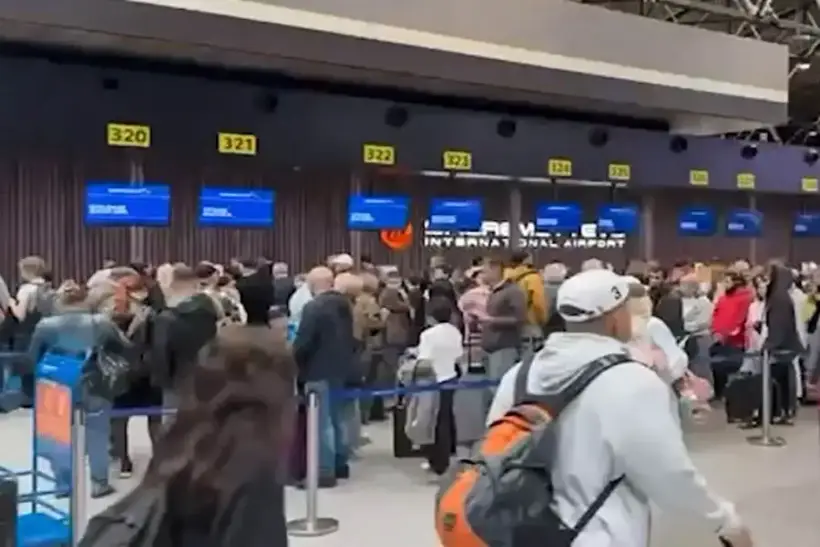
A large-scale drone attack on the Moscow region in the morning of June 18 led to serious disruptions at the capital’s airports. Temporary restrictions on takeoff and landing were introduced at Vnukovo, Domodedovo, Sheremetyevo, and Zhukovsky airports. The schedules of more than 500 flights were disrupted.
Disruptions at Moscow airports
A mass drone attack caused significant disruptions at Moscow’s airports. Temporary restrictions on the arrival and departure of aircraft were introduced at all major airports in the capital. According to Rossiyskaya Gazeta, 444 flights were disrupted, while the SHOT Telegram channel reported 527 delayed and cancelled flights. The most severe situation was observed at Sheremetyevo, where over 120 flights did not depart and 136 arrivals were affected. At Vnukovo, disruptions affected more than 180 flights in total, at Domodedovo — 81, and at Zhukovsky — 5.
The Federal Air Transport Agency stated that the measures were necessary to ensure flight safety. To support passengers, airport terminals deployed additional staff and switched services to an enhanced operational mode. Rosaviatsiya reported that the situation inside terminals remained calm. Passengers were provided with mats and sleeping pads, access to drinking water via fountains, purifiers and coolers, as well as free mother-and-child rooms. The agency also reminded that airlines are required to provide passengers with food and drinks during delays and arrange hotel accommodation if necessary.
Aeroflot asked passengers with cancelled flights not to come to airports for ticket refunds or rebooking, as these services are available remotely. Exceptions apply to tickets purchased through agents, which must be refunded at the point of purchase.
As of 13:30 Moscow time, restrictions on flights remained in place at Domodedovo, while Vnukovo and Sheremetyevo had resumed operations.
190 drones over the Moscow region
The cause of the large-scale disruptions was a drone attack on the Moscow region in the morning of June 18. At 04:36, Moscow Mayor Sergey Sobyanin reported the destruction of the first drones. “Fifteen UAVs heading toward Moscow were destroyed by the Ministry of Defence air defence system. Emergency services are working at the sites where debris has fallen,” he wrote on his messaging channel.
Throughout the morning, the number of intercepted drones continued to rise, reaching 190 by 09:25 and later 194. Some drones reached the Moscow Oil Refinery in the Kapotnya district. After that, a so-called “oil rain” was reported in Lyubertsy and Zheleznodorozhny. Residents were urged to avoid unnecessary outdoor activity. According to Novaya Evropa, the impact on the Kapotnya refinery is described as extremely serious. Overall, strikes on such facilities create risks for fuel supplies, including aviation kerosene, and may worsen market conditions. At least 16 people were reportedly injured in the Moscow region, including a three-year-old child, while no casualties were officially confirmed by authorities.
Moscow Region Governor Andrey Vorobyov said a drone struck an apartment building on Gagarin Street in Zhukovsky, prompting evacuation. In Lyubertsy, buildings of a fitness centre and an industrial facility were damaged. A fire broke out on the roof of the Belaya Dacha shopping centre. In Elektrostal, debris damaged a private house and a car, and one woman suffered a minor shoulder injury. In Chekhov and Pavlovsky Posad, drone debris hit dacha houses, with no casualties reported.
The Moscow Main Directorate of Internal Affairs reported traffic restrictions on the Moscow Ring Road (MKAD), from the Nizhny Novgorod highway (Volgogradsky Prospekt) to Kashirskoye Highway, and near Privolnaya Street. In addition, Kapotnya, Verkhnie Polya, and Chaginskaya streets were closed.
What this means for tourism and business
Analysts at International Investment note that this is the first attack on Moscow of such scale in four years. At the same time, UAV-related incidents are regularly recorded across Russia, including in the Moscow region, Saint Petersburg, and Sochi. This negatively affects aviation, tourism, and business sectors.
The number of cancelled and rescheduled trips is increasing, route planning is becoming more difficult, and pressure on airlines and service providers is rising. For businesses, this means higher costs, disruptions in supply chains, and reduced predictability of commercial activity.
The country remains in a tense situation, which creates risks not only for transport schedules and logistics but also for safety. As a result, market participants are becoming more cautious, especially in sectors linked to transport, business travel, and international connections.