













Peru Reworks Machu Picchu Access as Tourism Recovers
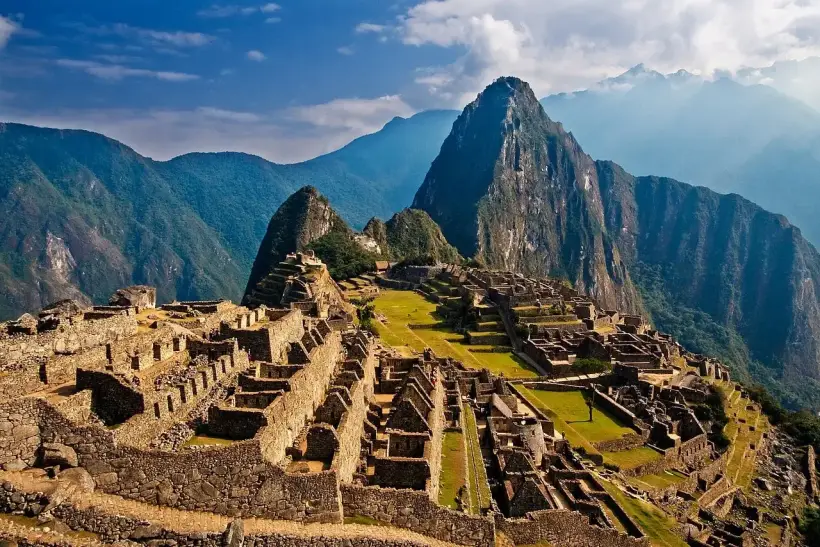
Peru is stepping up efforts to restore international tourism by expanding air connectivity, reducing its dependence on Lima and reviewing how visitors gain access to Machu Picchu. The government is targeting 4 million international tourists in 2026, but the latest detailed figures show a slow recovery: 1,369,992 tourists arrived between January and May, only 0.6% more than a year earlier and just 75.1% of the comparable 2019 level. At the same time, international passenger traffic through Lima has already surpassed its pre-pandemic benchmark, highlighting a gap between the recovery in aviation and inbound tourism itself. Travel Daily News reported on Aug. 14 that the government is considering changes to Machu Picchu visitor management while seeking more international flights from regional airports and developing alternative destinations.
Peru targets 4 million international tourists
Peru’s Ministry of Foreign Trade and Tourism reported 823,863 international tourist arrivals during the first quarter of 2026, up 3.5% from a year earlier. The government also confirmed its target of reaching 4 million international tourists by year-end. Chile contributed 208,792 arrivals, or 25.3% of the total, followed by the United States with 143,435, Ecuador with 67,429, Bolivia with 52,545, Colombia with 39,628 and Brazil with 32,818. Together, those six markets accounted for 66.1% of arrivals.
Momentum weakened by May. A total of 1,369,992 international tourists entered Peru during the first five months, only 7,857 more than a year earlier, leaving year-over-year growth at 0.6%. That represented 75.1% of the January-May 2019 level.
The government’s full-year target also remains below the historic benchmark. Peru received 4,371,787 international tourists in 2019, meaning that even 4 million arrivals in 2026 would remain roughly 8.5% below the pre-pandemic total.
After 1.37 million arrivals in the first five months, Peru needs roughly another 2.63 million during June through December to meet the annual goal. That is a mathematical calculation rather than an official forecast, but it illustrates the scale of acceleration required.
Chile and the US account for more than 40% of arrivals
Figures published by state news agency Andina using tourism and migration data show that around 303,000 Chilean tourists arrived between January and May. Chile represented 22.1% of the market even after a 3.1% year-over-year decline. The United States generated around 255,000 arrivals, accounting for 18.6% of the total and increasing by approximately 5%.
Ecuador generated about 114,000 tourists, Bolivia 75,000, Colombia 67,000 and Brazil 66,000. South America represented 50.2% of inbound tourism, North America 24.1%, Europe 16.6%, Asia 5% and Central America 2.6%.
The structure leaves Peru dependent on two distinct categories of demand. Neighbouring countries provide large regional flows, including overland traffic, while visitors from the US, Europe and other long-haul markets are particularly important for longer itineraries.
Lima handles almost two-thirds of foreign tourists
Jorge Chávez International Airport remains the primary gateway. About 871,000 foreign tourists entered through the Lima airport between January and May, equivalent to 63.6% of the total. The Santa Rosa border crossing in Tacna accounted for another 229,000, Tumbes for 104,000 and the Desaguadero-Carancas border facilities in Puno for approximately 68,000.
Aviation has recovered considerably faster than inbound tourism. International passenger traffic through Jorge Chávez reached 3.19 million in the first quarter, 1.9% above the comparable 2019 level. More than 491,000 were international transfer passengers.
The airport figure cannot be directly compared with international tourist arrivals because it covers a broader passenger population. The divergence is nevertheless significant: Lima’s international aviation traffic has already exceeded its pre-pandemic benchmark while inbound tourist numbers remain well below 2019 levels.
Peru expands nonstop links with Europe
One of the most visible additions in 2026 was the launch of the Lima-Barcelona route. LEVEL began operating the service on June 3 with three weekly Airbus A330-200 flights and more than 4,000 monthly seats in each direction.
Air France is increasing Paris-Lima service from seven to 10 weekly frequencies. Air Transat is adding Toronto capacity, LATAM is expanding São Paulo service, Boliviana de Aviación is increasing connections with Santa Cruz and La Paz, Plus Ultra is moving to daily Madrid flights, while United Airlines maintains connectivity with Newark. Lima is connected to 49 international destinations, and Peru has reached aviation-liberalisation arrangements with 11 countries during 2026.
Additional flights address Peru’s international-access constraint, but they do not remove the industry’s heavy concentration in Lima.
Cusco remains dependent on connections through Lima
Tourism Minister Rogers Valencia has identified regional international connectivity as a major constraint. Cusco and Chiclayo together account for less than 3% of Peru’s international air connectivity, and the government wants to encourage more foreign services from cities including Cusco, Chiclayo and Iquitos.
A possible nonstop São Paulo-Cusco route is among the connections being discussed. It could give Brazilian travellers direct access to Peru’s main Andean tourism region without transiting through Lima. As of August 2026, however, it remains a proposal rather than an operating scheduled service.
Decentralisation would have implications beyond aviation. Direct international services could increase hotel nights and tourism spending in regional markets while reducing time lost to domestic connections.
Chinchero Airport is scheduled to operate in 2029
The largest long-term infrastructure project for Cusco is Chinchero International Airport. Physical completion stands at 38.86%, with investment estimated at about 3.98 billion soles. Main construction is scheduled to finish in 2028 and operations are planned to begin in 2029. Initial capacity is expected to exceed 7.5 million passengers annually.
A separate $47.9 million control-tower contract is under way. The approximately 36.8-metre tower will have seven levels, while the wider system is designed to manage up to 15 aircraft simultaneously and support 12 boarding bridges. This component is scheduled for completion by the end of 2027.
Chinchero is therefore a medium-term tourism project rather than a driver of the 2026 visitor target. Cusco will continue to depend on its existing airport, domestic connections and a limited number of direct international services for several more years.
Machu Picchu allows up to 5,600 visitors a day
Peru’s Ministry of Culture established a 2026 maximum of 5,600 daily visitors to Machu Picchu on high-demand dates: Jan. 1, April 2-5, June 19-Nov. 2 and Dec. 30-31. The regular-period limit remains 4,500 visitors. The higher 5,600 ceiling therefore applies throughout August.
Online tickets are sold through the government’s TuBoleto platform, with capacity allocated by route and entry period. That enables authorities to manage pressure not only on the entire archaeological site but also on individual sections.
The separate figure of 2,400 people mentioned in Valencia’s proposals refers to simultaneous presence at the site and should not be confused with the legally authorized daily capacity. Visitors enter in different time slots, allowing daily admissions to exceed the number present at any single moment.
Machu Picchu Pueblo retains 1,000 in-person tickets
A daily allocation of 1,000 tickets remains available for direct purchase at the cultural centre in Machu Picchu Pueblo. Those tickets are part of the overall authorized visitor capacity rather than an additional quota above the daily maximum.
The system provides a fallback for independent travellers who fail to obtain admission online, but it can also reduce certainty for international visitors planning expensive itineraries months in advance.
That is one reason authorities are considering changes that would distinguish individual travellers more clearly from travel agencies and tour operators and reduce the ability of automated systems to block large amounts of ticket inventory. The proposal has not yet replaced the current sales regime.
Machu Picchu has not returned to 2019 visitor levels
The Historic Sanctuary of Machu Picchu recorded 391,128 visitors between January and April 2026, equivalent to 87.7% of the total during the same period in 2019. Foreign tourists represented 79.4% of visitors and domestic travellers 20.6%.
The site is therefore recovering faster than Peru’s overall international-tourist market but has still not returned to its pre-pandemic traffic level.
Increasing visitor numbers is also constrained by conservation considerations. Machu Picchu is both an archaeological property and a protected natural landscape, requiring authorities to consider monuments, trails, ecosystems, safety and transport conditions when setting capacity.
A new capacity study is being funded with 1.8 million soles
Tourism, cultural and environmental authorities agreed in November 2025 to commission a new study of carrying capacity and acceptable change for the wider Historic Sanctuary of Machu Picchu. The work is being financed with 1.8 million soles and will update an assessment originally carried out in 2015.
Until that work is complete, proposals for materially higher capacity should be viewed as scenarios rather than approved new limits.
The distinction is important for investors and operators. More visitors could support hotels and tourism businesses in Cusco, but excessive pressure on a World Heritage property could also lead to tighter restrictions later.
Hanan and Urin routes remain proposals
Valencia has suggested simplifying the current system into two broader visitor experiences. Hanan Machu Picchu would cover the upper area and Urin Machu Picchu the lower zone. Additional paths have also been discussed around the eastern terraces and between Puente San Miguel, Incaracay and Gran Caverna.
The minister has estimated that alternative routes could potentially accommodate around 1,000 additional visits per day. That figure cannot be added to the current 5,600-person limit as if the increase had already been approved. Any new routes and capacity require technical assessment and authorization.
Travellers in August 2026 therefore remain subject to the officially approved circuits, entry times and capacity limits.
Choquequirao could become a major alternative destination
Peru is also seeking to spread archaeological tourism beyond Machu Picchu. Investment-promotion agency ProInversión values the Choquequirao tourism-access project at $411.55 million, including $294.5 million of capital expenditure and $117.05 million in projected operations and maintenance expenditure over the first ten years of operation. The public-private partnership term is 25 years.
The plan includes a cable-transport system consisting of two sections in the northern zone and one in the southern zone. Its objective is to address the difficult access that currently limits visitor volumes at the Inca archaeological complex.
The project remains in the transaction phase. The current timetable calls for the final concession version in the third quarter of 2026 and award of the project in the fourth quarter.
Choquequirao could eventually reduce pressure on Machu Picchu and distribute tourism revenue more widely across Cusco and Apurímac, but it will not materially affect visitor numbers in 2026.
Tourism spending recovered faster than tourist numbers
The financial recovery has moved ahead of the physical recovery in arrivals. PROMPERÚ estimates that Peru received about 3.3 million international tourists in 2024, roughly 74% of its 2019 total, while foreign-exchange earnings from inbound tourism were already around 3% above the pre-pandemic level.
The average foreign tourist stayed for 12 nights and spent approximately $1,417, excluding international air or land transport, compared with $1,219 in 2019.
That changes the economics of the recovery. Restoring the 2019 arrival count remains important for hotel occupancy and employment, but length of stay and expenditure per visitor are increasingly important measures of the sector’s performance.
It also strengthens the case for destination diversification. Travellers who extend a Machu Picchu trip to Arequipa, Ica, Puno, the Amazon or eventually Choquequirao can generate additional revenue without a proportional increase in pressure on Peru’s most visited archaeological attraction.
Peru needs a stronger second half of 2026
Peru enters the second half of the year with conflicting indicators. Lima’s international aviation traffic has surpassed 2019 levels, new international routes are opening and spending per foreign tourist is above its pre-pandemic benchmark. Yet international tourist arrivals in the first five months remain at only 75.1% of the comparable 2019 level.
Most large infrastructure solutions will not deliver immediate capacity. Chinchero is scheduled to open in 2029, Choquequirao is still in the concession process and the proposed Machu Picchu routes remain subject to technical evaluation.
The 4 million target will therefore depend mainly on existing infrastructure, demand during the second half of the year, the performance of new international services and stable access to Cusco and Machu Picchu.
As International Investment experts report, Peru’s main tourism constraint is increasingly the capacity of the entire travel chain rather than a lack of international awareness or attractions. Lima’s international passenger market has already recovered, yet this has not translated into a full restoration of foreign-tourist numbers; Machu Picchu must make access more predictable without undermining conservation, while the largest infrastructure projects will take years to affect capacity. For investors, visitor spending, length of stay, hotel occupancy outside Lima and Cusco and the actual launch of regional international routes are more useful indicators than the 4 million arrivals target alone.