









Rosaviatsiya Limits Flight Altitude Over Moscow and Bans Transit Flights
Reuters
Russia's Federal Air Transport Agency (Rosaviatsiya) has limited the flight altitude of civil aircraft to 4,900 meters and banned transit flights through the Moscow Air Traffic Control Area (MATCA). The new rules were introduced to enhance flight safety and may increase flight times as well as airline operating costs, Kommersant reports.
Changes to Air Traffic Operations in Russia
Rosaviatsiya has reduced the maximum flight altitude for civil aircraft within the Moscow Air Traffic Control Area to Flight Level 160 (FL160), which is approximately 4,900 meters. Information about the change in the airspace regime is contained in a NOTAM published by the Aeronautical Information Centre.
The restrictions also apply to experimental and state aviation operating in areas near civil airports. In addition, Russian and foreign airlines are prohibited from conducting transit flights through the Moscow Air Traffic Control Area.
The Moscow Air Traffic Control Area includes Sheremetyevo, Vnukovo, and Domodedovo airports. The document states that the restrictions are in effect until August 26. Rosaviatsiya confirmed the issuance of the notice and said that the restrictions apply from July 11 to August 12. Since June 20, Rosaviatsiya, following a proposal from the Ministry of Defense, has also restricted light aircraft flights at altitudes of up to 5,200 meters in Central Russia.
Reasons for the New Flight Restrictions in Russia
The change in flight procedures is related to security measures, Rosaviatsiya explained. The initiative to adjust the airspace regime was proposed by the Ministry of Defense due to an increase in drone attacks.
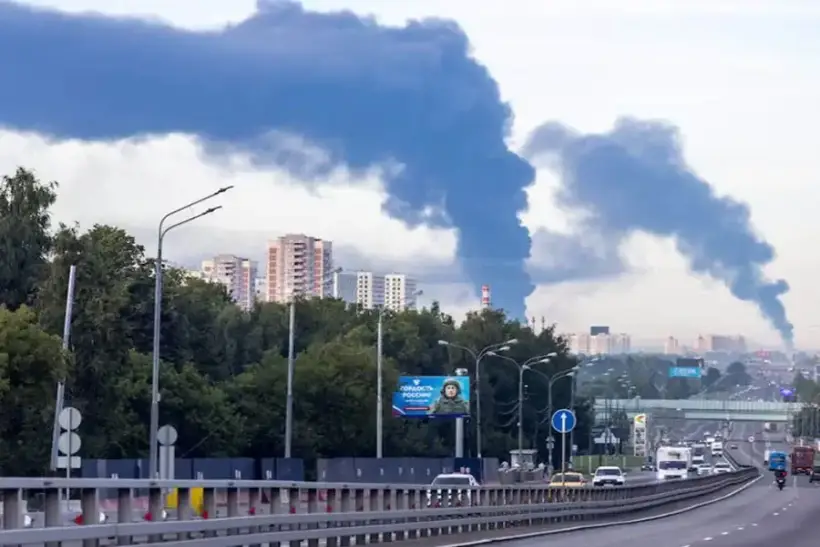
For example, on July 18, a series of Ukrainian drone attacks killed seven employees of a Wildberries warehouse, injured dozens of people, and caused a fire at an oil products storage facility in the Moscow Region.
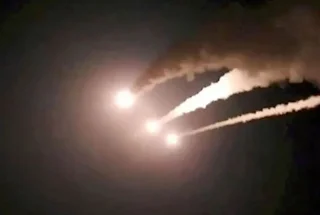
According to Reuters, from 8:30 p.m. until 5:00 a.m. on July 20, Moscow and surrounding regions were attacked by more than 400 drones. Ten people were injured and fires were reported. Most drones were neutralized by air defense systems at a significant distance, including 85 drones destroyed while approaching the Russian capital. On July 21, 209 drones were shot down over various Russian regions, and 242 on July 22.
The ban on transit routes through the Moscow Air Traffic Control Area is intended to reduce traffic intensity around Moscow. The lower altitude limit allows aircraft to descend faster and, in the event of a threat, make a landing at the nearest airport more quickly.
Before the new rules were introduced, flight altitude restrictions for aircraft approaching Moscow airspace were set at Flight Levels 270–280, or 8,250–8,550 meters. Previously, aircraft entered the Moscow approach area from the south and southeast at an altitude of around 5,486 meters, while aircraft approaching from the east and north flew at around 6,700 meters.
How the Restrictions Will Affect Russian Airlines
Experts note that lower flight altitudes increase fuel consumption and reduce aircraft speed. In addition, aircraft can reach an economically efficient cruising altitude only after leaving the Moscow Air Traffic Control Area.
The additional travel time caused by the restrictions may range from 5 to 15 minutes per flight and will remain within the range of statistical error. At the same time, fuel costs have already increased, but the scale of additional expenses can only be assessed after analyzing monthly operating results.
A more significant factor for carriers will be the ban on transit flights through the Moscow Air Traffic Control Area. It may affect Aeroflot, Smartavia, Belavia, and other airlines.
Transit route detours are expected to increase flight times by at least 20–30 minutes. At the same time, airlines will be able to offset additional costs without a sharp increase in ticket prices, as the restrictions are not considered large-scale.
Flight Safety Risks
The reduction in flight altitudes may increase the risk of aircraft collisions with birds. However, Airbus A320 pilot Andrey Litvinov explained that the FL160 restriction does not mean that aircraft will necessarily fly exactly at this altitude. The choice of flight level depends on air traffic controllers’ decisions, airspace congestion, noise restrictions, and other factors.
“If an aircraft flies at low altitude for a long time, the bird strike risk does increase, because, for example, eagles and some other birds fly at altitudes of 2,000 meters and above,” he said.
At the same time, a source from one of the airlines added that most bird strikes occur during takeoff and landing, and the number of such incidents depends on the season and the location of residential areas near airports.
Outlook for Russia’s Aviation and Tourism Markets
Andrey Kramarenko, Senior Research Fellow at the Institute for Transport Economics at the Higher School of Economics, noted that any increase in route length amid rising aviation fuel prices and declining demand makes airline operations more difficult.
Many experts believe that the impact of the new rules is not comparable with the losses carriers have suffered due to airspace closures in certain regions. The lifting of restrictions in the Moscow region is unlikely before the end of hostilities. Similar measures may potentially be introduced in other regions.
Analysts at International Investment note that rising risks and expanding restrictions are having a negative impact on the tourism market. Many passengers are already forced to avoid airports in Moscow, Sochi, and other terminals where regular attacks have been recorded. This also complicates business travel and increases costs. Investors continue to face elevated risks when implementing projects related to aviation, infrastructure, tourism, and the hospitality sector.