







 Australia’s Spring Auctions Rise but Remain Well Below 2025
 Number of Foreigners Holding Turkish Residence Permits Exceeds 1.27 Million
 Demand from Russian Tourists for Holidays in Georgia Rises by 20–25%
 Montenegro Property Buying Costs in 2026
 Four in Ten Companies Would Not Choose Slovakia
 Gulf Countries Prepare Unified Tourist Visa
High Prices Cool Hong Kong New-Home Demand
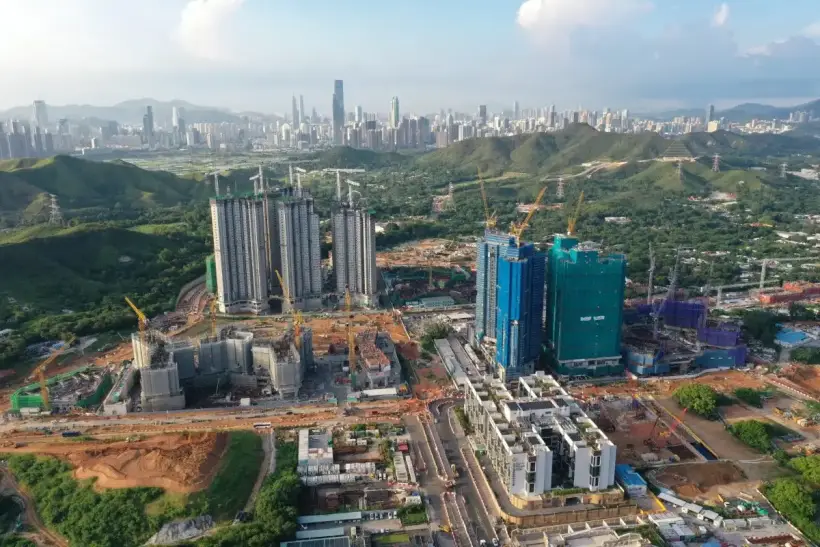
In Hong Kong, a special administrative region of China, the first major private-home sales in the Northern Metropolis have exposed buyers’ sensitivity to pricing. Wheelock Properties sold 56 of the 100 homes offered on August 16 at Palo Springs, the second phase of Park Silicon in Kwu Tung, despite receiving more than 2,500 registrations. The first price-list batch averaged HK$17,671 per square foot, putting the emerging district close to some new projects in much more established parts of Hong Kong. The launch is becoming an early pricing test for a vast area that the government plans to turn into a new residential and technology hub next to Shenzhen.
Hong Kong home prices test demand in Kwu Tung
Palo Springs launched on August 16 with 100 homes offered to buyers: 82 through published price lists and 18 by tender. By the evening, 56 units had sold for close to HK$417 million, including eight tender transactions.
The development had received more than 2,500 registrations before the sale. Interest therefore substantially exceeded the initial supply, but most registrations did not convert into completed purchases. Tendered homes achieved more than HK$23,000 per square foot in some cases, with the highest reported rate reaching HK$23,604 per square foot.
The gap between registrations and completed purchases is important. Registering an expression of interest does not oblige a Hong Kong buyer to purchase a home, allowing prospective purchasers to walk away if the final pricing or available units are unattractive.
The original Bloomberg report highlighted the fact that Park Silicon was approaching prices seen at projects in more urban parts of Hong Kong. Morningstar analyst Kathy Chan described the pricing as looking “aggressive at first sight” given that Kwu Tung will not receive its full rail connectivity until later. Mainland Chinese buyers account for roughly half of Hong Kong first-hand residential sales by value, adding exposure to changes in cross-border capital flows.
Hong Kong’s Kwu Tung homes approach urban prices
The first published Palo Springs price list contained 65 homes ranging from 311 to 480 square feet. After available discounts, prices started at about HK$5.05 million, or HK$15,903 per square foot. The highest price in that batch was HK$18,174 per square foot and the average was HK$17,671.
The HK$17,671 figure therefore refers specifically to the first 65-unit price-list batch, rather than all 100 homes offered on August 16. The batch contained 23 one-bedroom and 42 two-bedroom units. Park Silicon as a whole has 781 apartments: 457 in phase one and 324 at Palo Springs.
The challenge for buyers is not simply the absolute purchase price. Kwu Tung is in the northern New Territories close to mainland China, and a substantial share of the transport, commercial and technology infrastructure expected to transform the district has yet to be completed.
A purchaser is effectively paying for both an apartment available today and the anticipated future value of Kwu Tung after railways, technology clusters and employment centres are delivered.
The closer Kwu Tung prices move toward established Kowloon districts, the more buyers must believe that future development will justify the difference in present-day infrastructure.
Hong Kong buyers favour an urban project at a similar price
The contrast with The Sterling in Cheung Sha Wan, southwestern Kowloon, is particularly striking. China Resources Land sold all 180 homes in the project's first price-list batch on August 22, generating almost HK$1.6 billion.
The project attracted more than 46,000 subscriptions, equal to more than 254 registrations for every available apartment. Its average discounted price was about HK$17,880 per square foot — only around HK$200 more than the opening Palo Springs batch.
The Sterling is located near the operating Nam Cheong station in an established urban district. Its opening prices were also around 27% to 33% below the original launch prices of some nearby projects introduced in 2021. The South China Morning Post linked the sell-out to a combination of urban location, transport access and value.
The two launches demonstrate that demand in Hong Kong has not disappeared. It has become increasingly selective.
A difference of less than HK$300 per square foot can produce very different buyer behaviour when one development sits next to existing transport and services and the other relies much more heavily on infrastructure that has yet to arrive.
Hong Kong’s Northern Metropolis targets 2.5 million residents
Kwu Tung is part of the Northern Metropolis, Hong Kong’s vast long-term development zone along the Shenzhen boundary. The area covers around 30,000 hectares, approximately one-third of Hong Kong’s land area, and incorporates existing towns as well as new development areas.
The government intends northern Hong Kong to become a second economic engine. The established southern urban area will retain its finance and professional-services role, while the north is intended to focus on innovation, technology, research, advanced industry and logistics.
At full development, the Northern Metropolis is expected to accommodate around 2.5 million residents and provide approximately 650,000 jobs. The government also identifies it as one of Hong Kong’s main future sources of housing land and a platform for closer economic integration with Shenzhen.
Employment is therefore central to residential values. If technology businesses and research institutions arrive alongside housing, Kwu Tung can create its own pool of buyers and tenants.
If apartments are delivered much faster than jobs, Northern Metropolis projects will have to compete more directly with established Hong Kong districts.
Hong Kong targets a 2027 opening for Kwu Tung Station
Rail infrastructure will arrive in stages. Phase one of the Northern Link project is Kwu Tung Station on the existing East Rail Line, and construction is under way with a target completion date in 2027.
The main Northern Link is intended to connect Kwu Tung with Kam Sheung Road, linking the East Rail and Tuen Ma lines. Its targeted completion date is 2034.
It is therefore inaccurate to suggest that Kwu Tung will remain without rail access until 2034. The district is expected to receive its own East Rail station much earlier; 2034 refers to the broader Northern Link connectivity across the northern New Territories. Hong Kong government budget documents confirm the two target dates.
That distinction matters to Park Silicon buyers. Some transport benefit can emerge after Kwu Tung Station opens, but the full infrastructure premium built into the Northern Metropolis investment story will develop gradually over many years.
Hong Kong land for Park Silicon was bought near the market peak
Park Silicon’s economics are also influenced by the price paid for the land. Fanling Sheung Shui Town Lot No. 278 in Kwu Tung was awarded to a Wheelock Properties subsidiary in July 2021 for HK$4.185 billion.
The site measures about 7,624 square metres and permits a maximum gross floor area of 45,744 square metres. Eleven other bidders competed, including Henderson Land Development, CK Asset, Sun Hung Kai Properties, Sino Land and Vanke.
Timing matters. The acquisition occurred close to the peak of Hong Kong’s previous property cycle. A neighbouring Kwu Tung site was awarded to Sun Hung Kai Properties in the same year for HK$8.614 billion.
The market subsequently entered a prolonged correction as interest rates increased and financing conditions deteriorated.
Developers that bought land close to the previous peak now face a difficult trade-off. Larger discounts can accelerate sales but damage project returns, while higher asking prices protect margins at the risk of driving buyers toward cheaper or more centrally located alternatives.
Hong Kong home registrations fall 42% in July
The Palo Springs launch followed a sharp monthly drop in residential registrations. The Land Registry received 4,462 residential sale and purchase agreements in July, down 41.7% from June and 22.6% from July 2025.
The value of residential agreements fell 44.6% month on month to HK$41.9 billion. June had recorded 7,650 residential agreements worth HK$75.6 billion.
The government cautions that deeds may be lodged as much as 30 days after a transaction, so monthly registry figures generally reflect activity with a lag rather than a precise snapshot of deals completed during that calendar month.
The broader quarterly picture is substantially stronger. Residential transactions rose 19% quarter on quarter to 22,156 in the second quarter, the highest quarterly total in 14 years. Overall flat prices increased another 3% during the quarter and were 8% higher year to date, the Hong Kong government said in its August economic update.
Park Silicon’s restrained launch therefore does not reflect an absence of housing demand across Hong Kong. It points instead to a market entering a stage where buyers discriminate much more sharply between individual developments.
More than 2,100 private homes are coming to Kwu Tung
Park Silicon is only part of the new supply pipeline. Its two phases provide 781 apartments. Henderson Land Development is preparing another 682 homes through North Innovale, while Sun Hung Kai Properties has a further 642-unit project planned.
Together, those three developments represent more than 2,100 new private homes.
The next launches will therefore become an important test of whether buyers accept a Kwu Tung benchmark around HK$17,000 to HK$18,000 per square foot.
If competing developers offer deeper discounts, Park Silicon could face pressure to respond. If comparable projects sell successfully at similar prices, the current range may become an early benchmark for the district.
The timing of launches will matter as well. The more units that enter the market simultaneously, the more developers may need to compete through pricing, payment terms and mortgage incentives.
Developers remain cautious on Hong Kong’s Northern Metropolis
Caution is visible in the land market too. The first tender for an integrated development pilot in Hung Shui Kiu/Ha Tsuen closed on July 3 with just two bids.
The site covers about 11 hectares. Around 2.6 hectares are designated for housing and 5.5 hectares for an Enterprise and Technology Park, with the balance reserved for public facilities and pedestrian space.
The tender itself differs from a conventional Hong Kong residential land sale. Land premium carries only 30% of the final assessment, while non-price factors make up the remaining 70%, including strategic industries, the ability to attract leading companies, development speed, investment commitments and job creation.
The pilot area is expected to provide about 3,120 homes and around 280,000 square metres of industrial floor space. To ease financing pressure, the successful bidder may pay 25% of the land premium shortly after the award and the remaining 75% over three years without interest.
Two bids should not be read as a complete lack of interest: the project requires investors to do far more than develop and sell housing. It does, however, illustrate the caution surrounding projects whose returns depend on the successful creation of an entirely new urban and technology centre.
Hong Kong needs jobs alongside its new homes
The main challenge for Northern Metropolis is not simply building a large number of apartments. It is creating enough demand to absorb them.
Large-scale infrastructure is already under construction in Kwu Tung. The government describes Kwu Tung North as the first Northern Metropolis new development area to enter the construction stage, with an additional population of around 130,000 expected when the district is fully completed in 2032. Government offices, sports facilities, healthcare, schools, welfare services and cultural infrastructure are also planned.
Private-home values, however, will depend heavily on whether well-paid employment arrives nearby.
Without that employment base, Kwu Tung risks becoming primarily a residential district whose residents continue commuting to Hong Kong’s traditional business centres. In that scenario, the premium attached to a future technology hub would remain limited.
If San Tin Technopole and other economic clusters succeed, proximity to Shenzhen could instead become one of the district’s most valuable characteristics.
As International Investment experts report, Park Silicon’s launch should not be described as a failure of Hong Kong’s housing market or of the Northern Metropolis. Selling 56 homes on the first day confirms that paying demand exists. However, more than 2,500 registrations translating into 56 purchases show that interest in an emerging district is not the same as willingness to pay in advance for future infrastructure at prices already approaching urban projects. Sequencing remains the main risk. If Hong Kong delivers Northern Metropolis housing faster than rail connections, technology businesses and jobs, competition among developers will increase and prices could come under pressure. If transport and employment infrastructure arrive broadly as planned, today’s HK$17,000–HK$18,000 per square foot range may eventually become an early benchmark for a new urban centre.